The Summer Run Series Through the Eyes of a Beekeeper
8 Runs. 8 State Parks. One Beekeeper.
The Walled Garden at Caumsett State Park
I came to Caumsett State Park for a 5K summer run, but it was the Walled Garden—with its towering Russian sage, busy honey bees, and remarkable brick wall—that stole the evening.
The drive to Caumsett State Park is special. There’s a point where you’re traveling across a narrow strip of land with water on both sides of the road. One side is scenic and marshy, while the other opens to Long Island Sound. Those wide-open views make it easy to drift back to the 1920s, when Caumsett was a working dairy farm on what was then the largest single-owner estate on Long Island’s Gold Coast.
I felt like I had taken a vacation.
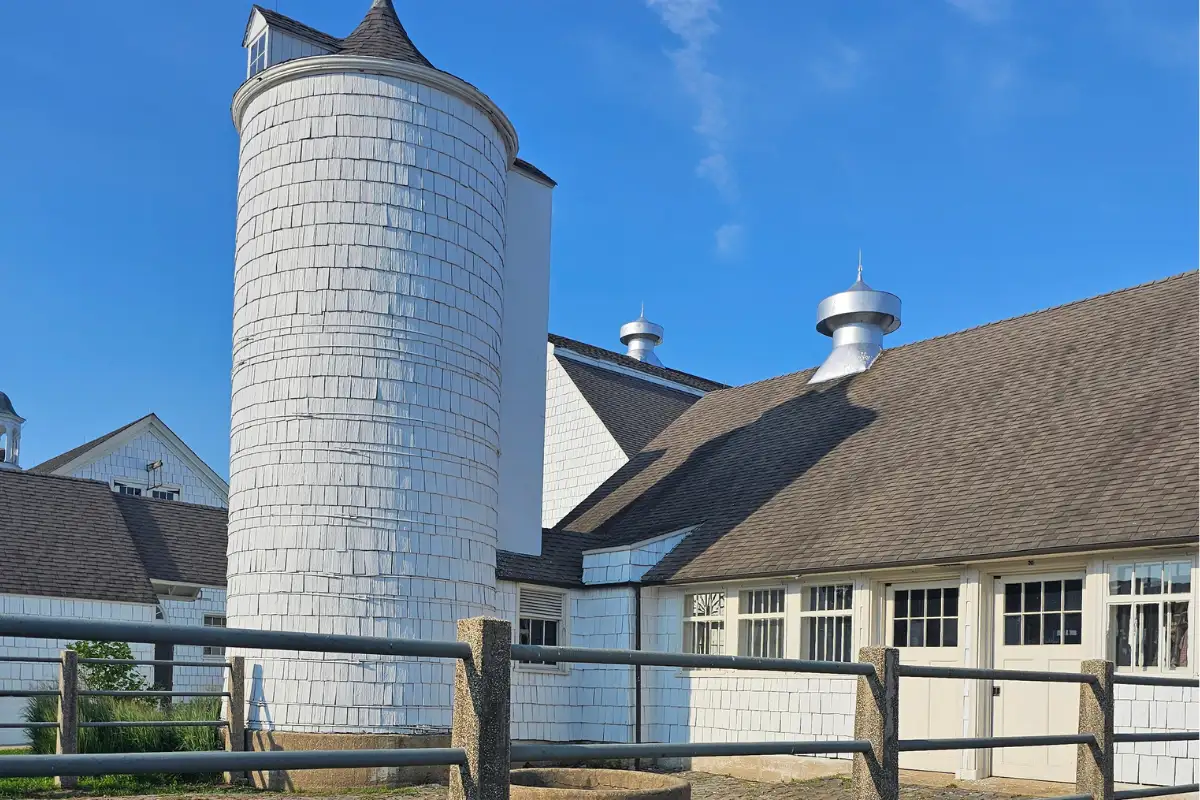
My short stay was filled with the timeless scent of freshly mowed grass, brilliant unobstructed views of a blue, blue sky, and a complex of blindingly white dairy barns that seemed to glow in the late afternoon sun.
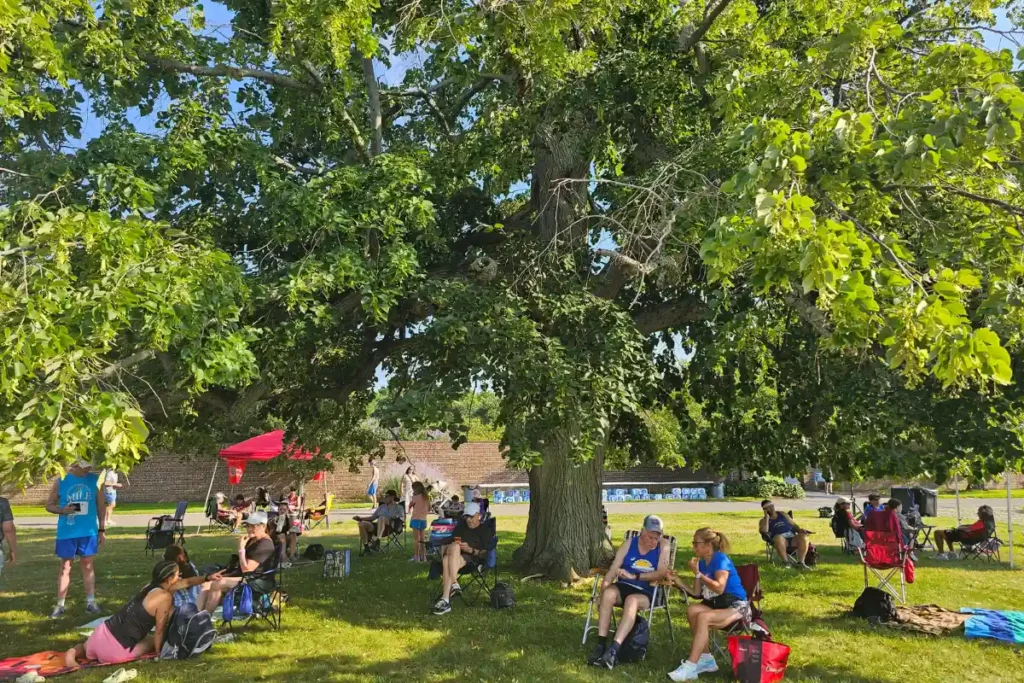
As always, I arrived at this week’s NY State Park Summer Run Series at Caumsett State Historic Park with plenty of time to explore. Other early arrivals were spreading blankets and setting up their post-run picnic areas beneath the huge linden trees surrounding the dairy buildings. A stage had been set up, and country music drifted through the air at just the right volume.
A Little History
I’m not usually a history buff when I visit a state park. I’d much rather find the trails, enjoy the scenery, and stop to smell the proverbial roses than spend my time reading every historical plaque.
But Caumsett felt different.
It felt less like a state park and more like a living museum. The restored dairy buildings looked spectacular, and the home of Marshall Field III and his family appeared every bit as majestic as it must have a century ago.
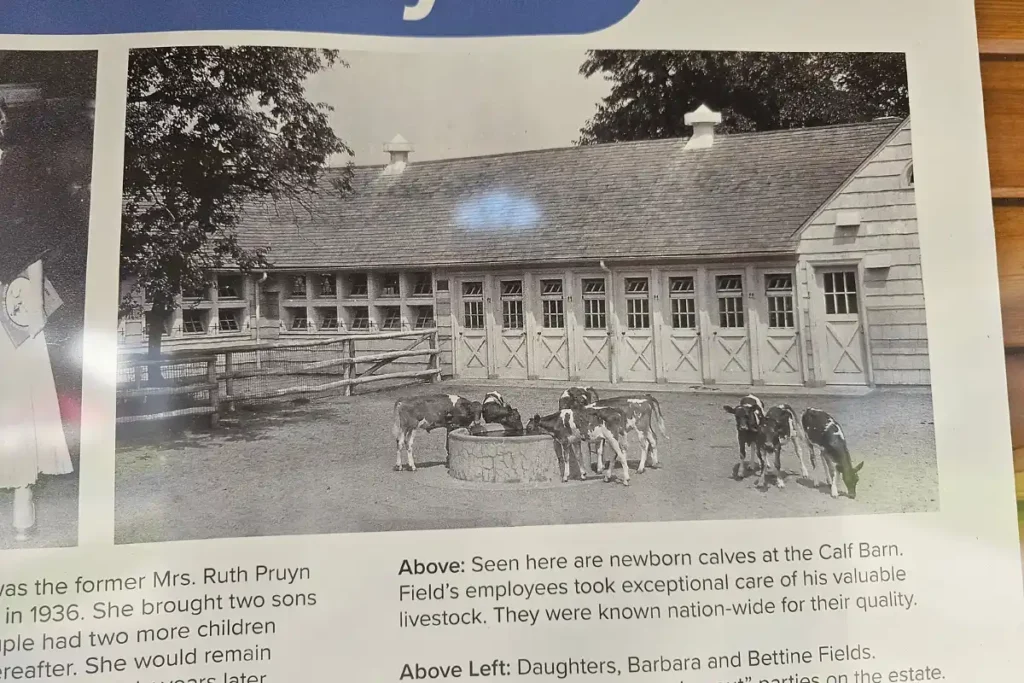
Then I stumbled upon one piece of history that, for me, brought the entire Gold Coast era to life.
The Wall
I had only been out of the car for about ten minutes when I found my destination.
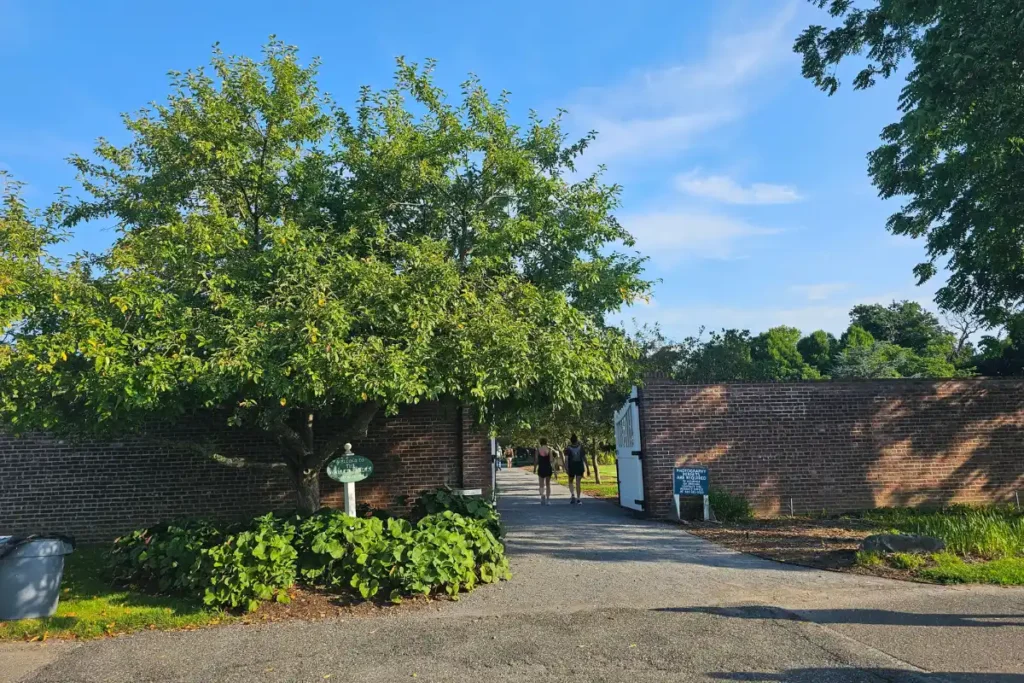
It was a tall brick wall that immediately caught my attention. It seemed almost out of place—solid, quiet, and dark against the brilliance of the white dairy complex on the opposite side of the pathway.
Even from a distance, I noticed purple flowers reaching above the wall, gently waving in the breeze as if inviting me closer.
I followed the wall until I found an opening with a simple sign.
The Walled Garden.
Suddenly, it all made sense.
Walking Into Another Climate
Walking through the gate of The Walled Garden at Caumsett State Park, I wasn’t sure what to expect. There was no peeking through the brick walls.
After the openness and brightness of the dairy farm complex, stepping inside felt like entering an entirely different world.
The sky was still blue. The sun was still shining. But the wall changed everything.
The air was calmer. The breeze had quieted. The country music became little more than a distant murmur, and the conversations outside seemed to disappear.
Straight ahead, the path was lined with old fruit trees. Like many formal gardens, intersecting walkways divided the space into smaller gardens, all leading toward a simple fountain in the center.
One runner had already discovered the magic of the garden. She sat quietly beside the fountain with her young child sleeping peacefully in her lap, waiting for her own chance to run.
Here and there, I noticed other runners wandering in alone. Some were seeking shade. Some were looking for solitude.
The wall had created something. A break from the outside world.
And it wasn’t just a garden.
It was four acres of enclosed space, originally designed as a private kitchen garden for one family. A true farm-to-table garden, surrounded by a six-foot brick wall built to keep deer away from the fruits, vegetables, and flowers growing inside.
But none of that was what I noticed first.
Surprised by Russian Sage
I took one quick look down the main path just to get my bearings, but it was really only a glance. Those purple flowers growing above the wall had already captured my attention. They seemed to be waving me over.
At first, I assumed it was lavender spilling over the bricks. The color was unmistakable. But as I walked closer, curiosity took over. I stepped off the path, crossed the grass, and walked right up to them.
I couldn’t believe what I was seeing.
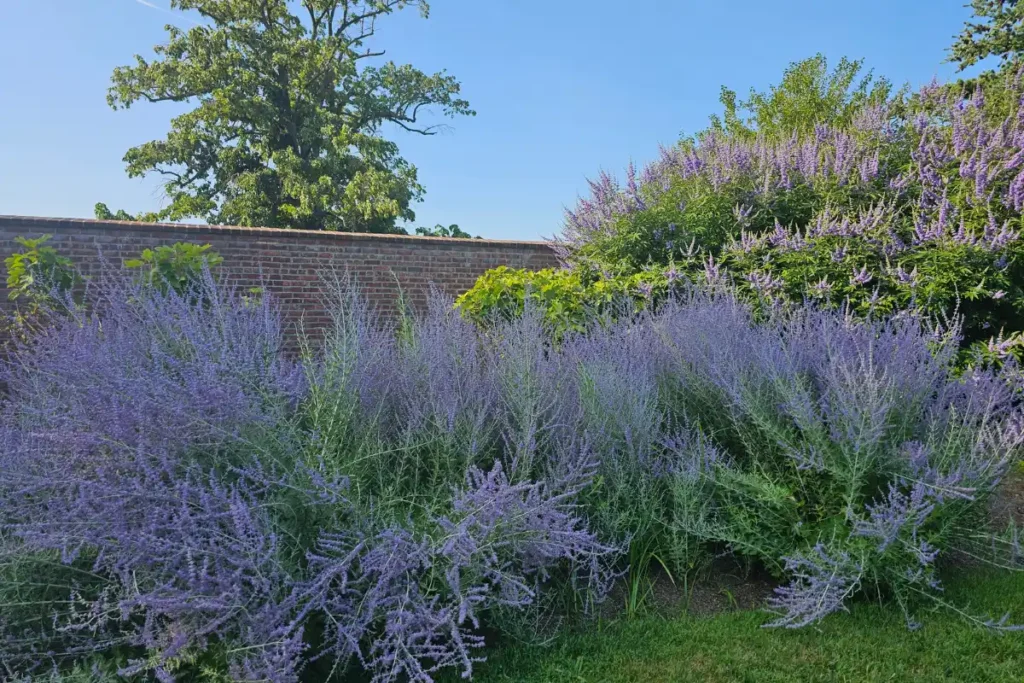
Two enormous Russian sage plants stood like sentries, flanking an even larger Lilac Chastetree.
I’ve grown Russian sage for years. It’s one of my favorite pollinator plants, with silvery-gray foliage and clouds of tiny purple flowers that seem to bloom just when the bees need them most. Mine has always been a faithful garden companion, even when I forget to prune it and it gets a little floppy by late summer.
These were different.
Russian sage is typically described as growing three to five feet tall and two to four feet wide. These shrubs stretched nearly six feet into the air and spread so wide they looked more like flowering hedges than perennial plants.
I just stood there.
The bees certainly weren’t impressed by the size. They were far too busy.
Honey bees drifted from flower to flower across the Russian sage while the neighboring Lilac Chastetree—sometimes called the “bee tree”—buzzed with even more activity. Every branch seemed alive. It wasn’t just one bee here and there. It was the steady hum of a summer nectar flow.
Plant envy struck immediately. Before I had even finished admiring the tree, I was already wondering where I could possibly fit one into my own yard. And wondering, maybe if I keep adding compost to my own backyard, my Russian sage will someday grow taller than my knees.
As excited as I was about the plants, I was even happier to see the bees. This was the first state park where I’d really stopped to watch honey bees at work, and they looked absolutely content. On a hot July evening, they had found exactly what they were looking for.
The Walled Garden at Caumsett State Park
But let me get back to that wall.
As I stood there watching the bees, all the little things I know about plants, pollinators, soil, and climate began to click together.
The Field family went to great expense to create a deer-proof barrier around their kitchen garden. I wonder if they fully appreciated everything else that six-foot brick wall would accomplish.
Brick absorbs the sun’s warmth throughout the day and slowly releases that heat as temperatures cool.
Unlike a fence, a solid wall reduces wind, protects the soil, and creates a sheltered environment where plants can thrive.
In other words, it creates a microclimate.
Add decades of rich compost and manure from the working dairy farm, and it’s no wonder these plants had reached such extraordinary proportions.
Everything worked together at the Walled Garden at Caumsett State Park.
Through the Eyes of a Beekeeper
While I was fascinated by the sheer size and health of the plants inside the garden—I should have taken a picture of the lamb’s ear!—I’m sure the bees saw something entirely different.
They weren’t admiring giant Russian sage.
They were enjoying one enormous nectar station. Instead of spending precious energy flying from scattered blossoms across the landscape, they could harvest thousands of flowers in one place.
At this point in the summer, easy and efficient matters – for bees and humans alike!
The Garden Before the Race
As I stood watching the honey bees and other pollinators dance through the flowers in the evening light, the garden slowly became a little busier.
People drifted in and out, pausing to admire their surroundings before returning to the world outside the wall.
The world of race bibs. Shoulder rolls. Quad stretches. Nervous excitement.
I did a few neck stretches of my own, took one last deep breath, and quietly said goodbye to the bees.
They had work to do. So did I.
I eventually left the garden for the starting line, still thinking about those brick walls. The things they kept out…
And the things they quietly made possible inside.
Life is funny.
I never expected to be so grateful for a brick wall.
Follow Along This Summer
This article is part of my Summer Run Series Through the Eyes of a Beekeeper, where I’m exploring Long Island’s parks and public spaces one race at a time.
👉 The NYS Parks Summer Run Series Through the Eyes of a Beekeeper
If you enjoyed this story, you might also like article in the series, Do Bees Fly in the Rain?, where a summer shower changed both the run and the bees’ evening plans.
Next week, the series heads to Robert Moses State Park for a one mile run on the beach.
I’ll admit it…I’m more of a beach bum than a beach runner. Churned-up sand and a beekeeper’s knees don’t always get along, but I’m curious to see what catches a beekeeper’s eye at the edge of the Atlantic. 🐝🏃♀️🏖️