Bee-hind The Scenes
The Curious Case of Goldenrod Honey
Honey that set too soon, a landscape full of golden flowers, and a jar everyone wanted. Follow a beekeeper’s clues in The Curious Case of Goldenrod Honey.
I love a good mystery novel, but I don’t love a real-life mystery so much.
And last year, I had a mystery on my hands in the honey room. I had several cases of honey that had solidified in the jar, making me doubt my own beekeeping skills and extraction process.
Why did this happen? Did I wait too long to extract it? Had I stored it improperly? Was it too cold in the storage area?
I didn’t solve the mystery last year. I slowly warmed the honey back to its liquid state, kept it in my heated kitchen, and then sold it to my customers as usual. It was a lot of extra work, and I promised myself that it would not happen again.
A Clue in the Comb
It happened again this year. More quickly than last year.
WHAT was going on?!
Looking back, I had noticed some clues, but I admit—I let myself get distracted.
When I was uncapping a frame of honey, I noticed a cell or two filled with something that looked like white sugar. I did slow down and think about the significance.
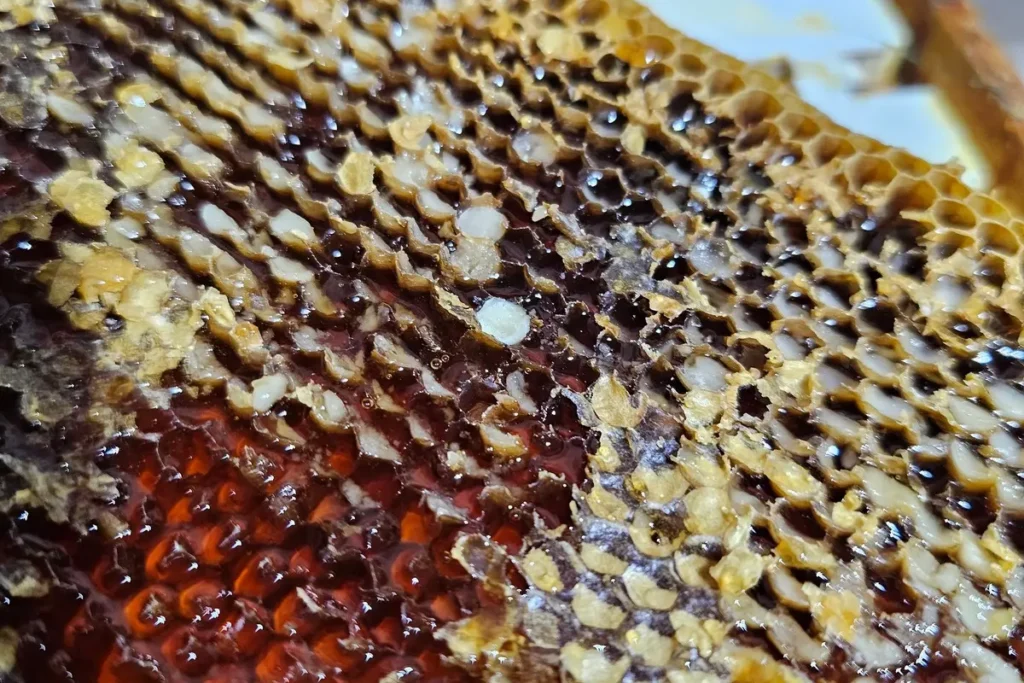
The first clue: honey already crystallizing inside the comb.
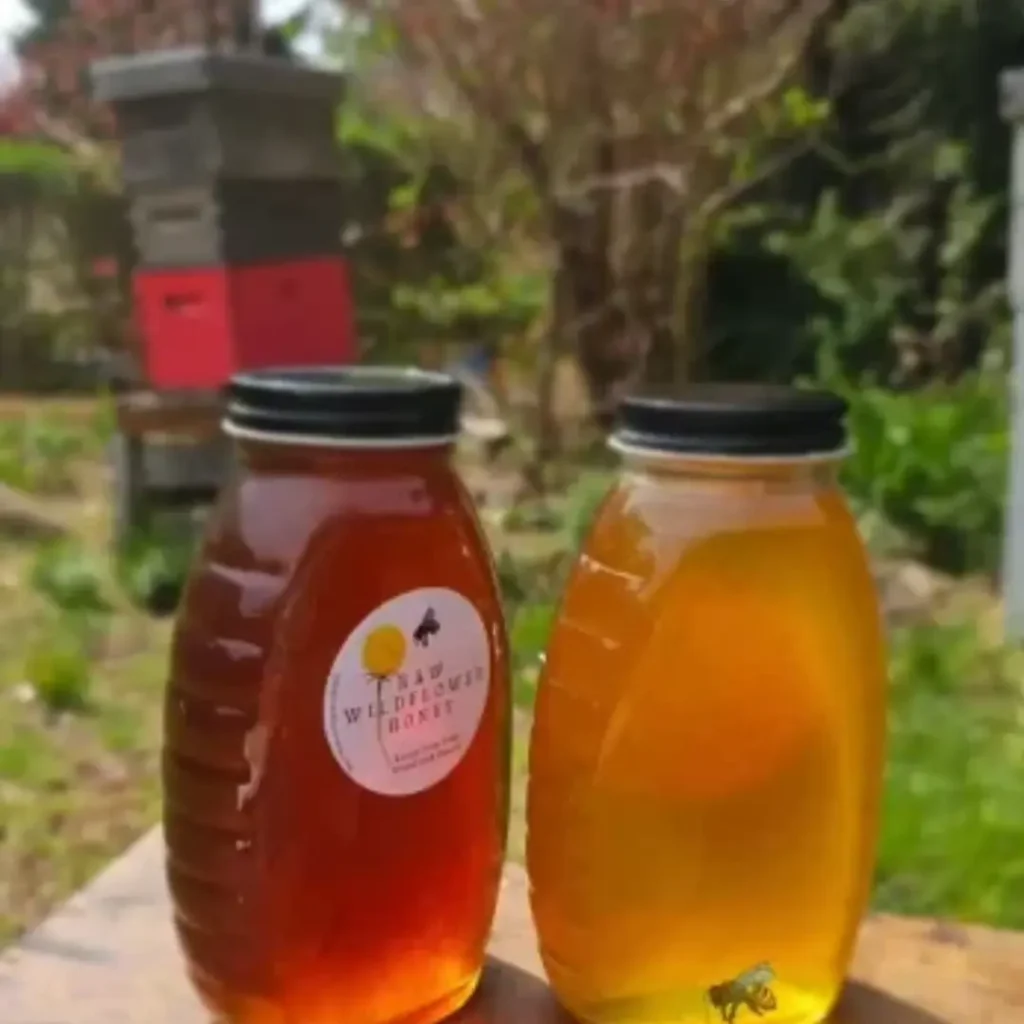
I had also noticed that the beeswax cappings didn’t come off so cleanly. They were really sticking to the honey. The honey was a gorgeous color, though—a deep amber. Reddish brown like the autumn leaves.
And delicious. I admit it. I got distracted by the buttery, caramel taste.
I did notice that the honey took more time to come out of the frames. That the filtering process felt excruciatingly slow. And that, at the end of the batch, the honey did appear a little cloudy.
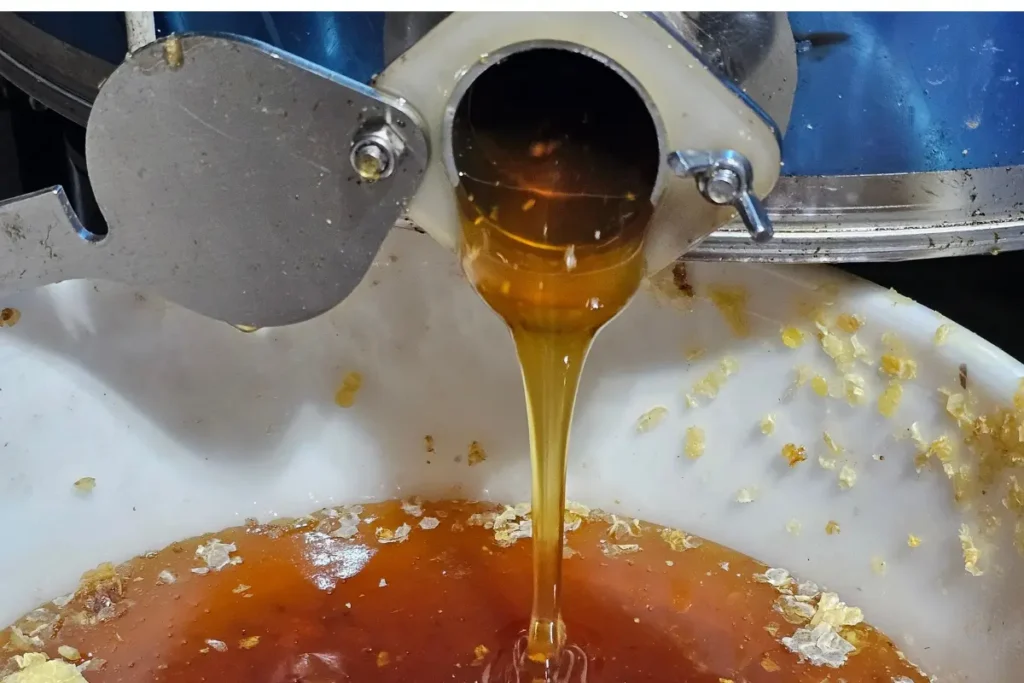
But the taste. It was distracting.
Until, two weeks later, I went to label the jars and noticed my freshly extracted batch of honey was semisolid.
I had to backtrack. What were those little honeybees doing behind my back?
Following the Yellow Brick Road
Playing detective to see what the bees were foraging on in September made things a little clearer. I mean, I already knew that late-summer forage on Long Island is not particularly abundant. The bees typically visit asters, knotweed, goldenrod, autumn sedum, and a miscellaneous collection of “whatever they can find on the way.”
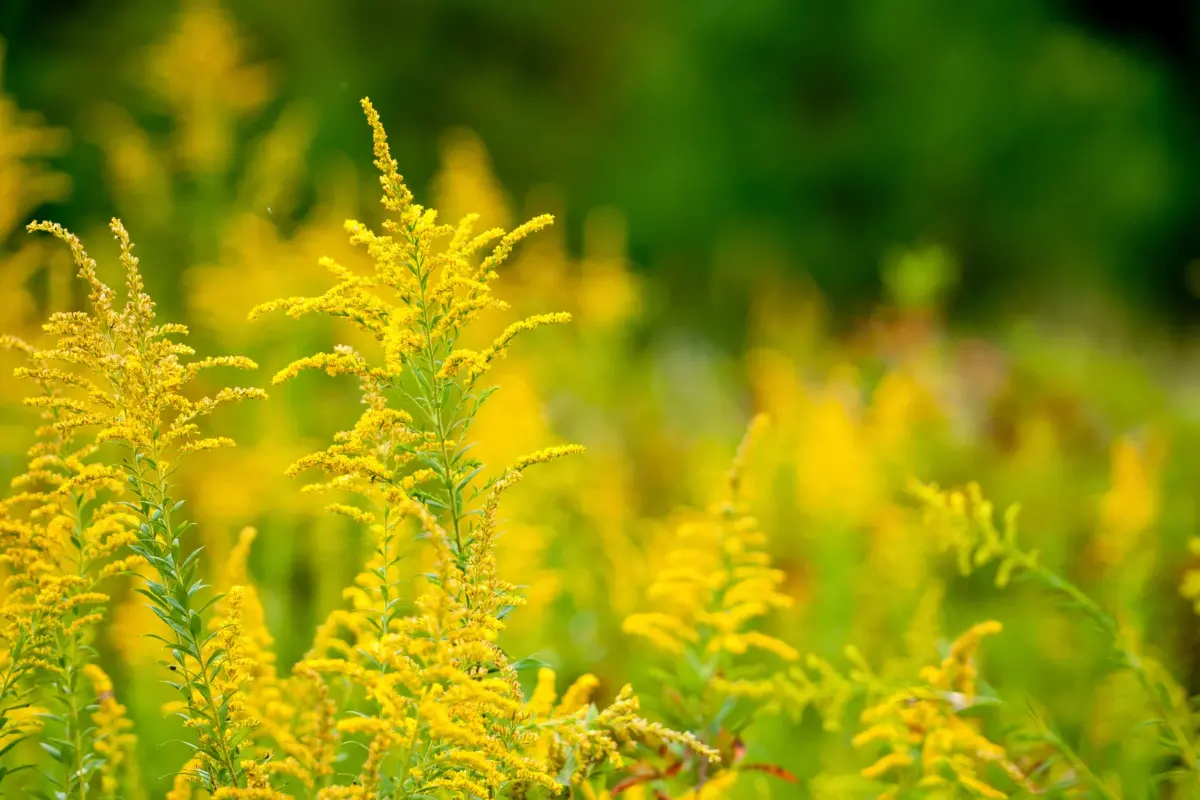
My very own backyard had a ton of cosmos, native asters, echinacea, Russian sage, and anemones in bloom. And mixed into the asters was a plant gifted by a friend—native Solidago, or goldenrod.
But it didn’t really hit me until I was out of my own backyard. The Northern State Parkway was lined with aptly named goldenrod, dripping with golden-yellow flowers all along the median.
More clues turned up when I took a walk around the Roslyn apiary where I harvested this honey. Two big open areas were being restored to native meadow, dotted with golden splotches of color.
The yellow-brick road of goldenrod appeared to be everywhere now that I was thinking about it.
An Old Suspect in a New Light
And the more I started focusing, the more I started remembering.
I had learned about goldenrod when I first started making soap. I had seen an interesting recipe suggesting that an olive oil infusion of goldenrod could become the basis for a naturally cheerful yellow soap, so of course I had to try it.
While foraging for a local source of the flowers, I learned about its undeserved reputation as a culprit behind fall allergies, often getting the blame meant for ragweed. But apart from its yellowness and its reputation, I was astounded at the number of insects crawling all over the long, narrow flower heads. From ants to bumblebees to yellow jackets to honeybees…plus many other tiny things I couldn’t name. This plant was clearly a pillar of the natural world.
At the time, I gave up on goldenrod. One, because the soap wasn’t as yellow as I would have hoped. Two, because there wasn’t very much wild goldenrod around to forage. And three…whatever forage I found was covered in life. I couldn’t cut it down to make soap!
But those memories triggered a connection—my neurons were firing. Time to ask some questions.
The Plot Thickens
It was time to do some reading. I had already investigated another honey that wouldn’t flow—English ivy—but this batch was presenting its own puzzle.
Goldenrod honey is known for setting quickly. The explanation comes down to the natural sugars in honey: glucose forms crystals more readily than fructose, so honeys with a higher proportion of glucose tend to crystallize sooner.
Suddenly, the clues were adding up.
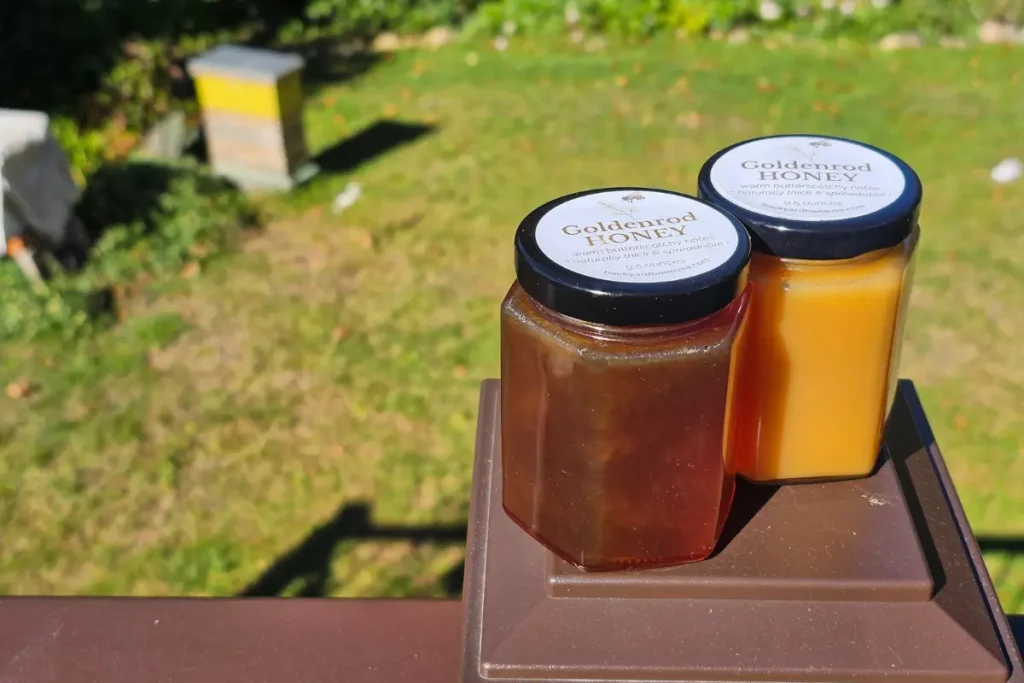
Was this a confirmed, single-flower goldenrod honey? No. My bees visit whatever flowers they choose, and this was still a wildflower harvest. But the season, the landscape around the Roslyn hives, and the honey itself all pointed toward goldenrod playing a leading role.
The relief was enormous. What I had treated as a mistake in the honey room was beginning to look like a characteristic of the harvest.
The Unexpected Twist at the Farmers Market
The seasonal surprises don’t seem to be ending.
It was the last market of the season at Eisenhower Park. I brought a case of the butterscotch-amber honey with me—in liquid form. I also brought a single jar from the original batch that had already set, as a visual aid.
I’ve talked with customers all season about the color of honey, but not so much about the consistency. It’s natural for honey to crystallize at some point, but not everyone wants to talk about that.
But the customers surprised me. I can’t tell you how many people asked to buy the jar of creamy, set goldenrod honey. I was just too surprised to keep count!
The jar I had brought to explain a potential concern was the jar everyone wanted.
Case Closed? Not Quite.
After 15 years of beekeeping, I’m still learning to read the clues the bees leave behind.
The extracting room is closing for the season, and I’m ready for a little rest. But next time, I’ll bring some of that set honey to sell.
Every jar has a story. This one kept me guessing.
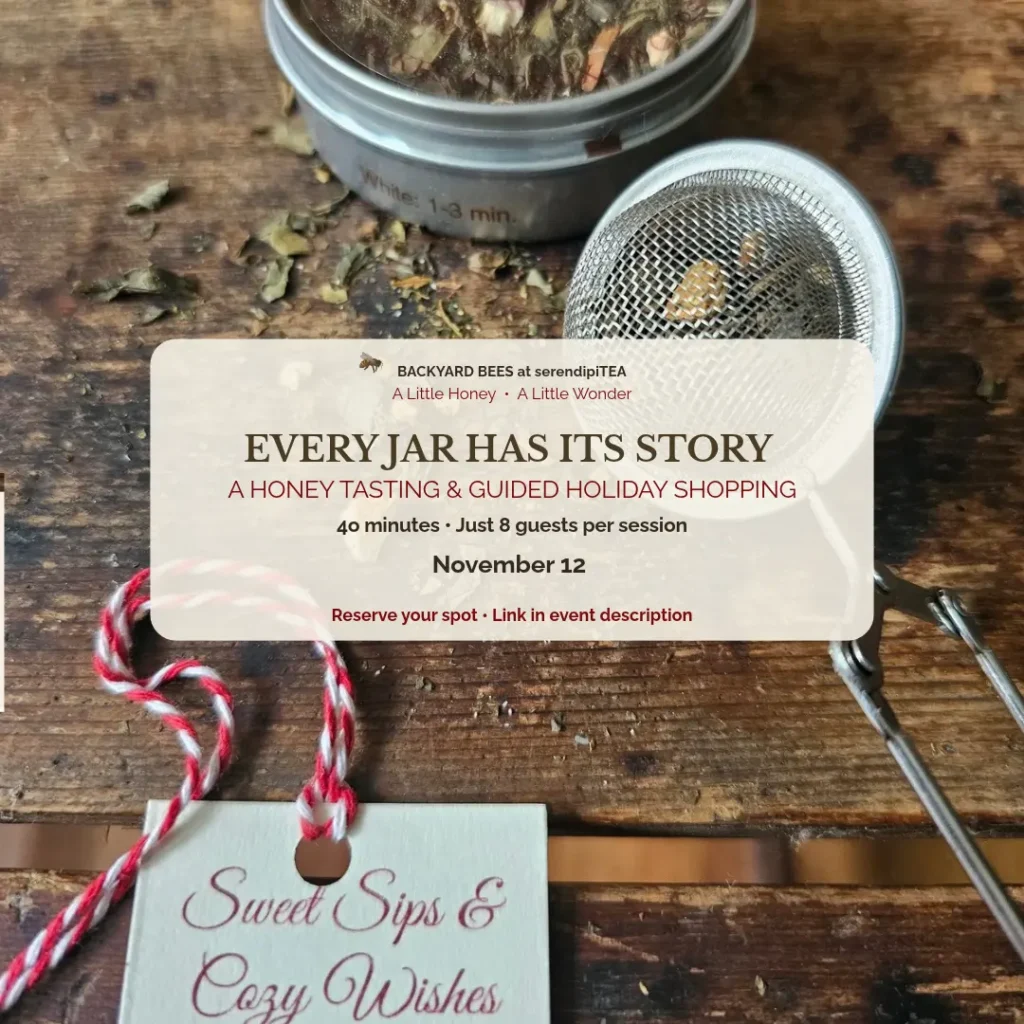
If you’d like to explore a few more with me, join us at SerendipiTEA for Every Jar Has a Story, our first Honey and Wonder gathering.