Recently I finished reading A Honeybee Heart Has Five Openings: A Year of Keeping Bees by Helen Jukes. One chapter stayed with me long after I finished reading: The Hive.
After fifteen years of keeping bees, this chapter brought me back to the most basic part of beekeeping…the hive. I’d forgotten the experience of making certain decisions. Deciding where the bees would live. Where they would be safe. Where they could thrive.
But Helen Jukes wrote so thoughtfully about that decision-making process that it all came back to me.
Unlike dogs that can be kept on a leash, or fish that live in a tank, honey bees aren’t exactly pets. Even when they are living in a hive provided by a beekeeper, they remain remarkably free. Every day they leave. Every day they return. And if they decide conditions are no longer suitable, they can leave for good.
Which raises an interesting question:
What makes a colony of honey bees decide that a place is home?
The Hive Is the Easy Part
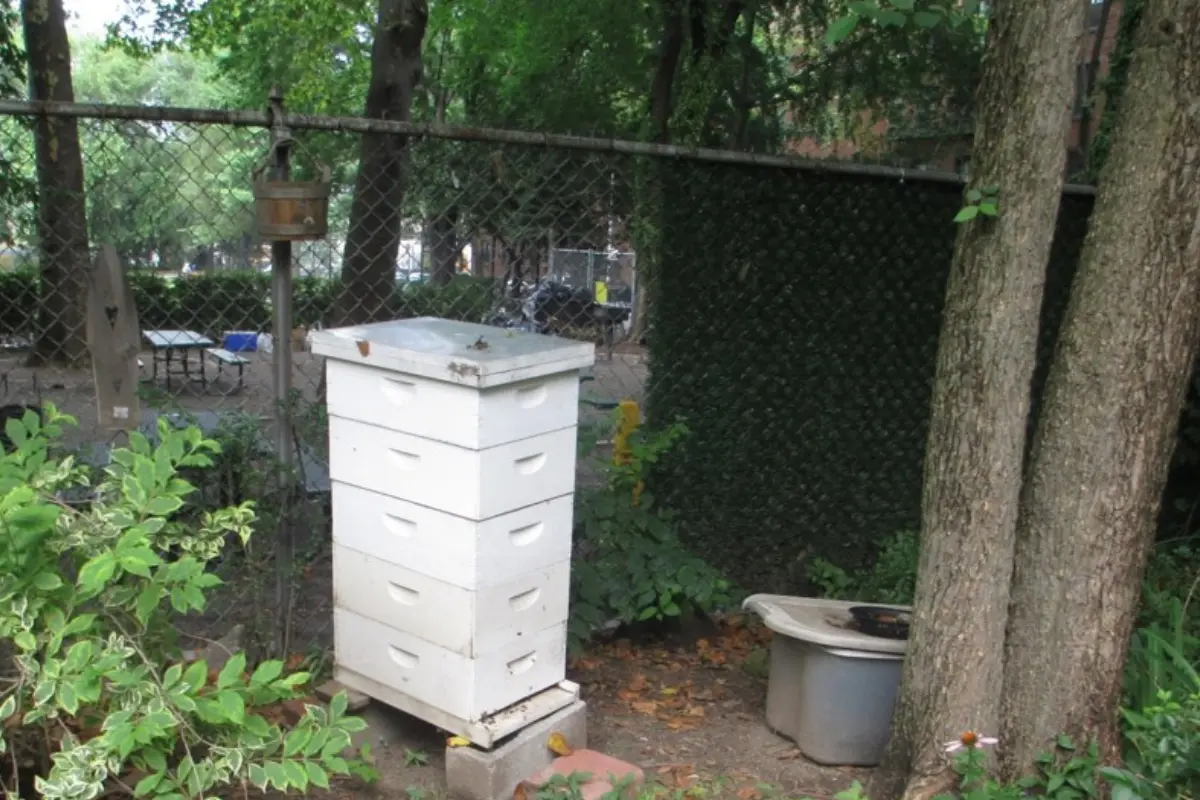
After a year of working alongside an experienced beekeeper, Helen Jukes made the decision to start a hive of her own. She carefully considered the hive design, the roof, the foundation, and the location. She purchased a custom-made hive, painted it tangerine orange, and coated it with beeswax to make an inviting home for the bees.
The hive itself, however, is only part of the equation.
Bees need sunlight, forage, water, protection from wind, and enough space to grow. Those are the practical things taught in every introductory beekeeping course.
But some things aren’t as easy to teach.
When those first 10,000 bees arrived in my backyard, nothing prepared me for the realization that I was suddenly responsible for a colony that remained fundamentally wild. Providing a structure for them to live in – a hive – wasn’t enough.
Responsible Beekeeping
From the moment I installed that first colony, I felt responsible for them.
At first, I focused on the hive itself. Was there enough room? Enough food? Was the queen healthy?
Then my attention expanded to the backyard. I became obsessed with the plants the bees visited and the seasons that determined whether nectar would be abundant or scarce.
Eventually, I began to see the larger landscape through the eyes of a honey bee.
I noticed drought conditions.
I worried about pesticides.
I thought about water quality.
Over time, that sense of responsibility grew.
Maybe that’s one of the unexpected things that happens when you keep bees. You start with a hive, but eventually you realize the hive extends far beyond the wooden box.
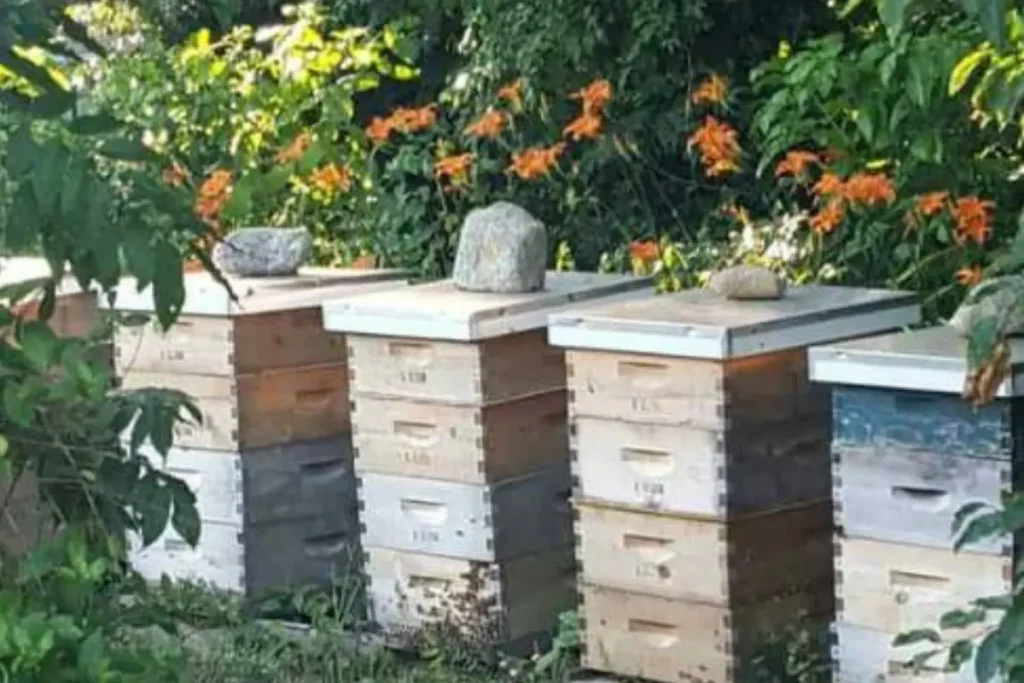
The bees quietly pull your attention outward—to the backyard, the neighborhood, and the larger landscape that supports them.
Every day they travel far beyond my property line. They visit flowers I didn’t plant, drink from water sources I didn’t provide, and encounter challenges I may never see.
But they always come home.
Beekeeping With Purpose
Creating a backyard home environment worth staying in doesn’t mean leaving bees entirely alone.
Years ago, I attended a beekeeping conference where one speaker shared an analogy that has stayed with me ever since.
“Imagine you’re asleep in your bedroom when someone suddenly tears the roof off your house just to see what you’re doing.”
Most people laughed.
I didn’t.
Because from that day forward, I’ve tried to approach every hive inspection with purpose.
If I’m going to open a hive, I want a reason.
Am I checking food stores? Looking for signs of disease? Evaluating a queen? Monitoring for varroa mites?
Or am I opening the hive simply because I’m curious?
Every inspection has a cost. The temperature inside the hive changes. Bees are disrupted. Comb can be damaged. A colony’s carefully regulated environment is interrupted.
But doing nothing also has consequences.
Without monitoring for pests and diseases, a colony can weaken or collapse. Without intervention, problems that might have been manageable can become fatal.
So yes, responsible beekeeping involves an invasion of privacy. The goal is to make that interruption as brief and purposeful as possible.
Beekeeping is more complicated than simply keeping bees in a box.
The Stewardship Question
After fifteen years, the complexities of working with bees have become part of me. When I evaluate a potential apiary site, I think about more than forage and hive placement. I consider the landscape, the people, and whether the location can support not only the bees, but also the relationship that comes with keeping them there.
Because stewardship is not the same as ownership.
Honey production alone isn’t enough. If we choose a home for the bees, we also accept responsibility for their care.
The truth is that the bees remain fundamentally wild. My responsibility is not to control them. My responsibility is to observe them, learn from them, and help when help is needed.
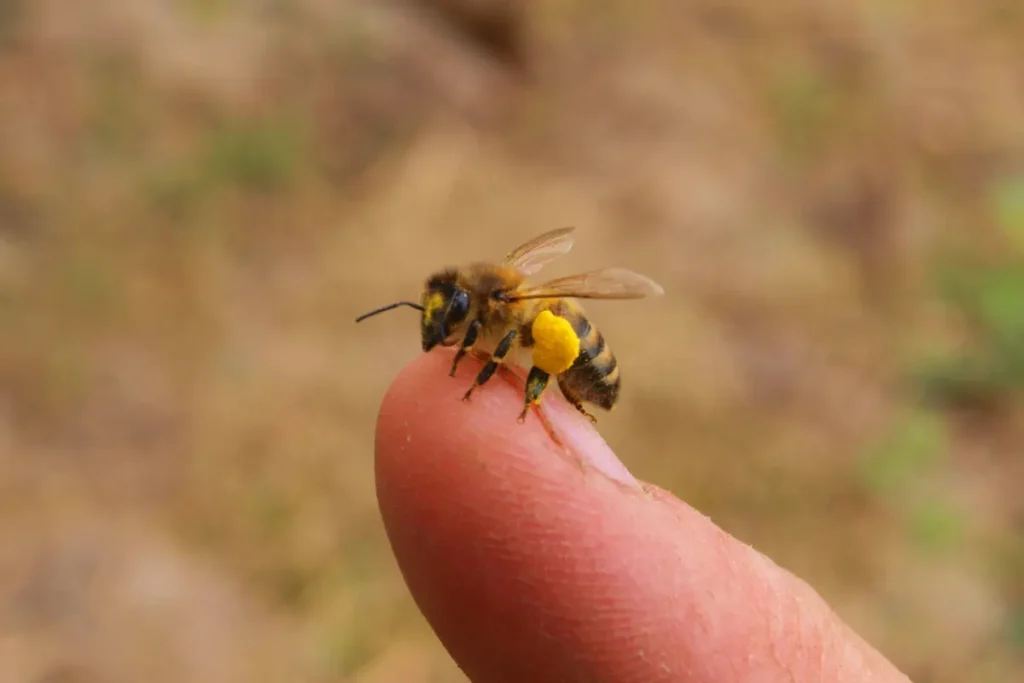
Do I let a swarm go because swarming is natural?
Do I treat for mites because mites are not natural?
Do I feed during a drought?
Do I replace a failing queen?
Different beekeepers answer these questions differently. The longer I keep bees, the more I appreciate that there are very few absolute answers, but the responsibile beekeepers consider their options.
That same awareness eventually found its way into my business as well. There are options for plastic-free packaging. Options for thoughtfully chosen ingredients. Options to create products that support a healthier environment for both bees and people.
The products I make may not save the bees. I am realistic about that.
But they can reflect the same values.
If I can’t always improve the world around the hive, I can at least try not to make it worse.
Home Sweet Hive
When Helen Jukes asked what makes bees want to stay, she was writing about a hive.
I think she was also writing about responsibility.
A hive becomes a home not because it is painted the perfect color or placed in the perfect location.
A hive becomes a home when it provides the conditions a colony needs to flourish.
And once we offer that home, we accept a responsibility to care for it thoughtfully.
After fifteen years, I still don’t have all the answers.
But I know this much:
The goal isn’t to control the bees.
The goal is to be worthy of the trust they place in the home we’ve offered them.
And perhaps that’s the real difference between being a beekeeper and being a keeper of the bees.
Perhaps a sense of hive is really a sense of responsibility.