Bee-hind The Scenes
The Mystery of the Honey That Wouldn’t Flow
What could make honey so thick it wouldn’t flow? For years, I had no idea. Then I began connecting a few curious clues: fall flowers, buzzing bees, and a plant I had overlooked for years. The mystery led me straight to English ivy honey.
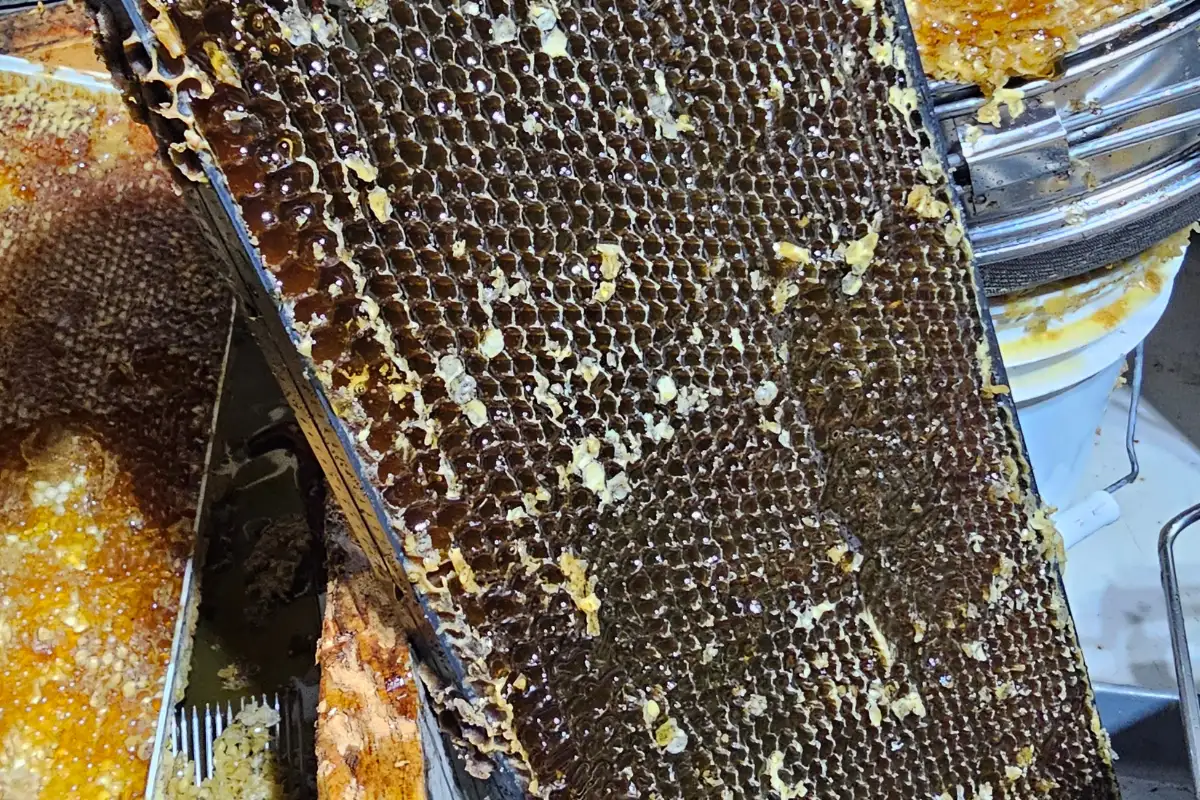
The honey inside some of my frames didn’t even drip when I removed the beeswax cappings. It just sat there.
It was dark. Incredibly thick. Almost… fudgy. In places, it looked as though it had crystallized before I had even taken the caps off. I thought I had done something wrong.
I didn’t know it yet, but I was looking at the final clue in a mystery that had started years earlier.
What was making this honey so different?
The answer was hiding in plain sight—actually, above my head.
The First Clue: A Tree Full of Bees
I was managing the apiary at the Queens County Farm Museum, and in early spring there was one tree that looked practically dead. A thick vine had taken over the trunk and branches, and I remember thinking, This tree has to go.
Then fall arrived, and suddenly the tree was alive with bees.
I think I heard them first. I looked up and saw bees covering thousands of tiny, pale-green flowers that had appeared all over the vine. I had never seen anything like it.
Once again, technology saved me. I pulled out my phone and let the PlantNet app identify the flowers for me.
English ivy.
Hmm. How did I not know that?
Because this did not look like any English ivy I knew.
English Ivy: The Shape-Shifter
You know what English ivy looks like, right? It is a classic, instantly recognizable ground cover. It creeps along the ground, climbs walls, and covers trees. Think of Ivy League universities—old, distinguished brick and stone buildings completely blanketed in deep green vines.
But that crawling vine is only one version of the plant. When English ivy matures, it completely changes shape. The leaves alter their form, and the stems become thick, woody, and upright.
Eventually, the plant does something most people never see:
It flowers.
And that flowering phase is incredibly easy to miss. The blossoms are tiny, pale green, and perfectly camouflaged among the leaves. They usually grow high up, too—exactly where you might not think to look.
You have to look up.
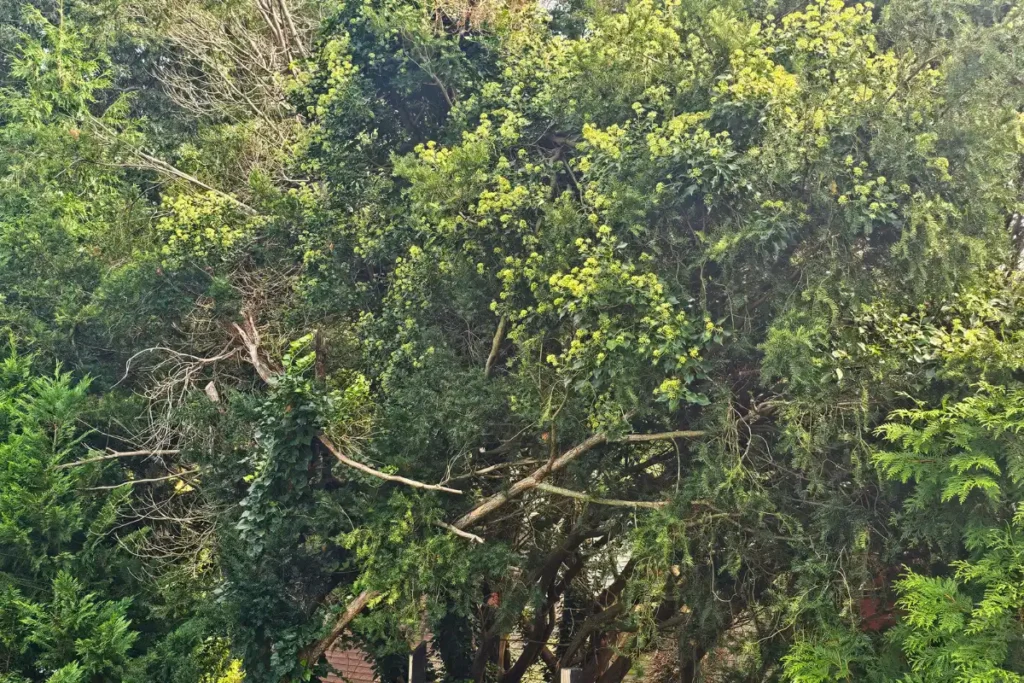
And when you do, you may discover that the ivy isn’t just sitting there.
It’s buzzing.
Learning to Be Attentive
You may forget to look up. I do. Especially in the autumn, when most of the action seems to be happening on the ground. Even the leaves are floating down, down, down to the earth.
But if you pay attention, you will start to notice English ivy in bloom. Use your senses. The flowers have a scent—not an overwhelming one, but just enough to notice when you’re standing near a mature plant in bloom.
And listen. Listen for the bees.
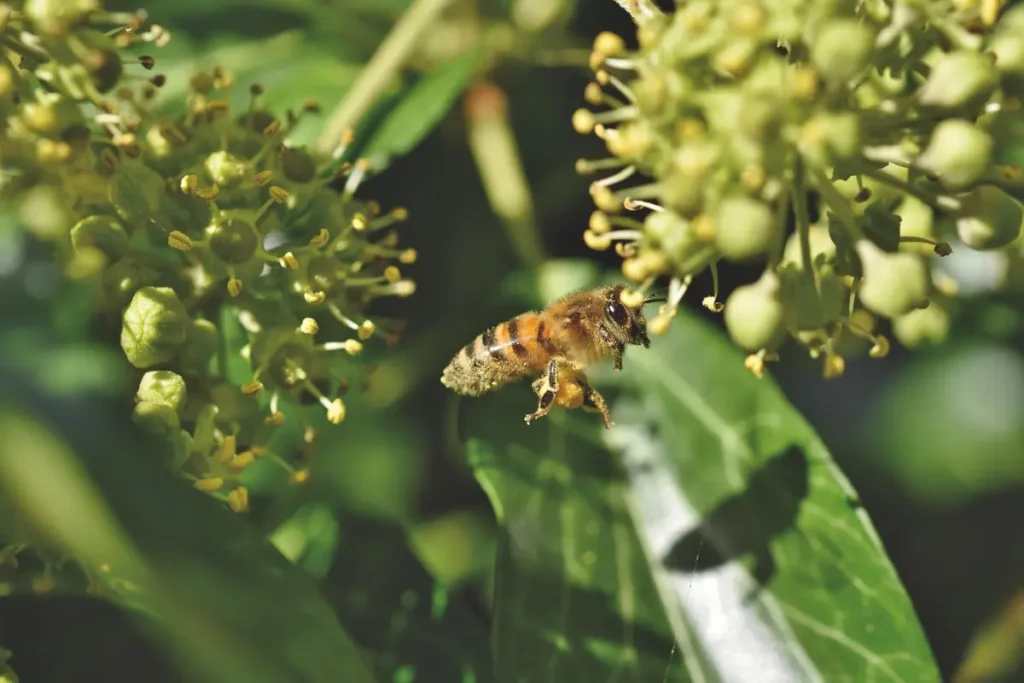
You don’t even have to see them. You’ll probably hear them first.
The neighbors on either side of me have mature English ivy, and I’ve started to notice that distinctive buzz of foraging bees above me while I’m gardening. It’s definitely a happy sound.
At the time, though, I didn’t realize I was listening to a clue. I knew the bees loved the flowers. I just didn’t understand what the ivy had to do with my honey.
A Dead End in the Apiary
Then last year, I brought home two supers that were SO heavy I thought I was going to break my back. I am not exaggerating.
This was another clue.
I thought I had a bumper crop of liquid gold. But when I started the work of harvesting the honey from the comb, things got very sticky.
And strange. Very strange.
I uncapped the frames, expecting the honey to flow.
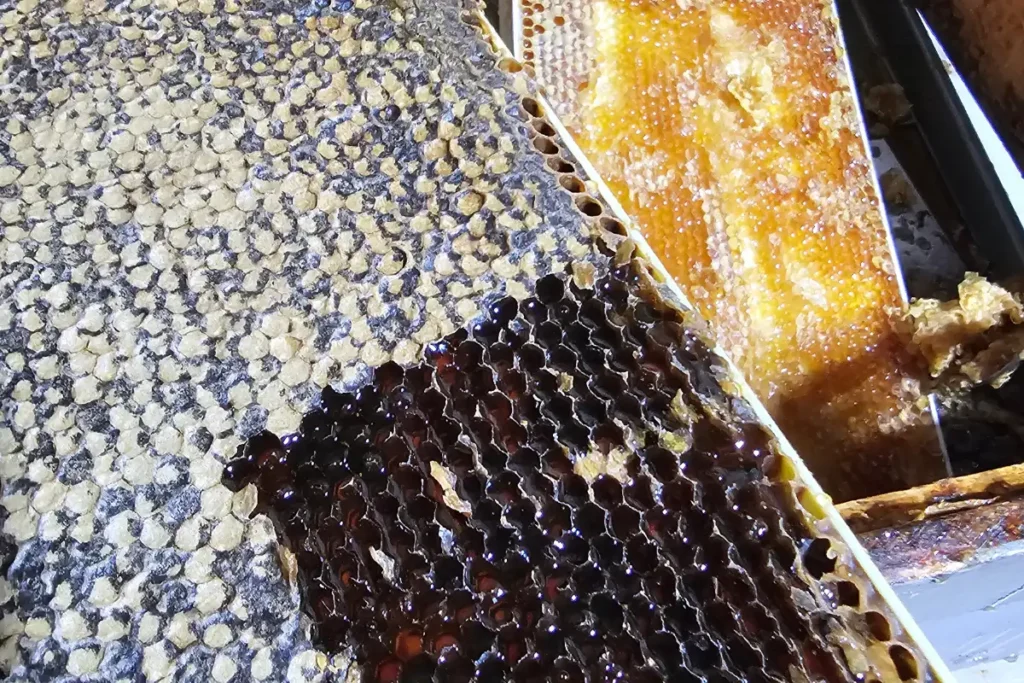
It didn’t.
The honey just sat there. It was dark, incredibly thick, and almost fudgy. In some places, it had crystallized right inside the comb before I could even spin it.
I thought maybe the bees had found some strange, artificial source of sugar. I thought I had done something wrong.
I couldn’t figure it out, and eventually, I gave up. The honey was simply too thick to extract without making an enormous mess.
Frustrated and defeated, I gave it back to the bees.
Yes, I almost broke my back again carrying those heavy supers right back to the hive.
Dead end. Or so I thought.
Solving the Mystery of English Ivy Honey
That honey that wouldn’t flow kept bothering me, so I started reading.
And that’s when I discovered that British beekeepers already knew what I was just beginning to understand: English ivy honey can crystallize very quickly—sometimes while it is still inside the comb.
Suddenly, the strange honey in my frames didn’t seem quite so strange.
It also explained something else. If my memory serves me correctly, those two super-heavy supers had come from a hive that appeared to have starved over the winter.
And then I read something that really made me stop. Even the bees can have difficulty accessing crystallized ivy honey in cold weather. They collect the nectar and store it—sometimes in abundance—but once the honey crystallizes and the weather turns cold, it can become harder for them to use.
That was the connection I had been missing.
The flowers. The bees. The timing. The heavy supers. The dark honey. The honey that wouldn’t flow.
English ivy honey.
The mystery was solved.
Or at least, part one was.
Solving the Mystery: Part Two
Knowing what the honey was didn’t mean I could actually get it into a jar. That was my next problem.
How could I prevent another dead end?
This year, I’ve been watching the flowers and the bees more closely than in years past. We’ve harvested early spring honey from Black Locust trees, spring honey with the essence of Tulip trees and Linden trees.
Then came late summer.
I noticed the ivy. I watched the bees. I watched the weather. And when the ivy started blooming, I started paying very close attention to what was happening inside the hives.
This time, I knew what I was looking for.
The weather helped, too. We’ve had a very warm summer, and late August stayed warm enough to make working with this unusually thick honey possible.
So when it was time to harvest, I didn’t expect the honey to behave like ordinary honey. I didn’t waste any time. While the frames were still warm from the hive, I removed the wax cappings.
I got a drop.
I kept going.
Into the extractor they went. The honey was coming out, but I couldn’t rush things. I let the extractor work overnight, then let the honey filter for another eight hours.
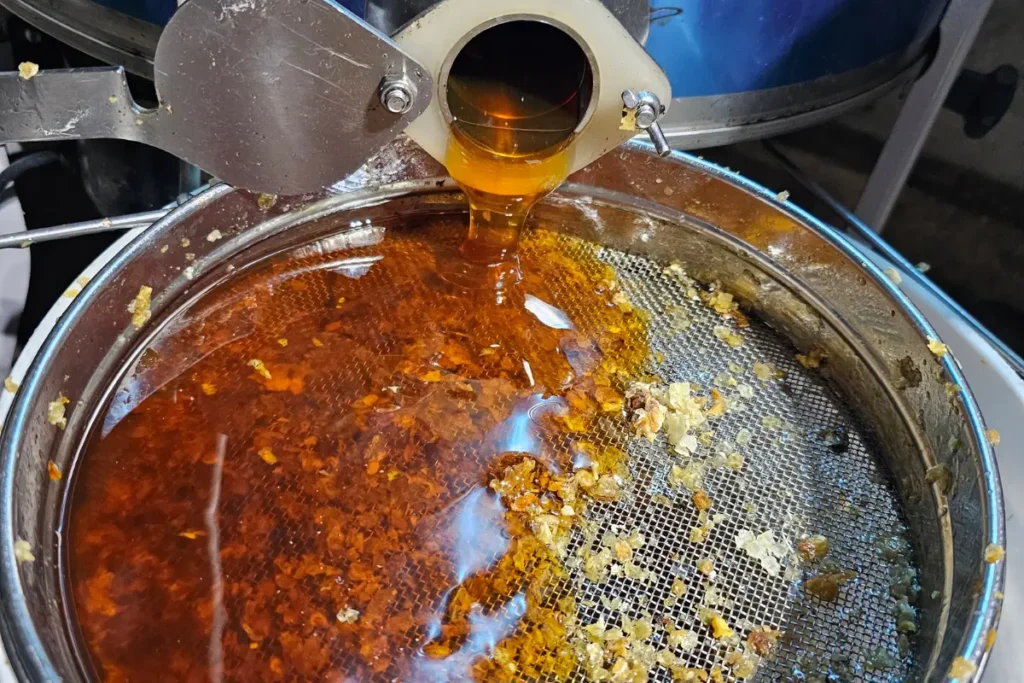
Slowly.
Slowly.
Finally, it made its way into the jars.
Case Closed
This isn’t pure English ivy honey. I’m calling it Fall Wildflower Honey, because the bees were also visiting other fall favorites—goldenrod, asters, and probably some Joe-Pye weed, too.
But the English ivy influence is there.
You can see the difference in the color. You can feel it in the texture. And you can taste it.
This honey has an earthy, slightly bittersweet flavor that is different from my other fall honeys and distinctly different from my spring honey.
And I love that I know why.
For years, I thought I was looking at separate things: a strange vine, bees buzzing high above me, an unusually heavy super, honey that wouldn’t flow.
They weren’t separate clues. They were all part of the same story.
Sometimes solving a mystery is simply a matter of knowing where to look.
In this case, I had to look up.
Bee-hind the Scenes
This particular batch of Fall Wildflower Honey came from my own backyard, with a strong English ivy influence and all the quirks that came with it.
Want to taste the honey behind the mystery? → Fall Wildflower Honey (Glen Head Local Honey)
More Bee-hind the Scenes
Salt Water Cures Everything (Or So My Mother Said) — The family story behind one of Backyard Bees’ best-selling soaps.
Lemon Bomb Is a Terrible Name — The story behind a lip balm that grew into something bigger.