The Summer Run Series Through the Eyes of a Beekeeper
8 Runs. 8 State Parks. One Beekeeper.
The Magic of Scent
The summer run series at Heckscher State Park became a fragrant reminder of how honey bees use scent to find flowers, navigate their world, and remember where food can be found.
I was multitasking. I arrived early to the first run of the NY State Parks Summer Run Series at Hecksher State Park to explore bee life on the South Shore of Long Island, to complete a 5-mile race, and to have fun.
Things weren’t going as planned.
The first mile split time of the 5 mile run series at Hecksher State Park was depressingly slow.
I hadn’t seen a bee.
I hadn’t seen a flower. (other than clover. I did see clover).
I really wasn’t having fun.
My brain was sinking into very un-beekeeper like thoughts about this terrible idea to share the summer run series through my eyes…
But then, right after the one-mile mark, the magic happened. I remembered something amazing about how honey bees use scent.
Because I smelled something. Something amazing.
I looked left.
I looked right.
And there it was.
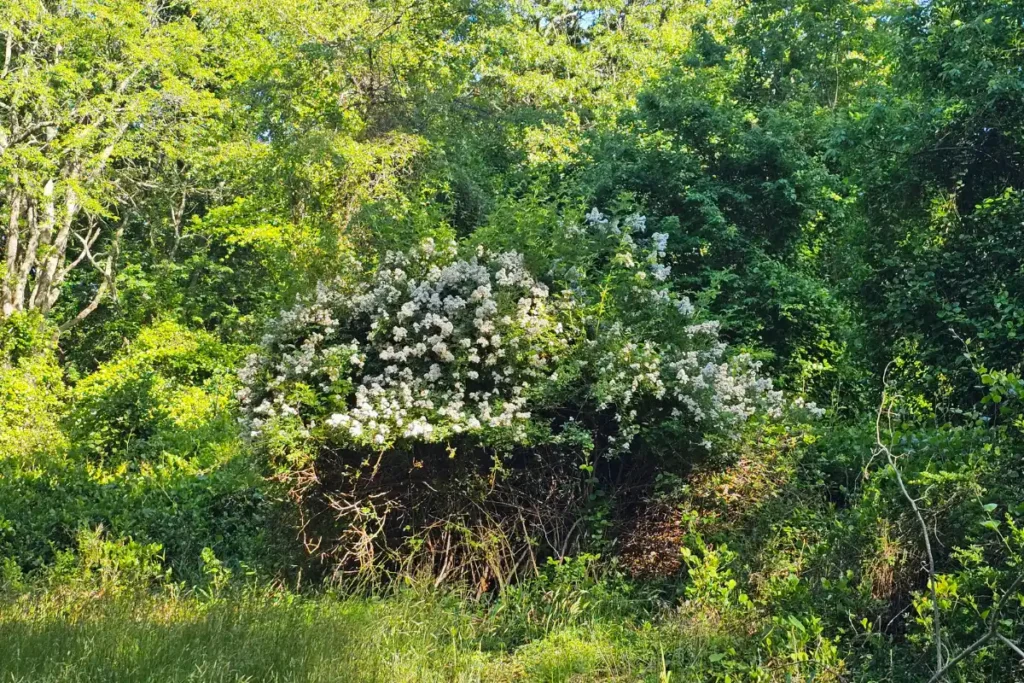
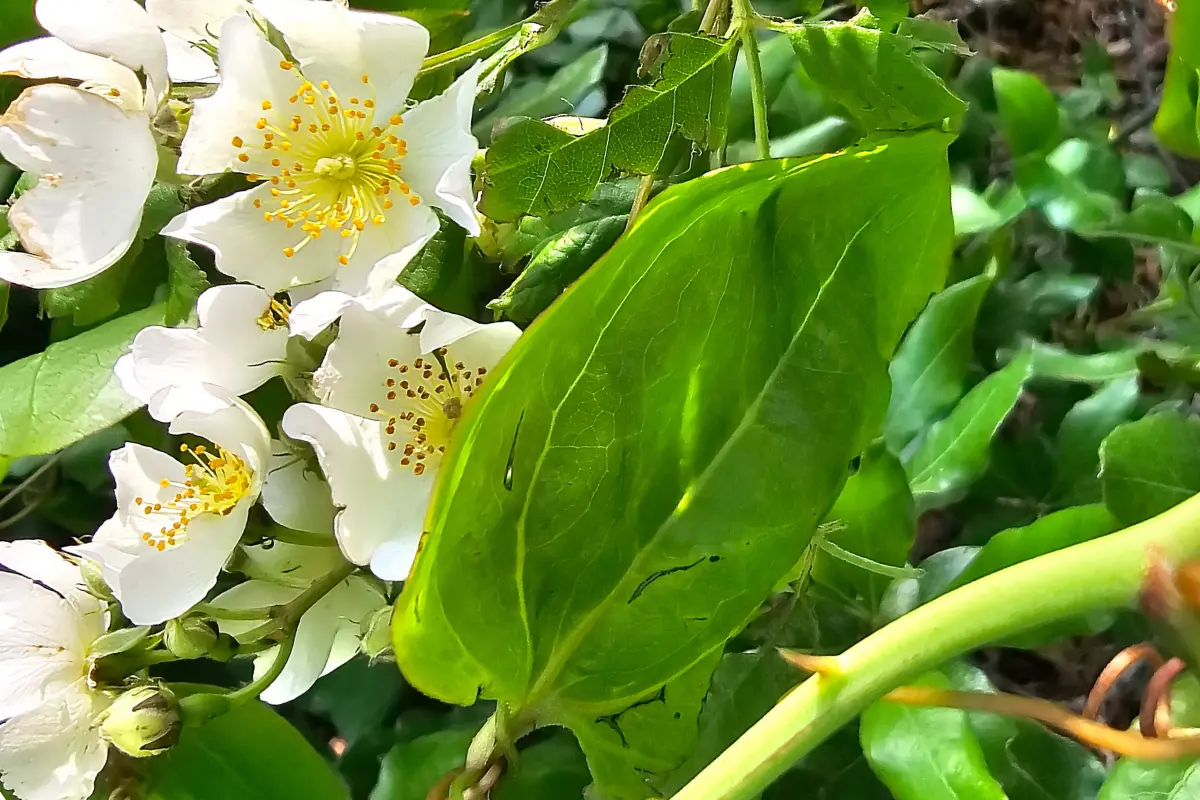
A hedge of Rosa multiflora covered in small white flowers with bright yellow centers.
It wasn’t huge, but it was the first significant bloom I’d seen all evening. More importantly, the scent was impossible to ignore.
My body relaxed, my lungs opened and abracadabra! The Summer Runs Series Through The Eyes of a Beekeeper could begin.
How Honey Bees Use Scent
Honey bees are experts at scent.
Inside the hive, scent is part of how bees understand their world.
The queen’s pheromones tell the colony she is present. Alarm pheromones warn the hive when something is wrong. Even when beekeepers use smoke, part of what we are doing is interrupting that scent-based communication so the bees are less focused on us.
Outside the hive, scent matters too.
Foraging bees don’t simply visit flowers at random. They take reports from the scout bees. Scout bees learn where the good nectar sources are, when those flowers are most rewarding, and how to communicate that information to the rest of the hive.
A scout bee may return with news of clover, linden, or some newly opened patch of flowers. Then the foragers do the heavy lifting. Because you know, there’s more than one hive of bees competing for that data.
So the foragers need to be efficient. And they are.
To help the bees behind them, honey bees can leave behind a distinctive scent mark on a flower that they visit. The scent is like a “sold out” sign, indicating looking for nectar in that particular flower would be a waste of time; the nectar has already been collected. When the flower replenishes its nectar, the scent signal fades.
That little fact amazes me.
In essence, the bees are multitaskers and time savers too.
More Than Flowers: Remembering a Landscape
Maybe it was curiosity. Or maybe years of watching honey bees have changed the way I look at plants.
But, before the race, I took a photo of a very unimpressive plant I discovered by the shore. And when I got home, I was amazed at what I learned and how it tied into my running ruminations on how honey bees use scent.
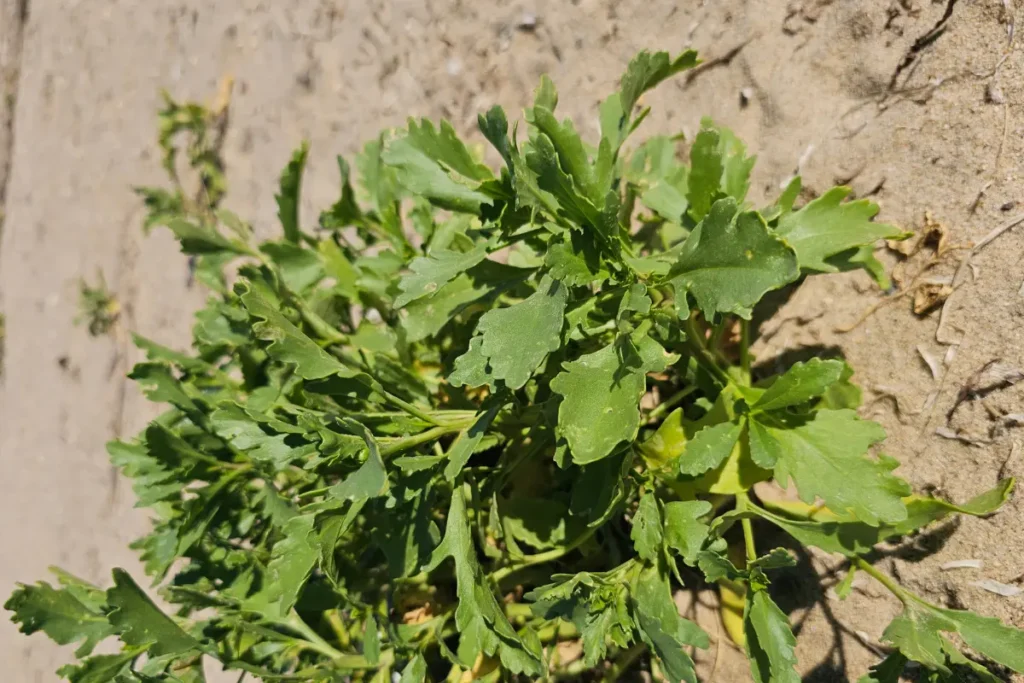
At home, I used my plant identification app to learn all about an amazing plant – the American sea-rocket.
Although there were no flowers during my visit, American Sea-Rocket blooms from midsummer into early fall and serves as an important nectar source for bees and butterflies along the coast. Suddenly, what looked like a weed became something worth noticing. My instincts were right.
Honey bees don’t simply react to what’s blooming today. They learn landscapes. They remember where food was found in the past and revisit those locations when conditions are right. A patch of flowers that was productive last summer may be worth checking again this summer.
Looking back at that photograph, I realized I had done something similar. The Sea-Rocket wasn’t ready yet, but I knew it had a story. I just had to wait until I got home to discover it.
Following the Roses
Back on the course, the multiflora roses kept reappearing.
Another patch appeared around Mile 3.
Then another.
By the time I reached Mile 4, there was a long stretch of blooming roses lining the road. The fragrance seemed even stronger in the evening air.
As a beekeeper who was getting tired, the scent lifted my spirits and helped me keep moving toward the finish line.
I didn’t see any bees working those roses. It was late and I hoped they would be at their hives, resting.
But I imagined them there anyway.
Cheering me on. “Go Queen Bee, you can do it!”
So How Bee-Friendly Is Heckscher State Park?
For me, the first run of the NYS Parks Summer Run Series seemed like the perfect opportunity to explore a different landscape. As a beekeeper from Long Island’s North Shore, I was curious what I might find on the South Shore. Different plants. Different ecology. Different food sources for pollinators.
Heckscher State Park is huge. With more than 1,000 acres along the Great South Bay, it contains a mix of unique habitats including shoreline, salt marshes, woodlands, and grasslands. After spending much of the spring running the tighter trails of Welwyn Preserve, the expansive views were breathtaking.
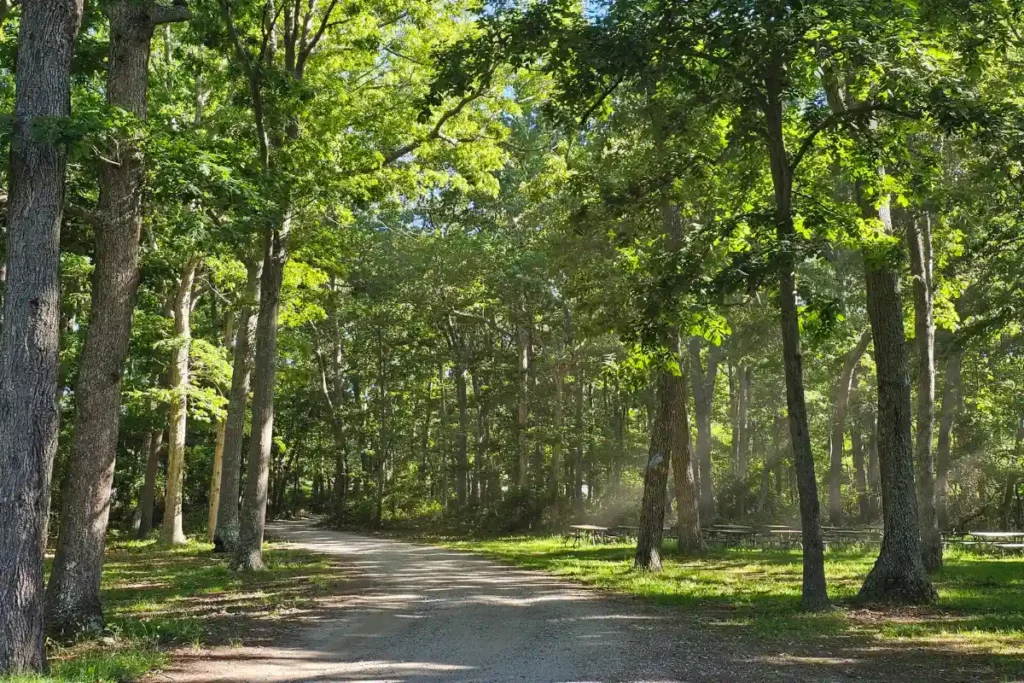
I took a little time to explore the park before the race start, knowing I couldn’t possibly see it all in a 5-mile run. It was one of those perfect June evenings—blue sky, sunshine sparkling on the water, and a steady breeze coming off the bay. I thought maybe I could snap a picture of a bee or two near the water.
I didn’t get very far.
A protective daddy goose turned around, hissed at me, and made it abundantly clear that I was not welcome. Enough said.
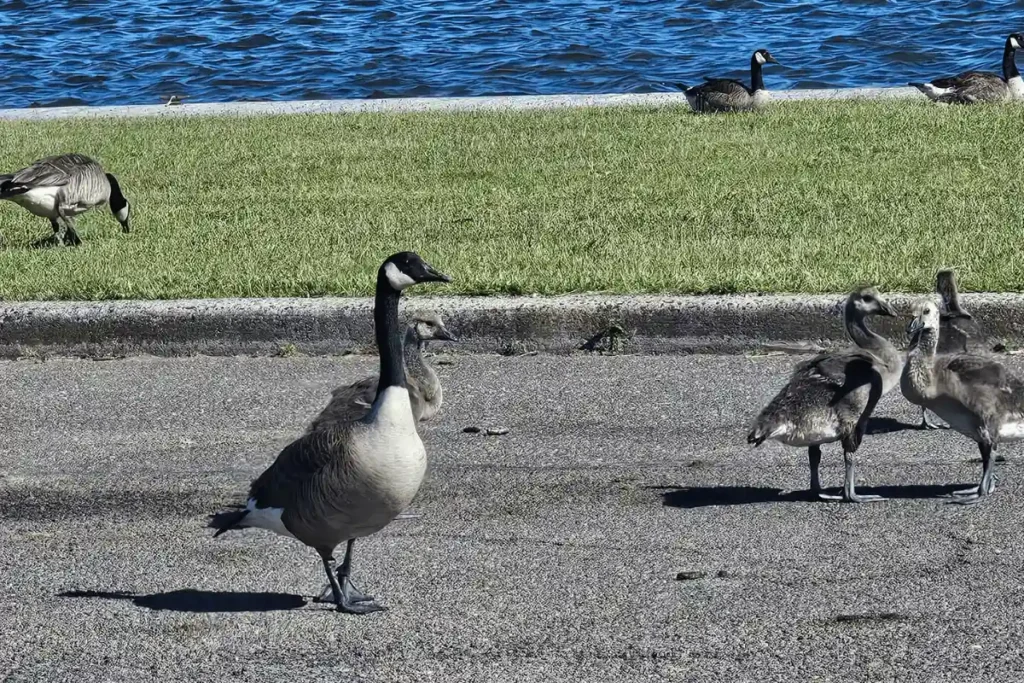
I left the shoreline and wandered toward the race start area.
I asked a park ranger if there were any pollinator projects, educational gardens, or habitat restoration areas that might interest a beekeeper. There weren’t.
I did notice a few “No Mow, Let It Grow” signs, but nothing jumped out as a major pollinator initiative. And I did see clover patches lining the roadway, even if I only saw one bee on one patch.
So what can I conclude about how bee-friendly this state park is?
First, I think the answer depends on when you visit.
I didn’t find a pollinator garden.
I didn’t find an obvious bee paradise.
But I did find a honey bee on clover. I did see no-mow areas waiting to become more interesting, beach plants that won’t bloom until later in summer, and miles of fragrant multiflora rose carrying me through the course.
Timing is everything.
And just like the surprising American Sea Rocket I found in the sand, it may not reveal itself all at once.
But it reminded me to keep visiting places, keep using my senses, and keep looking for the quiet clues that tell us how bees experience the world.
One Last Observation
After the race, the party atmosphere, and the drive home, there was one final Backyard Bees ritual waiting for me: a hot shower and a bar of Dirty Hands Soap.
By then the sweat had dried, the salt air was still clinging to my skin, and I was ready to call it a day. The fresh lime scent and gentle scrub of coffee made it the perfect way to wash off the miles and head to bed.
A good ending to a summer evening.
And a reminder that sometimes the best memories aren’t what we see.
They’re what we smell. 🐝🌹🏃♀️🌊🍯
Follow Along This Summer
This article is part of my Summer Run Series Through the Eyes of a Beekeeper, where I’m exploring Long Island’s parks and public spaces one race at a time.
👉The NYS Parks Summer Run Series With a Beekeeper
Next week I’ll be visiting Sunken Meadow State Park for a 10K race and my annual reunion with Cardiac Hill.
Honey bees don’t seem to have any trouble flying uphill.
I’m less confident about the beekeeper.
We’ll see what the bees have to say about that. 🐝🏃♀️