Honey & Wonder
Stories from our special gatherings at serendipiTea in Manhasset, inspired by the natural world, thoughtful rituals, and the joy of discovering something new.
A tornado of bees, a little yellow hive, and a jar of pale spring honey. It all began in a tangle of weeds in Plandome.
Honey & Wonder
Stories from our special gatherings at serendipiTea in Manhasset, inspired by the natural world, thoughtful rituals, and the joy of discovering something new.
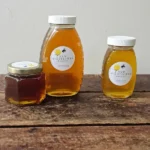
A jar of honey can be so pretty. And when you put several jars side by side they are even prettier. They grab your attention.
And that’s why the most common farmers market question this season was: “Why does this honey look so different from the others?”
It’s a good question. Honey is fascinating for lots of reasons, but to understand why one jar might be pale and delicate while another is dark and rich, you have to go back to the beginning.
You have to go to the hive.
And sometimes, to understand a particular jar of honey, you have to imagine a little bit of magic.
Imagine the hive as a golden kingdom: an industrious world of beeswax, pollen, and rivers of glistening honey, all organized around a single queen bee.
Inside the darkness of the hive, tens of thousands of worker bees operate together as a superorganism. They build, forage, feed, clean, protect, and maintain their home. Each bee has a role, and the entire colony works together to survive.
The queen is especially important. A healthy, productive queen lays the eggs that become the next generations of worker bees. A strong, growing colony has more bees available to forage, build, and care for the hive. And a thriving colony may be able to explore a wider area, discovering different sources of nectar along the way.
That’s where the story of honey gets interesting.
Every colony has its own personality, its own circumstances, and its own foraging patterns. The flowers and trees available to the bees, the weather, and the timing of the seasons all contribute to the honey they make.
In a way, every hive has its own recipe.
And this particular jar? Its story begins with a little yellow box, an unexpected swarm, and a tangle of weeds.
The story begins in May, at the beginning of swarm season here on Long Island.
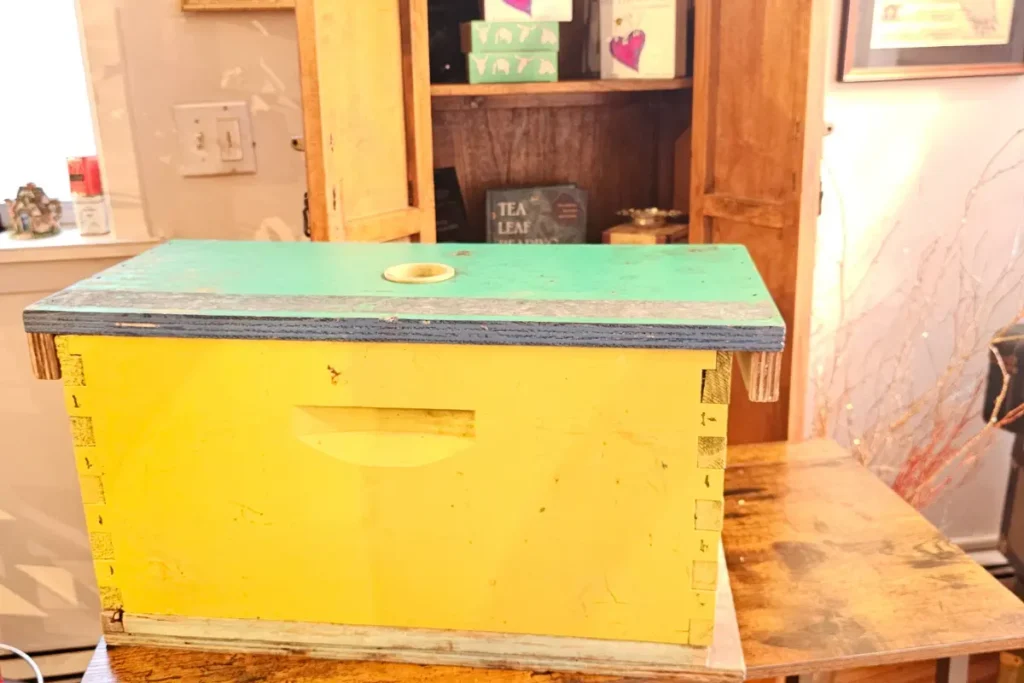
There was an unused hive sitting in my bee yard, waiting for a purpose. It was a little yellow box with an aged cover, painted in shades of green and blue.
On May 22, it found its purpose.
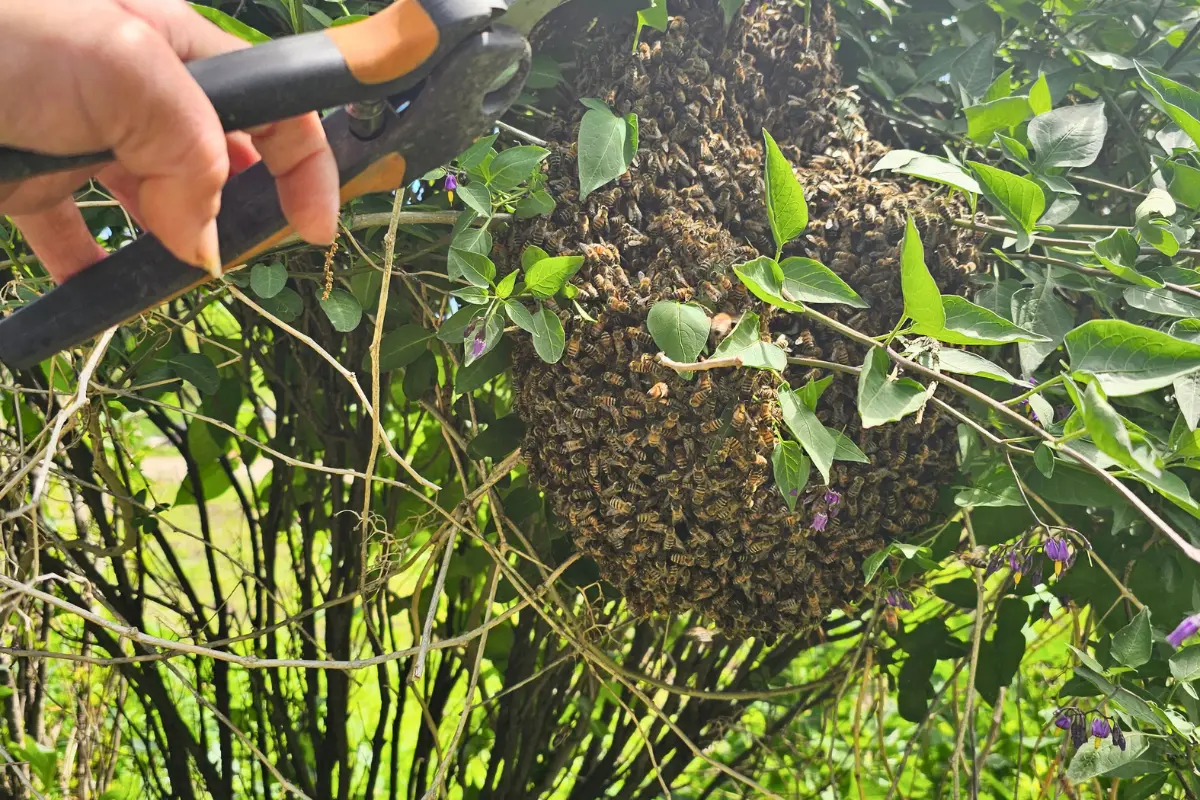
I was walking toward my bee yard when I literally watched a tornado of bees cross the road. A swirling, buzzing mass settled in the middle of a patch of invasive weeds. The bees regrouped noisily on a sprawling bittersweet nightshade plant, covered in purple flowers with cheerful yellow centers.
For the record, I didn’t know it was purple nightshade at the time.
They were so close! And so easy to rehome.
I picked up my yellow hive, waded through the weeds (praying there wasn’t poison ivy hiding among them), and placed the hive beneath the swarm. A little snip of a branch, a gentle shake, and I had successfully moved the bees into their new home in about ten minutes.
Just like that, the story of this little jar of honey began.
These bees had left the security of their old home in search of somewhere new. I couldn’t know exactly where they had come from or why they had decided to leave, but I could give them a safe place to settle.
Now it was up to them to make it home.
Once the colony had settled in and established that their queen was safely with them, they got right to work.
They needed to clean, build, forage, and replenish their food supply. Scout bees and foragers were already heading out, looking for nectar and pollen. Purple nightshade isn’t a particularly important nectar source for honey bees, so their landing spot was more coincidence than destination.
The tulip poplars and black locusts were blooming in Plandome, so there was plenty for the bees to explore.
Within a week, the little yellow hive needed another story. This time, a lovely red one.
The colony was growing, and the bees were building their own comb, creating those beautiful hexagonal cells where they would raise their young and store food.
Over the following weeks, they continued to expand. They drew out new beeswax comb, filled cells with nectar and pollen, and began the process of turning nectar into honey. As the honey matured, the bees capped the cells with a thin layer of wax to preserve it.
And suddenly, they needed another layer.
This one was brown.
The little yellow hive had become a three-story rainbow of yellow, red, and brown, sitting tall in the grass. It was a joy to watch.
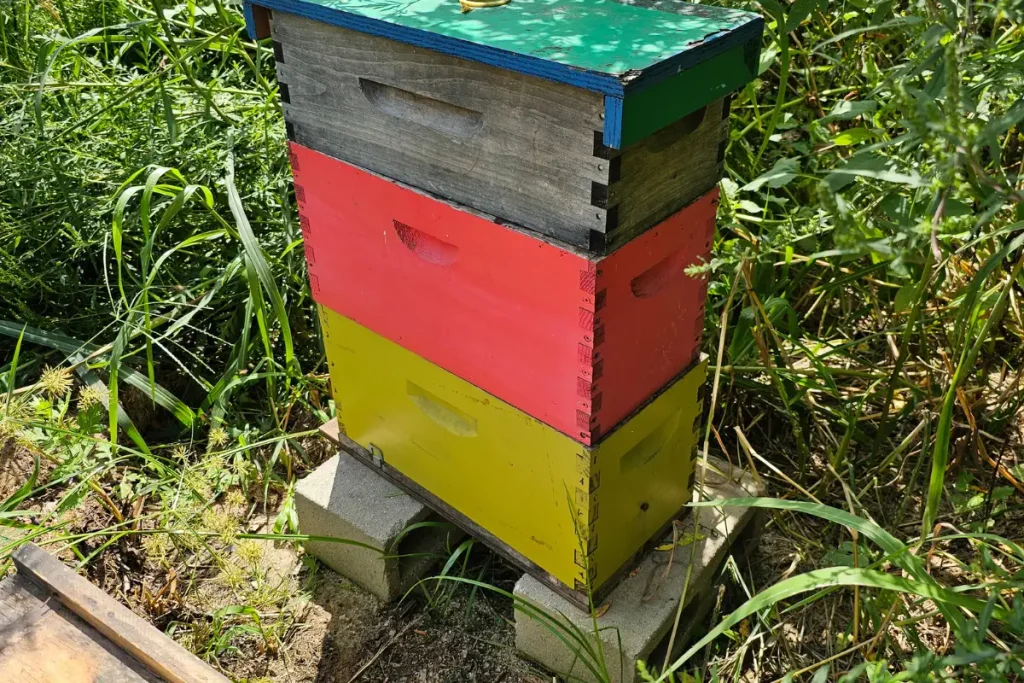
Later that summer, it was time to move the bees into a full-size hive and I took advantage of that opportunity to grab a few frames of capped honey from the colony.
It was a small harvest. The bees still had plenty of summer ahead of them, and they needed their food stores. But after watching them go from a buzzing tangle in the weeds to a thriving three-story hive, those few frames felt like a gift.
And they were.
As I watched the honey flow out of the extractor and through the filter, I was in awe of how hard these bees had worked to catch up with the season.
They had established a new home, cared for their queen, raised new generations of bees, and gathered nectar from the trees and flowers around them.
All of that work, all of that foraging, all of those trips back and forth to the hive had become this beautiful little jar of honey.
The color was pale, pale yellow, almost translucent. The scent was sweet and floral.
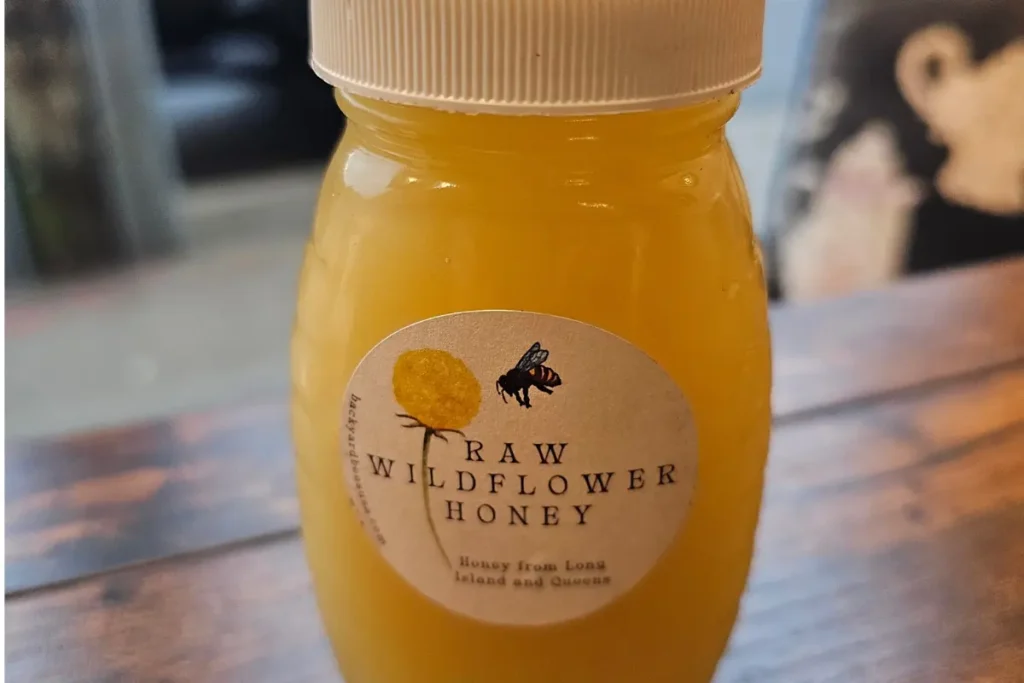
And the taste? Light and flowery and so delicate. Nothing like it. At least, nothing like any honey I had tasted before.
I brought a jar of that Plandome honey to SerendipiTea in Manhasset for the first gathering in our Honey & Wonder series. It seemed like the perfect place to share the story.
SerendipiTea is only a few miles down the road from where I had collected the swarm, and the gathering was designed to give people a hands-on look at what goes into making honey: the hive, the beeswax, the tools, and, of course, the finished product.
We were also going to taste several local honeys side by side, exploring how different seasons, locations, flowers, and weather can influence what’s in the jar. I thought everyone would be especially proud of this little batch of local Plandome honey.
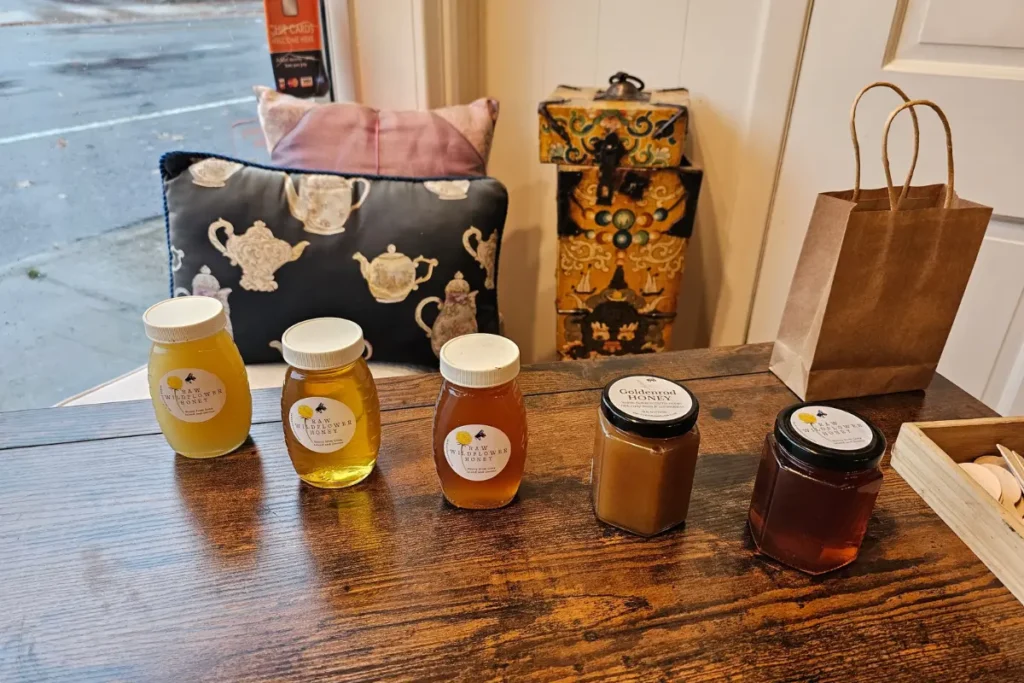
The weather, however, had other plans. There were no visitors to the shop that day, but the serendipiTea staff came out, one by one. I told the story over and over, and we ended up having our own little honey tasting right there in the shop.
And the tasting results? The “winner” was not the Plandome honey! Instead, the jar we kept coming back to was something entirely different. It was the fall goldenrod honey.
By then, it had already crystallized into a soft, spreadable honey, and it tasted like butterscotch. A complete surprise! (You can read more about this curious transformation in The Curious Case of Goldenrod Honey.)
The little yellow hive had a pretty remarkable season. From an unexpected swarm in a patch of weeds to a thriving colony in its new home, it was a reminder of just how much happens before a jar of honey ever reaches your table.
And there’s an even happier ending to this particular story.
The bees have since moved into their full-size hive, where they are now settled in with plenty of honey stores to carry them through the winter. The little yellow box has been emptied, cleaned, and put aside, ready for whatever next spring might bring.
Behind every jar is a colony of bees, a particular place, a season of flowers, and thousands upon thousands of tiny trips made by very hardworking bees.
No two jars have quite the same story.
Next Thursday, November 19, I’ll be back at SerendipiTEA for Milk & Honey Skincare. Who knows what surprising things you’ll learn! Save a spot or just drop in.