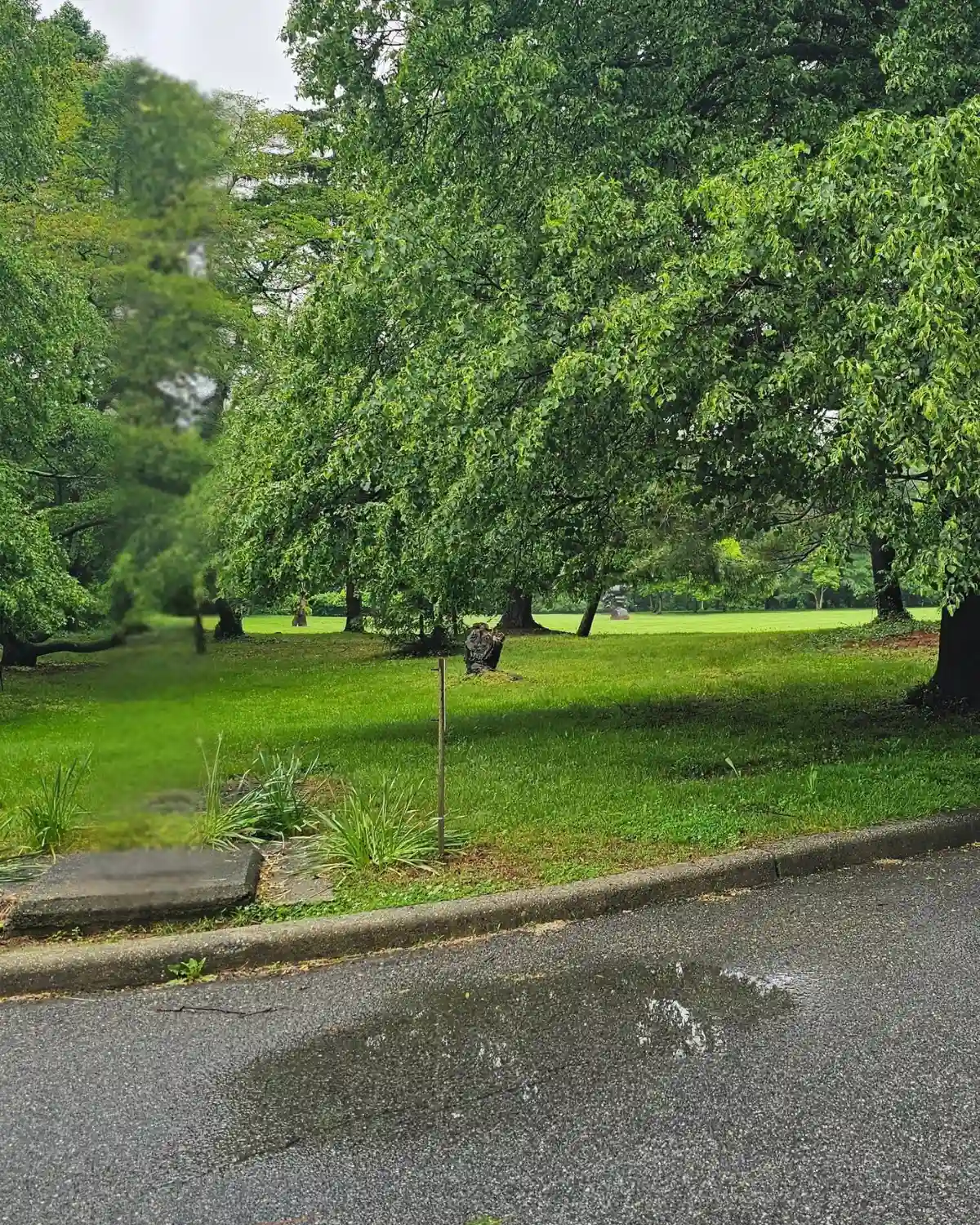
I found myself exploring the trails on the grounds of the Nassau County Museum of Art during a break in the rain. It’s been pretty much all rain this Memorial Day weekend, but I caught a small window of dry weather and headed for the woods.
As I walked, I kept thinking about what happens to the nectar in the tree flowers when it rains. Or more importantly, what happens to the bees who depend upon that nectar.
Nectar From The Trees
As much as I talk about pollinator gardens, tree nectar is the most important source of nectar for honey bees, especially in the early weeks of honey season. On the North Shore, beekeepers track of black locusts, tulip trees, and linden trees, in that order.
Black locust season started about two weeks ago and I’ve been watching the bloom season closely. I recently read that the amount of nectar produced by black locust trees can reflect the rainfall — or drought — conditions from the previous year. After last summer’s heat and drought, I was already wondering what kind of nectar flow we would see this spring.
And now? Three straight days of rain.
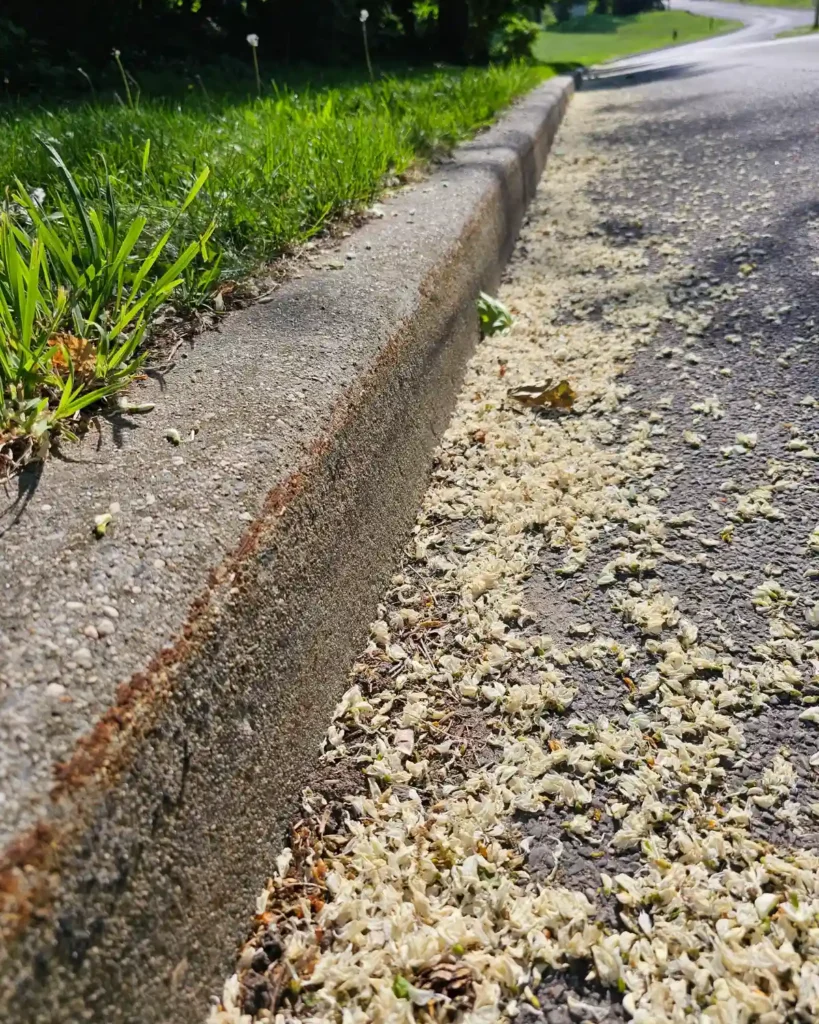
The black locust flowers were soggy, their delicate petals hanging like wet sweet peas. By today, many of the blossoms had already fallen, collecting along the roadside like pale confetti after the storms. There were definitely fewer blossoms on the trees than there were just days ago. My guess is that the black locust nectar flow is mostly finished for the season.
Tulip Tree Nectar
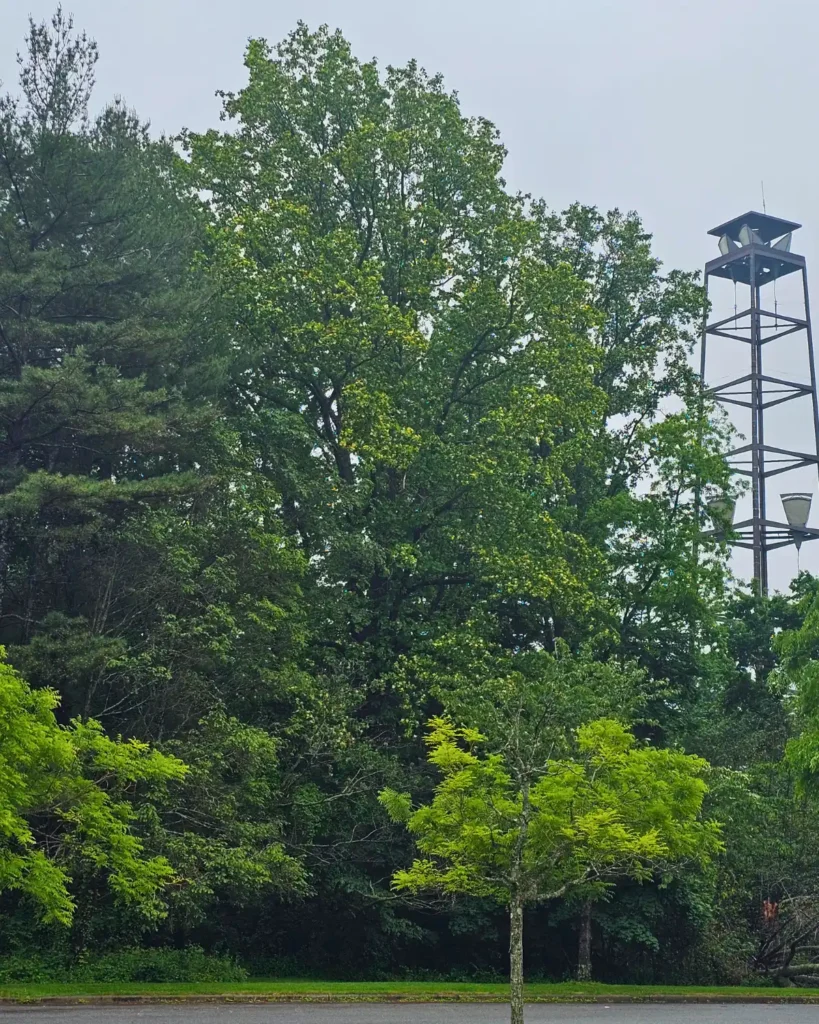
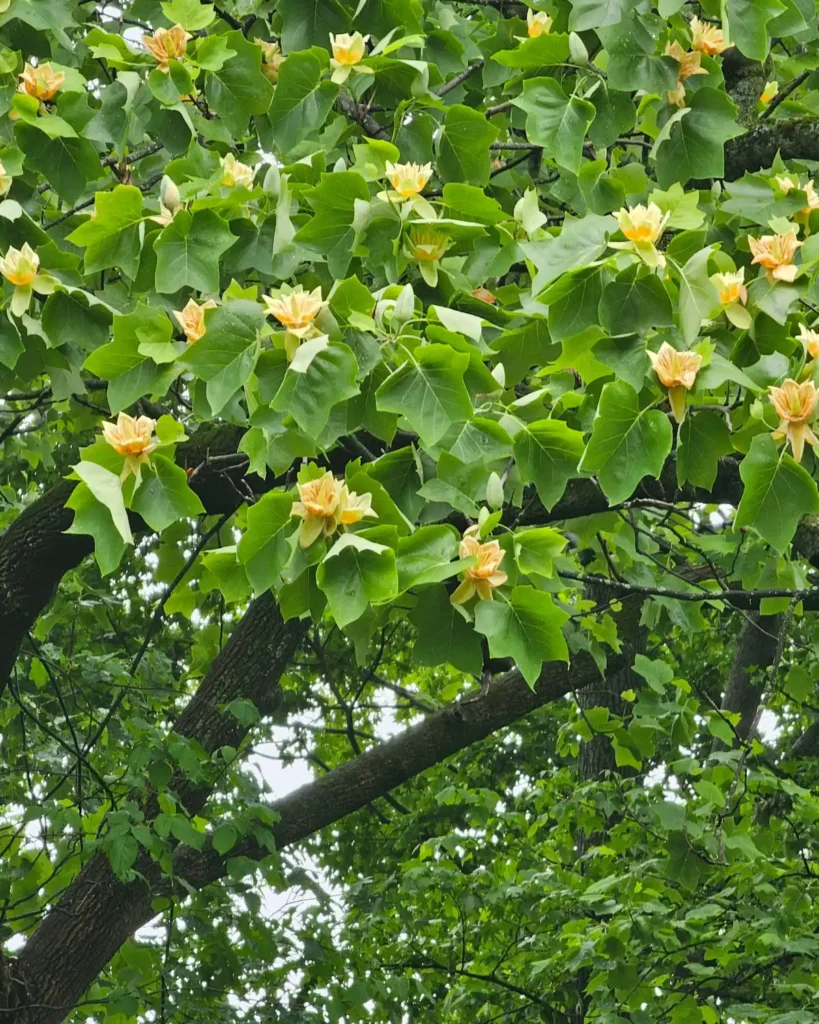
But the art museum grounds are also home to another powerhouse nectar source: the tulip poplar. Tulip poplars are massive – they average about 90 feet high – equivalent to an 8-story building! The Tulip Tree Trail is full of beautiful examples, but I caught this one at the back of the parking lot where I had to zoom in 10 times to get images of the flowers blooming overhead.
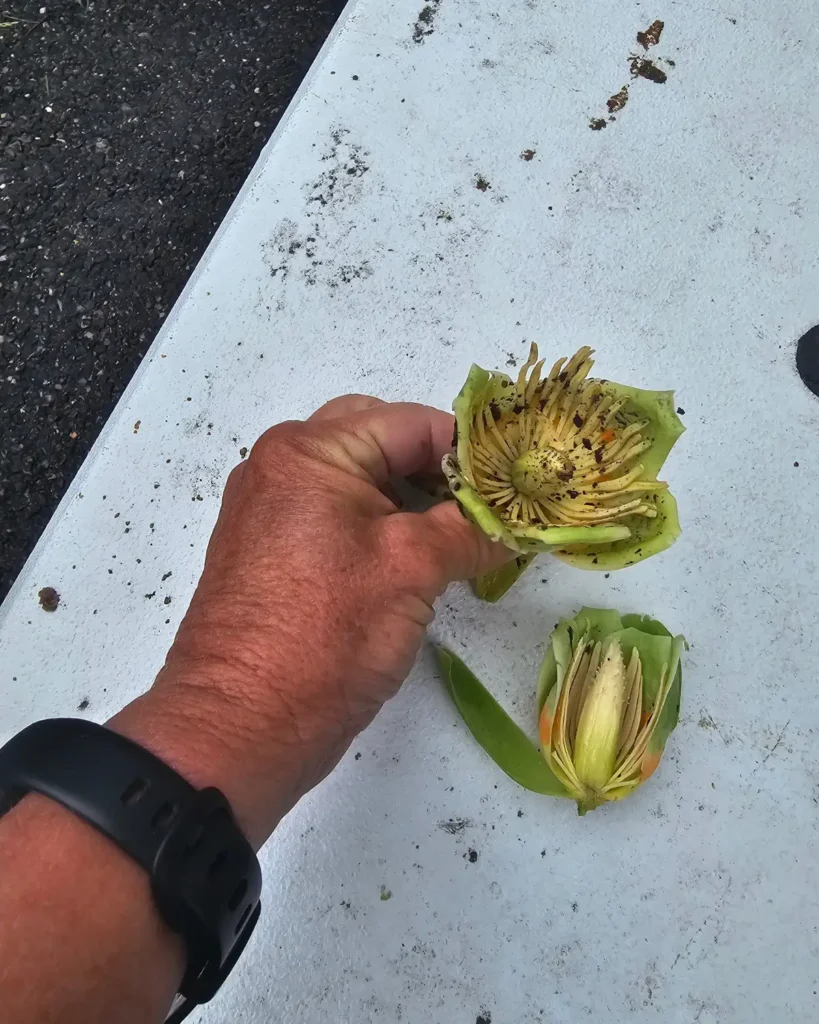
The flowers of the tulip poplar are high overhead, easy to miss when you’re focused on the narrow woodland paths below. But every once in a while, you’ll spot a fallen bloom on the trail. They’re surprisingly large and sturdy, often landing perfectly intact after falling from such a height.
The flowers remind me of little tea cups, though some people compare them to goblets. Either way, they form a deep bowl-like shape that makes it easy for bees to access the nectar tucked inside. According to my research, a single tulip poplar flower can hold an astonishing amount of nectar — sometimes close to a tablespoon.
Rain affects more than just whether bees can fly. Extended wet weather can dilute the nectar itself, lowering the sugar concentration and making it less rewarding for pollinators. For the bees, thinner nectar means more work back at the hive to evaporate excess moisture before it can become honey.
But the weather changed in another important way too. After several days in the 90s, temperatures suddenly dropped into the 60s, with cool nights in the 50s. The bees noticed the change immediately.
And the tulip tree is smarter than it looks.
Tulip poplars can actually slow or pause nectar production during stretches of cool, rainy weather, then begin producing heavily again once warmth and sunlight return. The flowers simply wait.
So do the bees.
And so do I.
As a beekeeper, it’s hard not to watch every shift in weather this time of year. A few days of rain can feel enormous when the bees are gathering nearly all of their spring honey from blooming trees high above our heads. And who knows what the summer will hold. Last summer was rough for the bees.
If you’re interested in tasting how the weather affected the bees in the vicinity of the museum, Roslyn Local Honey is available seasonally.
But every day is a new day, and I’m gonna be optimistic. Take a walk through the Tulip Tree Trail, look up…and dream of sweet things.
Happy Memorial Day!
Continue the walks with a beekeeper in How Bee-Friendly Is Your Neighborhood?