The Scenic Route
Today’s walk had a mission: walk to Sea Cliff and back to borrow a bee book — A Honeybee Heart Has Five Openings by Helen Jukes — before the rain arrived. With early May threatening clouds above, I laced up and headed out.
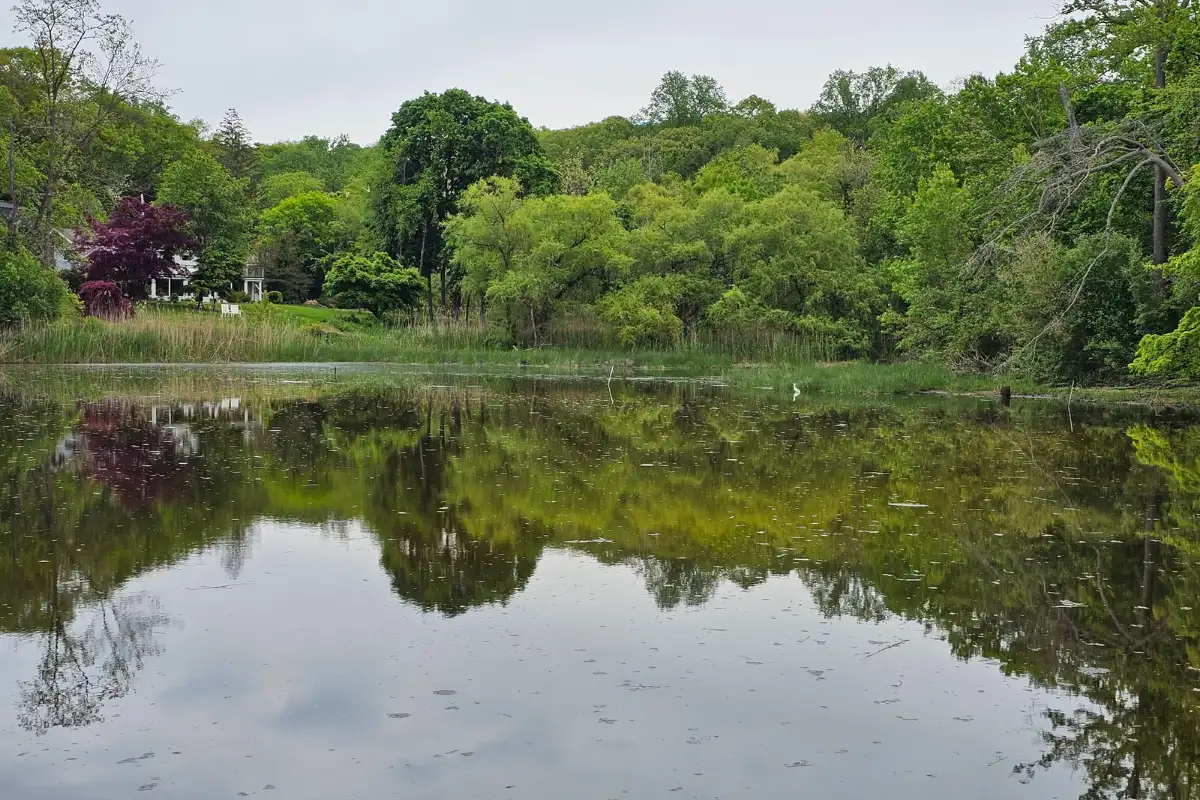
I chose the scenic route along the water. I like to see Scudders Pond in all the seasons. Walking by it is a very different experience than driving by
I walked alone. No headphones. No phone calls. Just my thoughts.
As I headed down the hill, I passed the construction site on the corner where two new homes seem to be growing overnight. Brown dirt, compacted by excavators and backhoes, set the stage for my thinking.

This corner once held a single home surrounded by dense rhododendrons, ivy, and tall saplings — maple trees, maybe? It hasn’t been long, but I can already barely remember it.
Now the land is cleared. Two large homes with double garages are taking shape. And I found myself wondering: what comes next? What gets planted? Who decides? And what does “beautiful landscaping” even mean anymore?
Certainly not many builders are calling the local beekeeper for advice.
I left those thoughts behind and continued toward Shore Road.
Shore Road Between Glenwood Landing and Sea Cliff
Wherever you live, I think we all carry an image of what shoreline roads and coastal public spaces should feel like — open, beautiful, connected to nature, shaped with some sense of care for the people moving through them.
For me, it suggests blue skies, grasses moving in the wind, beaches, old trees, and a landscape softened by nature. Add a walking path or bike lane, and the name alone makes me want to go there.
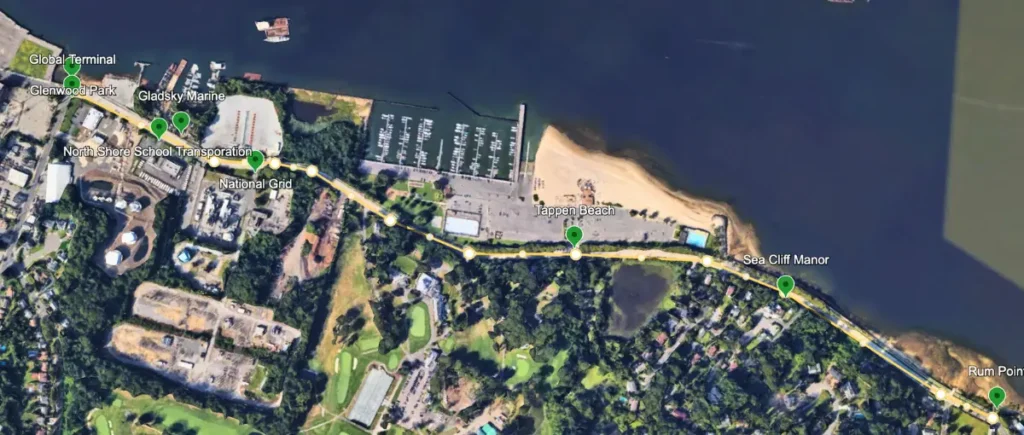
This particular stretch of Shore Road, connecting Sea Cliff and Glenwood Landing, meets some — but not all — of those imaginings. Hempstead Harbor runs alongside one side of the road, bordered by an unusual mix of public spaces, industrial properties, institutions, and private landscapes.
As I made my way along Shore Road between Sea Cliff and Glenwood Landing, I found myself paying attention not only to the water and early spring landscape, but to the different ways public-facing spaces shape the experience of a community.
The walk itself was not dramatic or especially scenic, but it gave me time to think about public space and environmental responsibility.
The bees wisely stayed home on this gray day. I did not see a single bee on the entire walk.
Still, I found myself looking at the landscape through the eyes of a beekeeper.
Moments of Thoughtfulness
A beautiful public space does not always have to feed pollinators directly. Sometimes it simply needs to invite people to slow down.
And along this approximately one-mile stretch of Shore Road, there were several invitations:
to sit,
to pause,
to look,
to breathe.
Glenwood Park
Glenwood Park sits quietly at the intersection of Glen Head Road and Shore Road. A few benches, a small lawn, and thoughtful plantings — grasses, spirea, sedum.
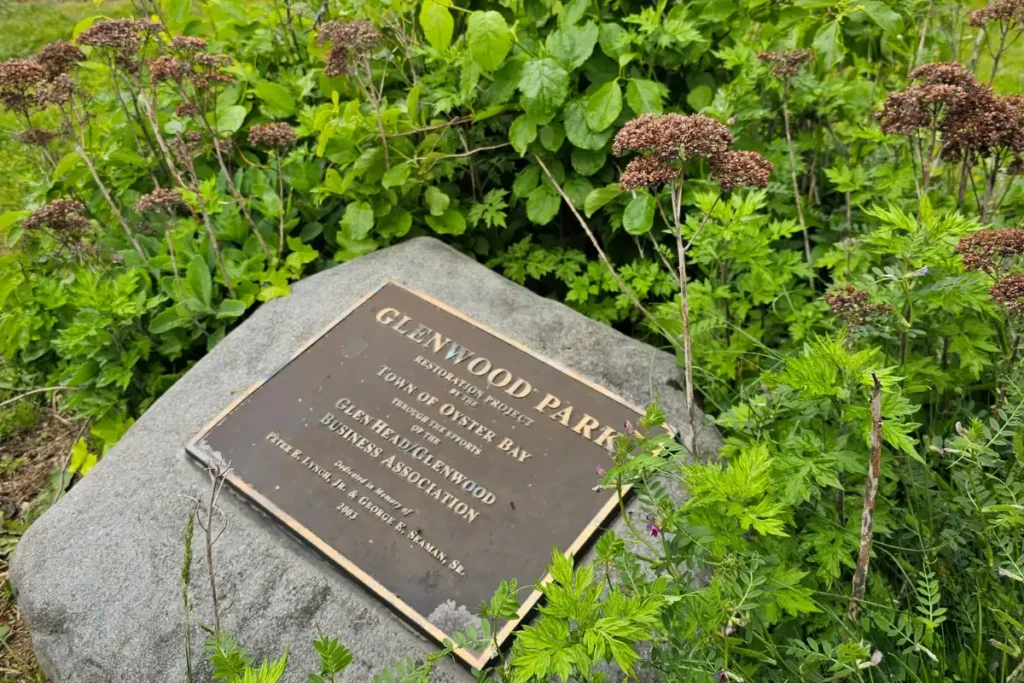
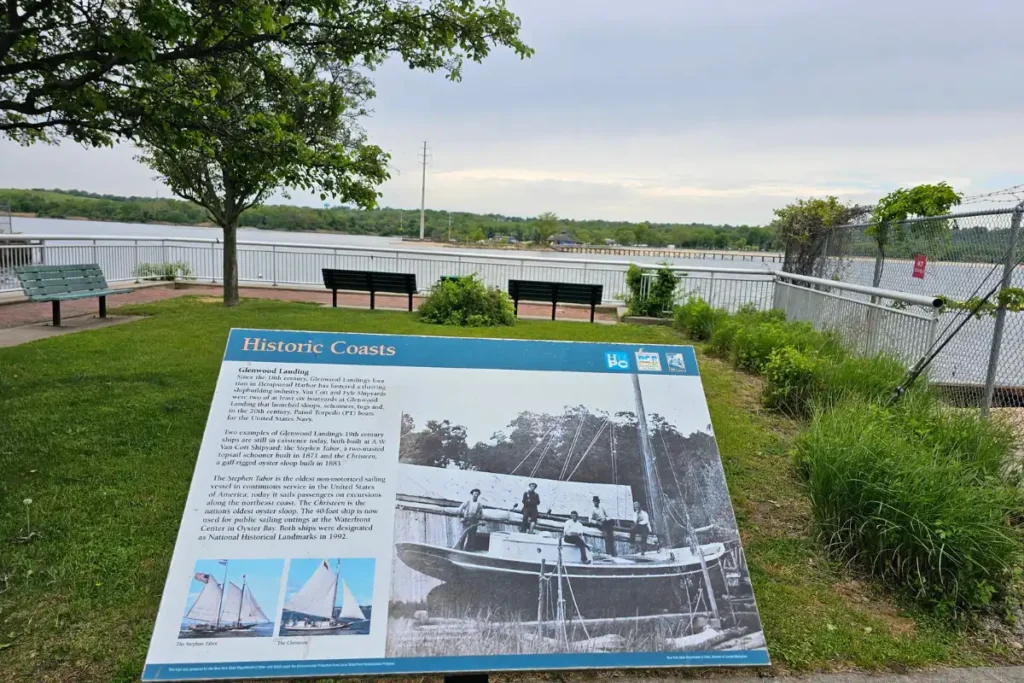
Restored by the Town of Oyster Bay through the efforts of the Glen Head/Glenwood Business Association in 2003 and dedicated to two local residents, it feels cared for and deeply human in scale.
A historical sign about the harbor and Glenwood Landing’s role along the coast gently connects past and present.
Tappen Beach Pool & Marina
The Town of Oyster Bay’s Tappen Beach Pool & Marina offers one of the best harbor views along Shore Road.
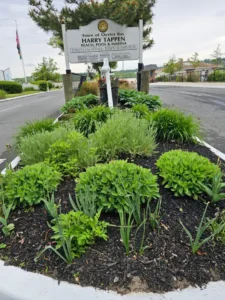
The water is separated from the sidewalk by a large parking lot used for community events, but the entrance plantings surprised me: sedum, yarrow, hostas — durable plants chosen not only for appearance, but for seasonal texture and resilience.
The bees will eventually benefit from some of them, but perhaps more importantly, visitors are greeted with softness and seasonal beauty instead of emptiness.
Sea Cliff Manor
Across the road sits Sea Cliff Manor.
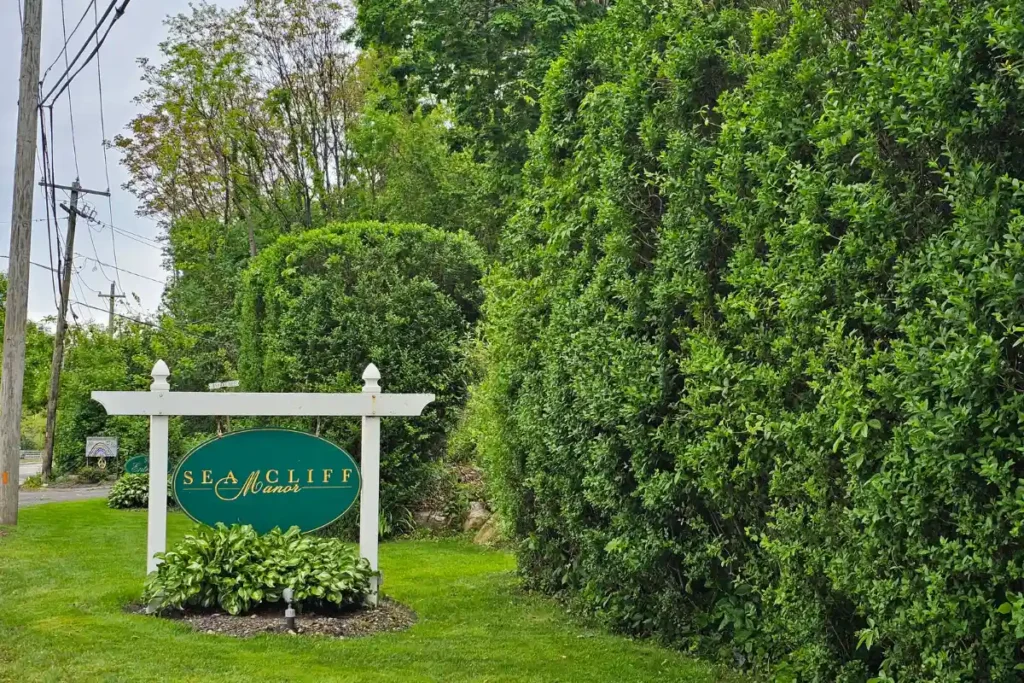
The manor itself is mostly hidden from view, but the landscape speaks loudly enough: thick, healthy privet hedges, a rocky slope layered with butterfly bushes, and perennials still emerging from spring.
It is not peak season yet, but the space already feels alive.
Rum Point
Rum Point is even smaller than Glenwood Park, tucked at the bottom of the steep hill leading toward Sea Cliff Beach.
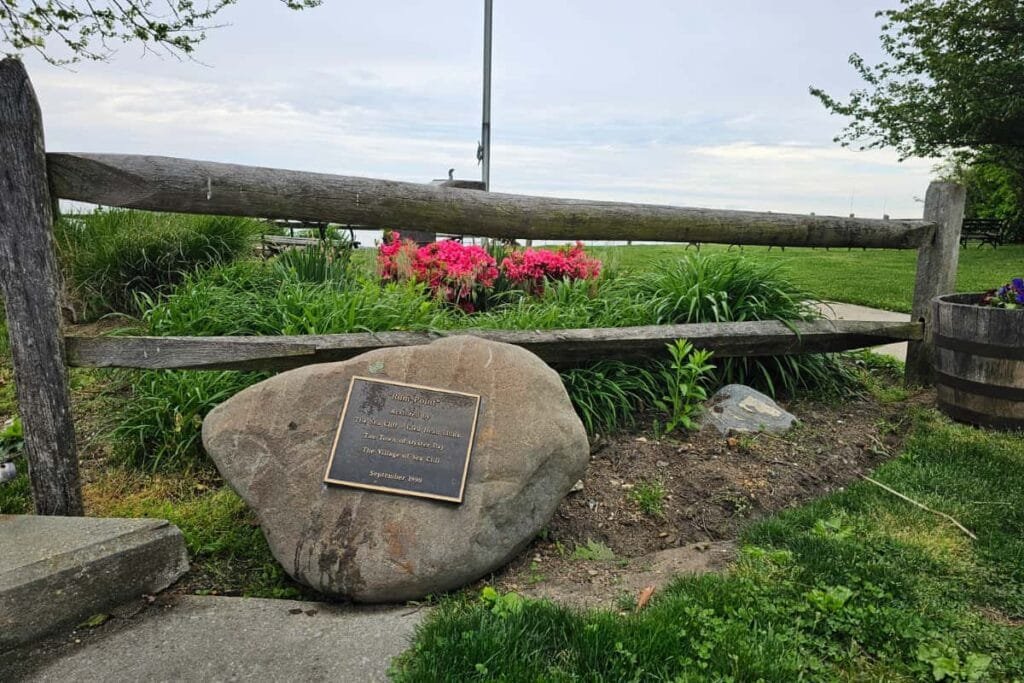
A bench. A boulder. A flag. A few azaleas. A water stop loved by dog walkers.
Not elaborate. Just welcoming.
Restored through the combined efforts of the Sea Cliff-Glen Head Lions, the Town of Oyster Bay, and the Village of Sea Cliff, it’s a perfect example of what can happen when people come together.
Expanses of Practicality
Not every stretch of Shore Road invited people to pause.
Some landscapes are shaped primarily by function — spaces designed to be maintained efficiently, separated cleanly, or simply kept under control.
Tightly mowed grass. Harsh fencing. Rigid pruning. Shrubs clipped into unnatural forms.
There is nothing inherently wrong with practicality. Workplaces, utilities, schools, and industrial properties all serve important purposes.
But visible spaces also shape how a community feels.
Especially along the shoreline, where so many people move through shared public space, I found myself noticing the difference between landscapes created simply to function and those created with a deeper sense of care.
National Grid
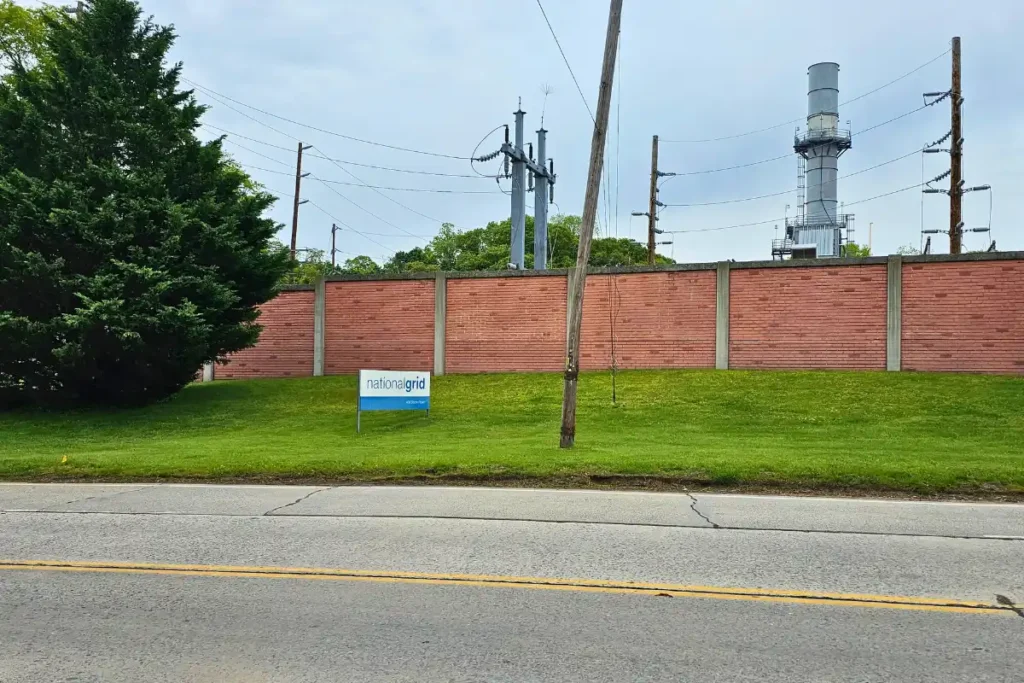
National Grid occupies a significant stretch of land along the road.
The property is immaculate: clean brick walls, weed-free grass, careful maintenance.
But it feels controlled rather than welcoming.
North Shore School District Transportation Facility
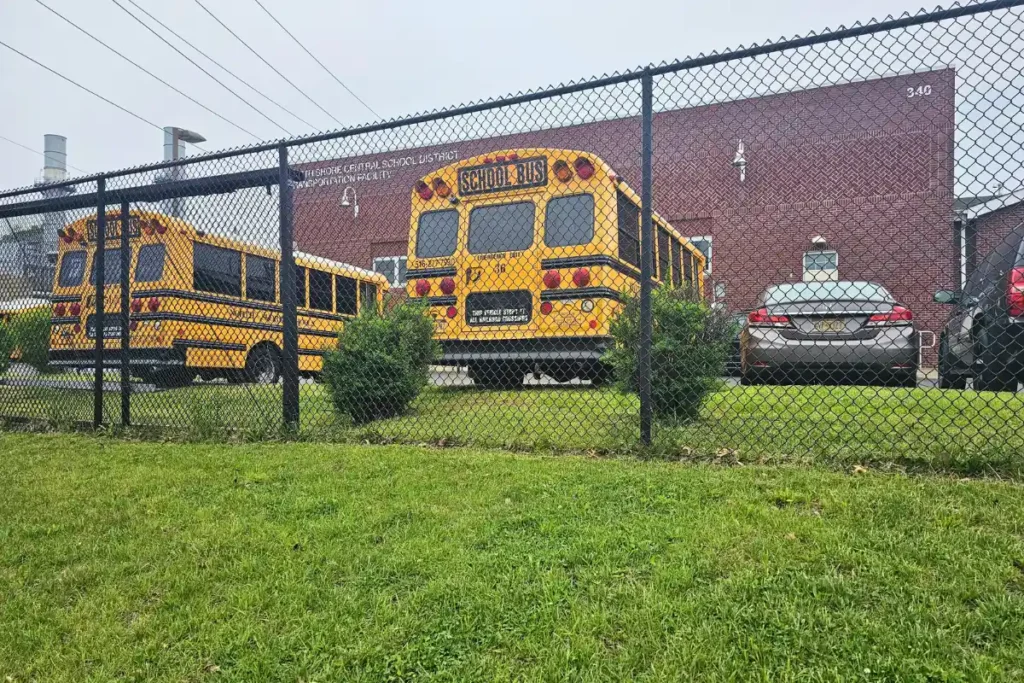
The Transportation Facility feels similarly utilitarian.
Industrial fencing, scattered barberry bushes, and mowed grass softened only by the bright yellow school buses parked behind them.
Global Glenwood Landing Terminal
And then there is the Global Glenwood Landing Terminal, the proposed site of a future battery energy storage facility.
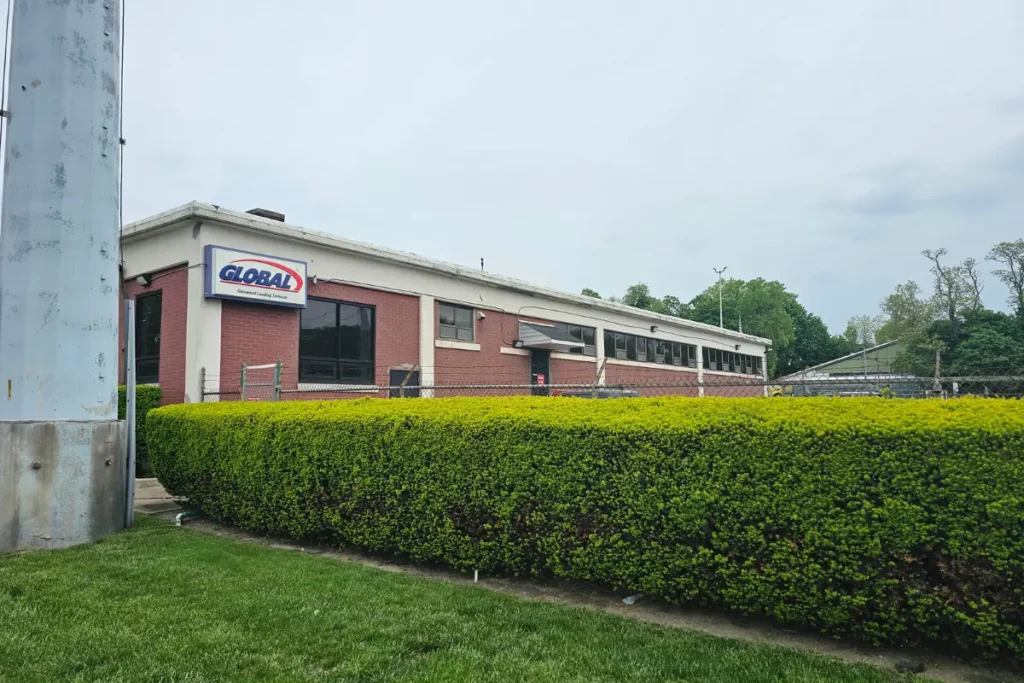
I’m not surprised that people drive by this location every day and still feel unsure where the proposed project would actually be. Most people barely notice the property at all. It is neat and orderly, but the landscaping feels strangely disconnected from the shoreline around it.
It’s interesting how the front of a business reveals how it chooses to exist within a community.
Think Like a Bee
You can’t always judge a landscape by its appearance.
From the sidewalk, Gladsky Marine doesn’t look particularly “marine-like” at all, and it’s certainly not the most attractive stretch of Shore Road.
But rising above the fence is a massive linden tree — and for the bees, that changes everything.
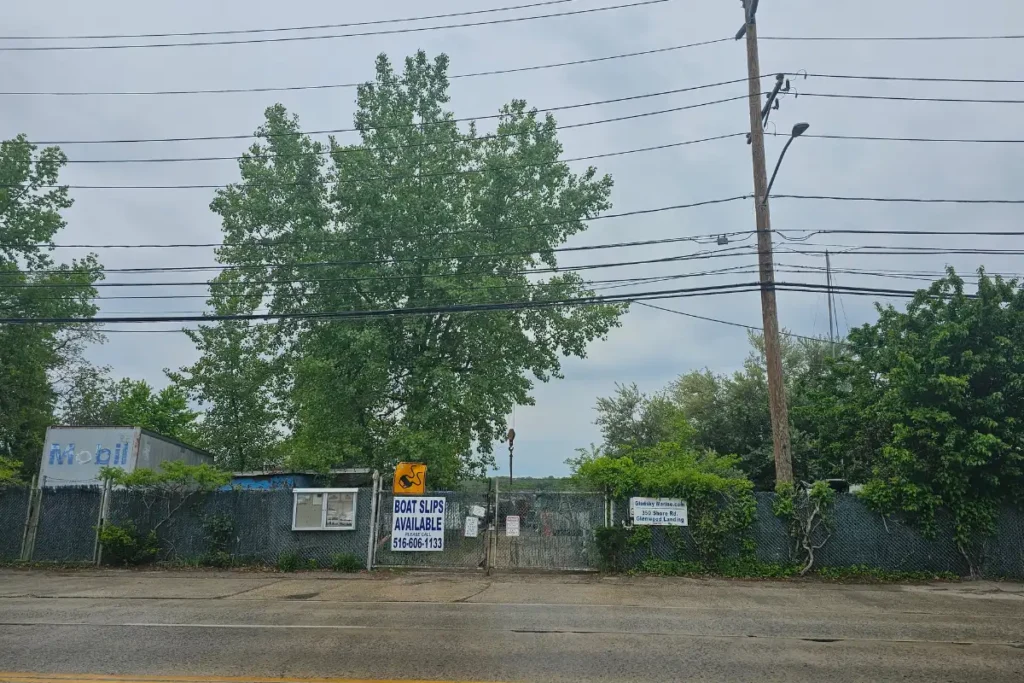
Linden trees are one of early summer’s great nectar sources, and for a few weeks each year, that single tree will contribute more to the pollinators along Shore Road than many carefully maintained landscapes combined.
The bees don’t care about chain-link fences, faded slats, or whether a property feels polished from the street.
They care whether something blooms.
(The bees will definitely notice when it blooms.)
And honestly, that felt like a good reminder by the end of the walk.
Bee-ing Thoughtful Together
The beginning and end of this stretch of Shore Road offered examples of what can happen when businesses, local government, and community groups work together to create spaces that feel welcoming and shared.
Glenwood Park and Rum Point may be small, but they feel intentional. Human. Connected to the people who move through them.
And perhaps that is what Shore Road needs more of — not perfection, but participation. Not simply landscapes designed to function, but coastal public spaces shaped with the understanding that the shoreline belongs, in some way, to all of us.
Read the Other Walks
Explore more observations from trails, shorelines, gardens, and public spaces through the eyes of a beekeeper.
Visit the Walk With a Beekeeper Series →