
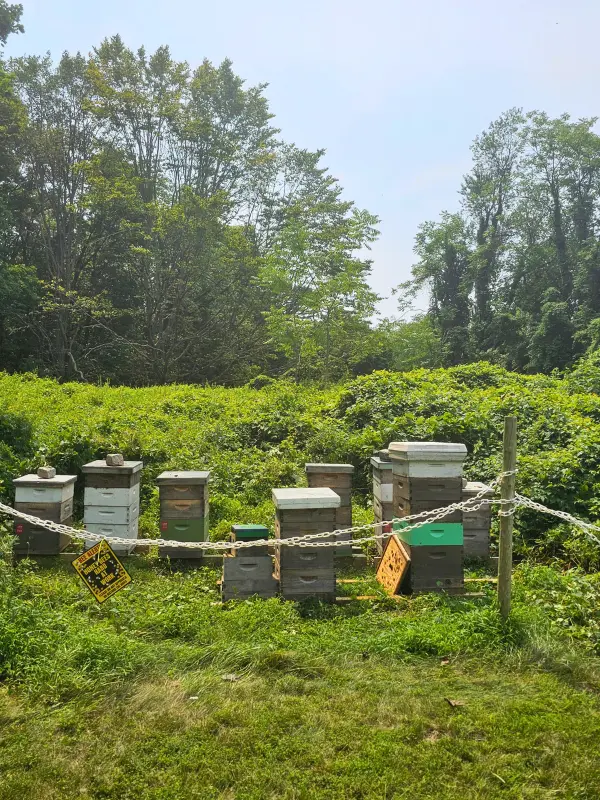
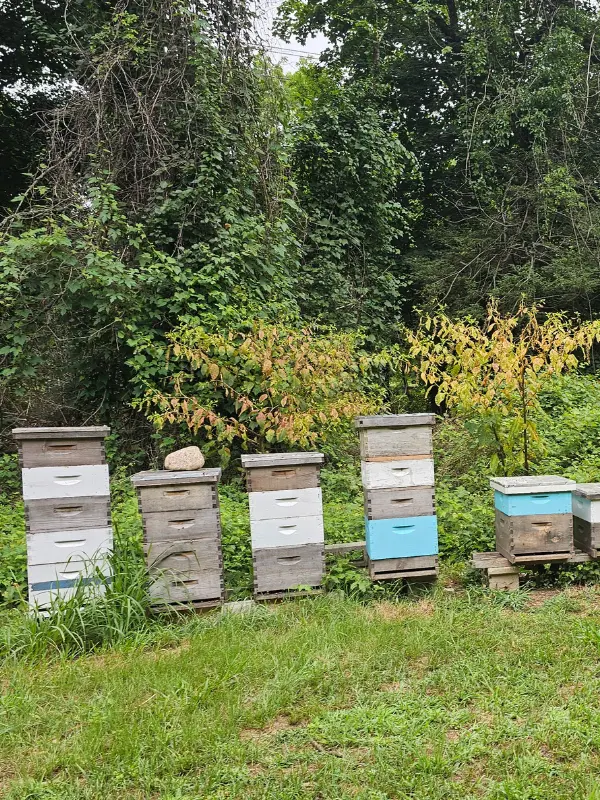
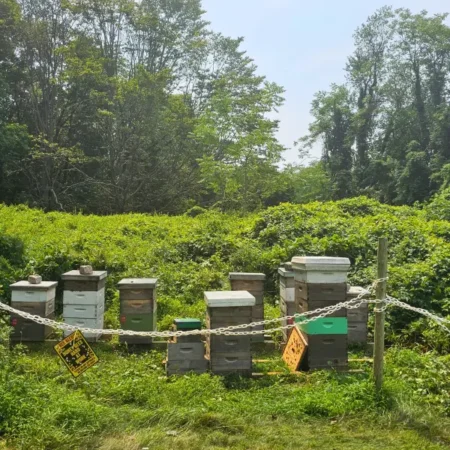
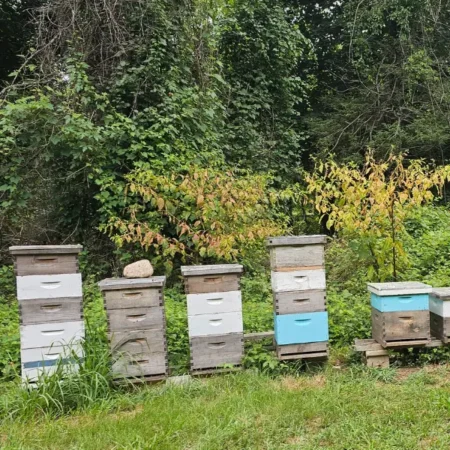
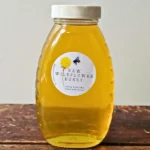
Our Oyster Bay local honey comes from one of two apiaries. One apiary is tucked into a cool, damp grassy dell in East Norwich, near the woodlands of the Muttontown Preserve. Winter snow often lingers there later than it does at our other apiaries, keeping the surrounding ground moist as spring begins.
A second apiary sits on private property adjoining the preserve, where neighborhood gardens give way to wild meadows and mature woods. Although these apiaries are only a few miles apart, their bees encounter different combinations of plants within their flight range.
Oyster Bay Local Honey Through the Seasons
- Early Spring Near the Farm: As the apiaries begin to warm, flowering fruit trees, garden plants, and other early blossoms provide the first sources of nectar and pollen.
- Late Spring in the Trees: Black locust trees come into bloom in fragrant clusters of white flowers, followed by towering native tulip trees (Liriodendron tulipifera). These flowering trees provide an important spring nectar flow throughout the surrounding woodlands.
- Early Summer Along the Edges: Wild wineberry (Rubus phoenicolasius) flowers along the woodland edges as milkweed begins to bloom in the sunnier fields and open spaces.
- Midsummer in the Meadows and Vines: As summer progresses, porcelain berry (Ampelopsis brevipedunculata) flowers among the climbing vines. Meadow wildflowers and blooms from nearby gardens add to the variety available within the bees’ flight range.
- Late Summer and Early Fall: Goldenrod and asters fill the fields and untended edges later in the season, providing forage after many of the spring trees and summer flowers have faded.
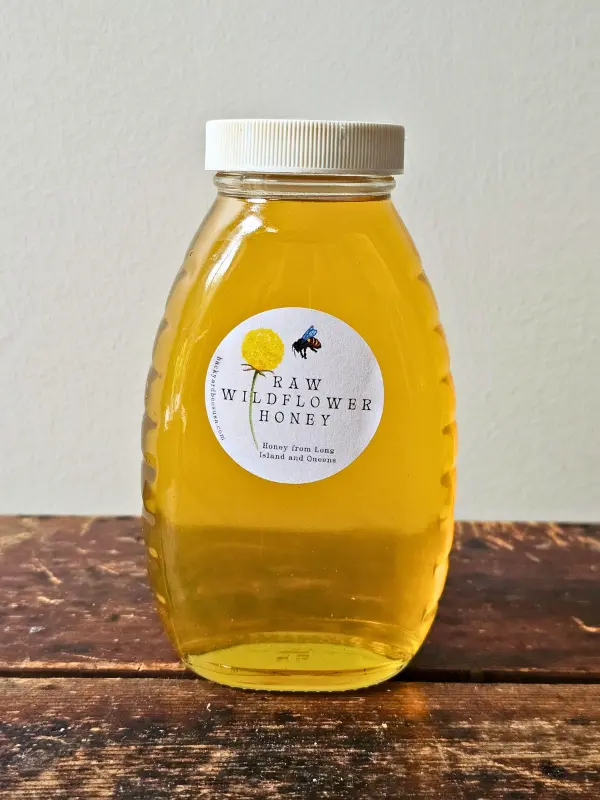
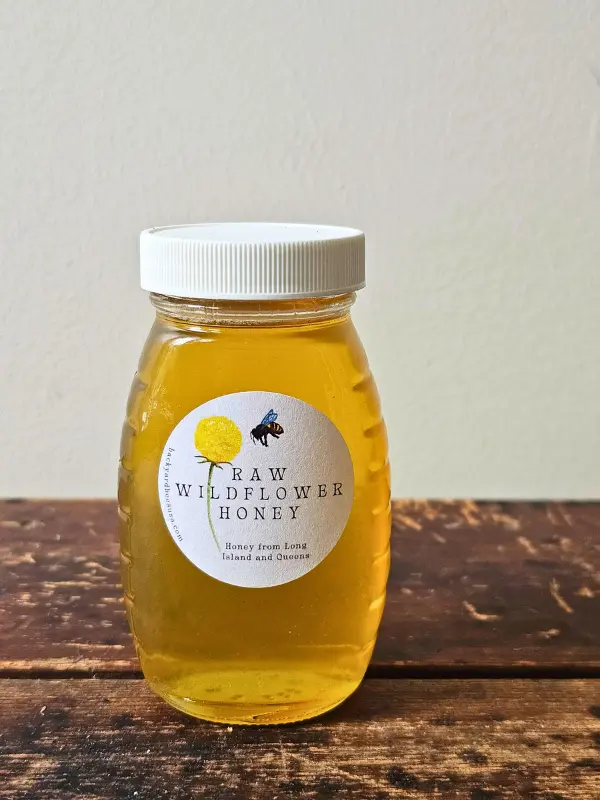
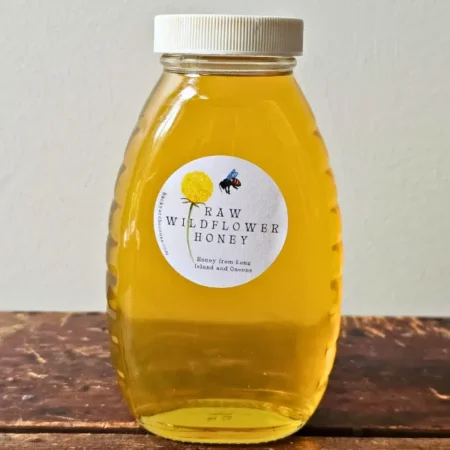
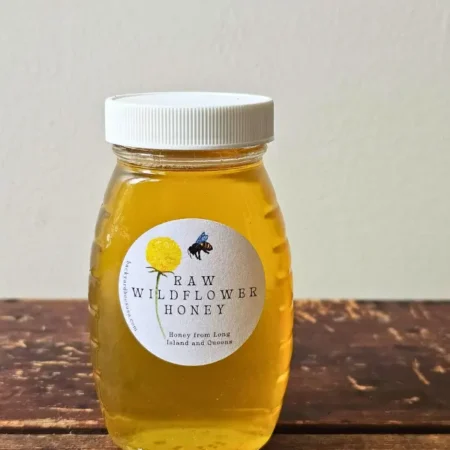
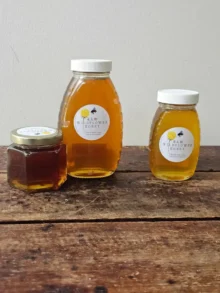
- The Honey: Our current fall harvests are deeper in color and full of character. The Muttontown honey is dark reddish brown with a bold, memorable flavor, while the East Norwich harvest is warm orange-brown with a tart, bittersweet finish.
Honey Terroir: A Taste of Time and Place
Terroir describes how a food reflects where and when it was produced. Honey has terroir, too. A wet spring, hot summer, or cool fall affects which plants bloom, when they bloom, and how long those flowers remain available to the bees. Each harvest reflects what was blooming within the bees’ flight range at that particular time.
That means our Oyster Bay local honey will not look or taste exactly the same from season to season—or even from one nearby apiary to another. One harvest may be light and delicate; another may be darker, bolder, or bittersweet. Those natural differences are part of what makes local raw honey unique.
For information about storing and caring for your honey, visit our Raw Honey Guide.
Reviews
There are no reviews yet