Spring is here and things are changing so quickly, it’s hard to keep up with my walks. So I started running again in one of my absolute favorite places on the North Shore: Welwyn Preserve in Glen Cove. The weather is warming, the trees are blooming, and the bees are buzzing — I want to bee everywhere at once.
Most people don’t expect to find bees at the beach, but that’s exactly what drew my attention on this particular run. Yes. Bees at the beach.
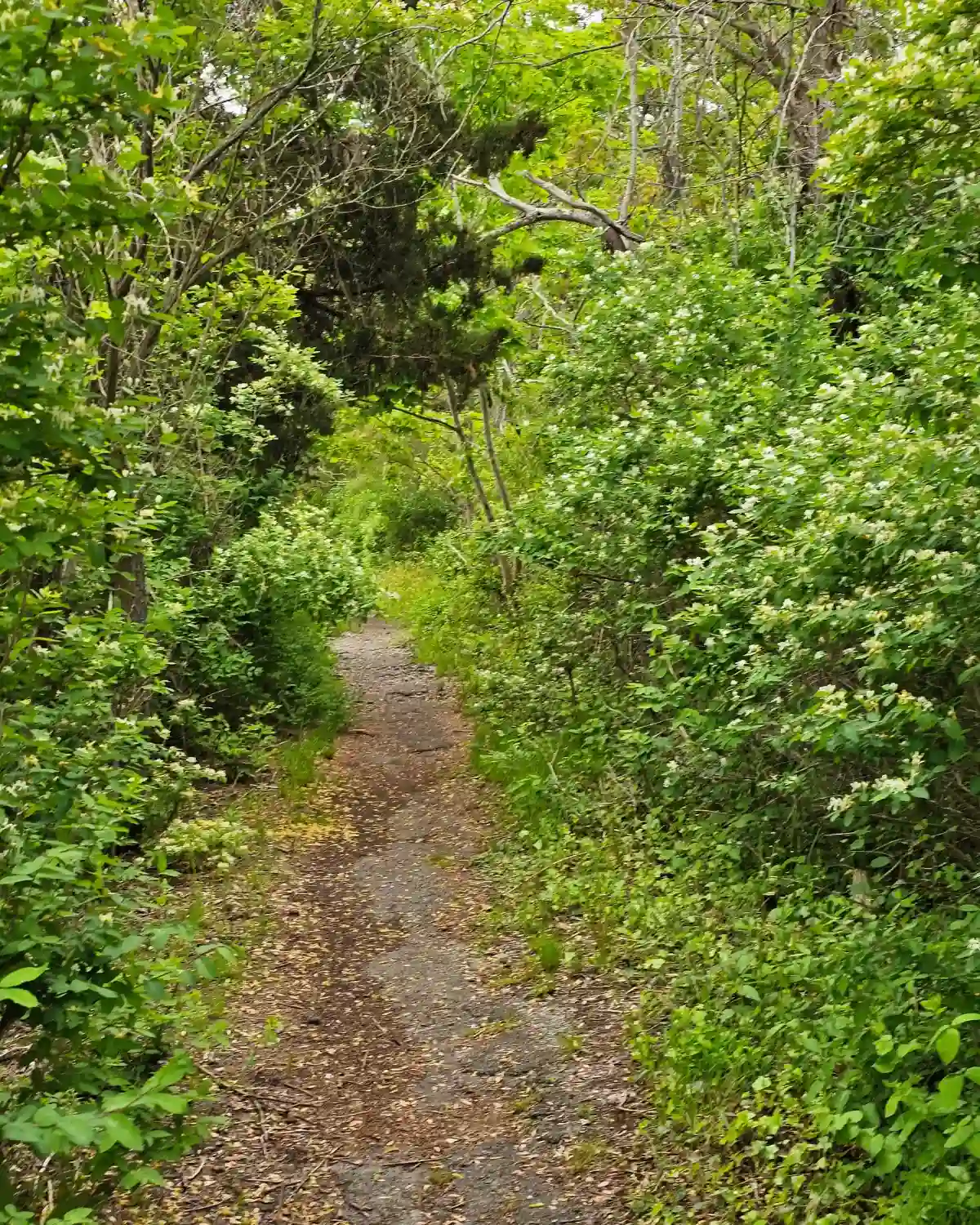
The trails at Welwyn Preserve are very satisfying. In a three-mile loop, I get wooded wonderlands, little streams, wooden bridges, salt marshes, and a beach on the Long Island Sound. And just in case that’s not enough, my “honey tree” is there too.
The Honey Tree
The honey tree gets me every time.
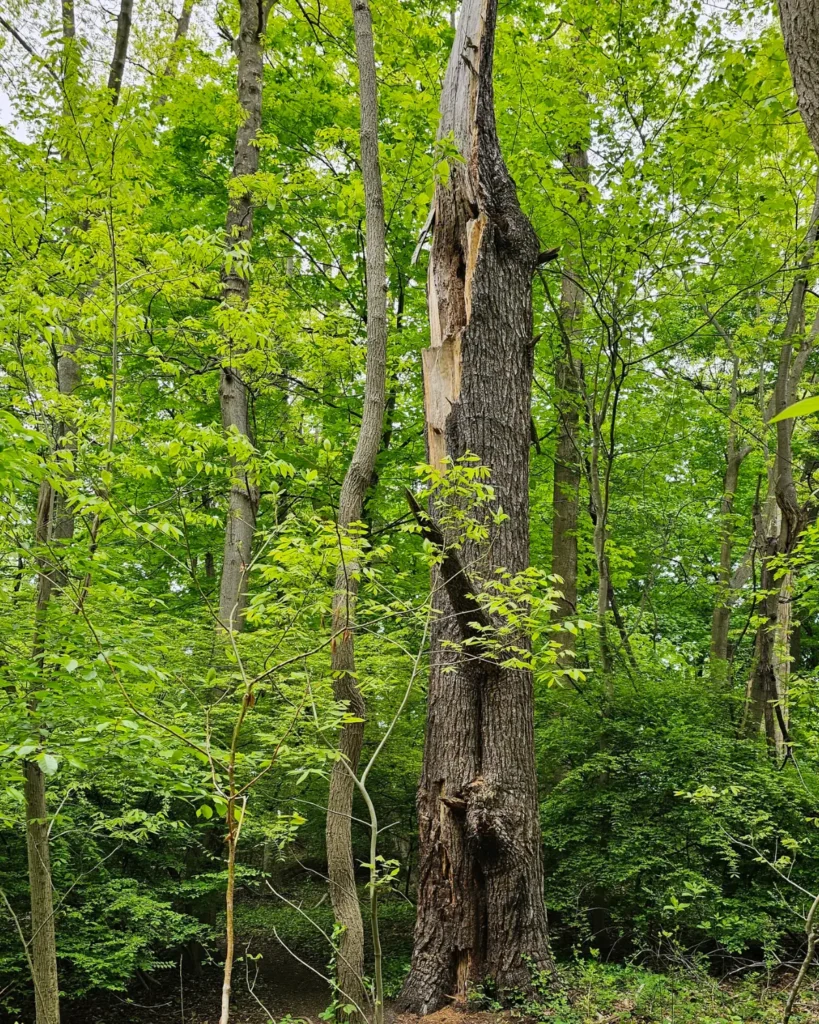
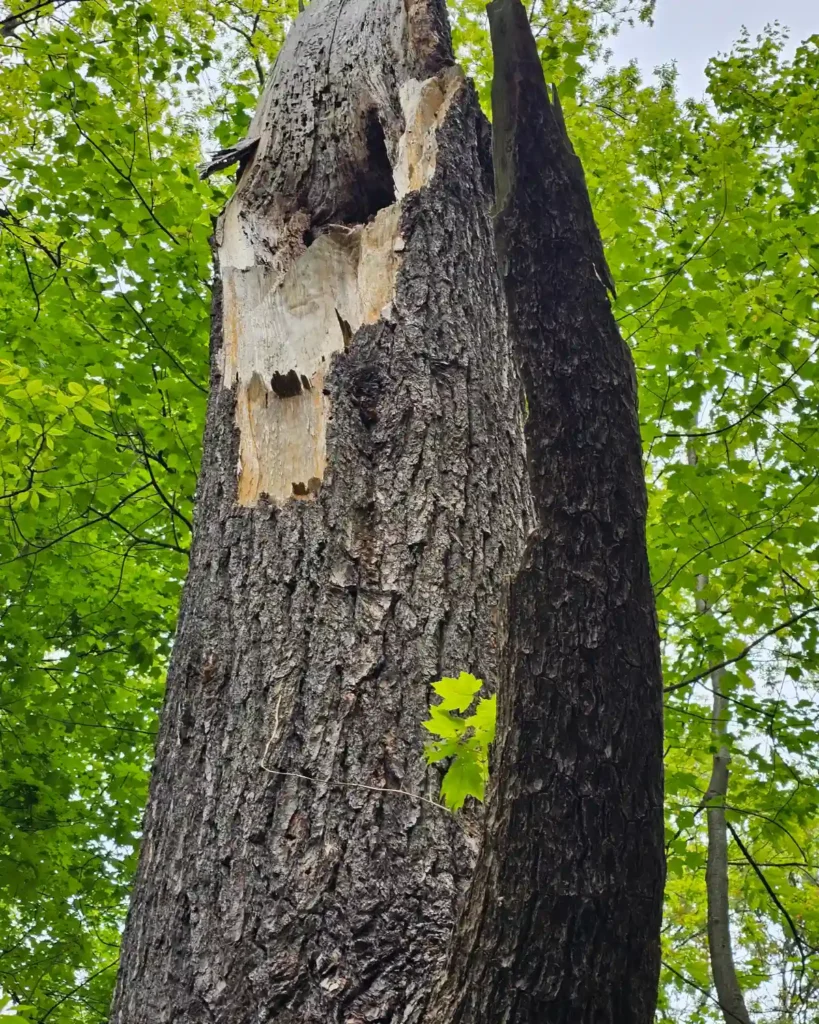
It’s all imagination, of course, but I think of Winnie the Pooh whenever I run there. The tree is tall and dramatic, splintered and topless, as though it was struck by lightning years ago. Near the top is a large opening that makes me look up every single time, half expecting a swarm of bees to move in and surprise me.
It hasn’t happened yet, but that’s okay. I love surprises.
And fittingly, this year marks the 100th anniversary of Winnie the Pooh and the Honey Tree. Maybe this is the year the bees finally move in at Welwyn.
The honey tree sits at the bottom of a twisty-turny slope in the trail, and while I always look up, I also try very hard not to twist my ankle on the exposed roots and rocks beneath my feet.
Still, I always look forward to the turn.
Honeysuckle by the Marsh
Just a few strides past the tree, the world begins to open up.
The wooded trail gives way to a narrow path lined with tall grasses as the salt marsh comes into view. The remains of old estate plantings still linger here — unusual varieties of honeysuckle, including one blush-pink shrub that literally stopped me in my tracks.
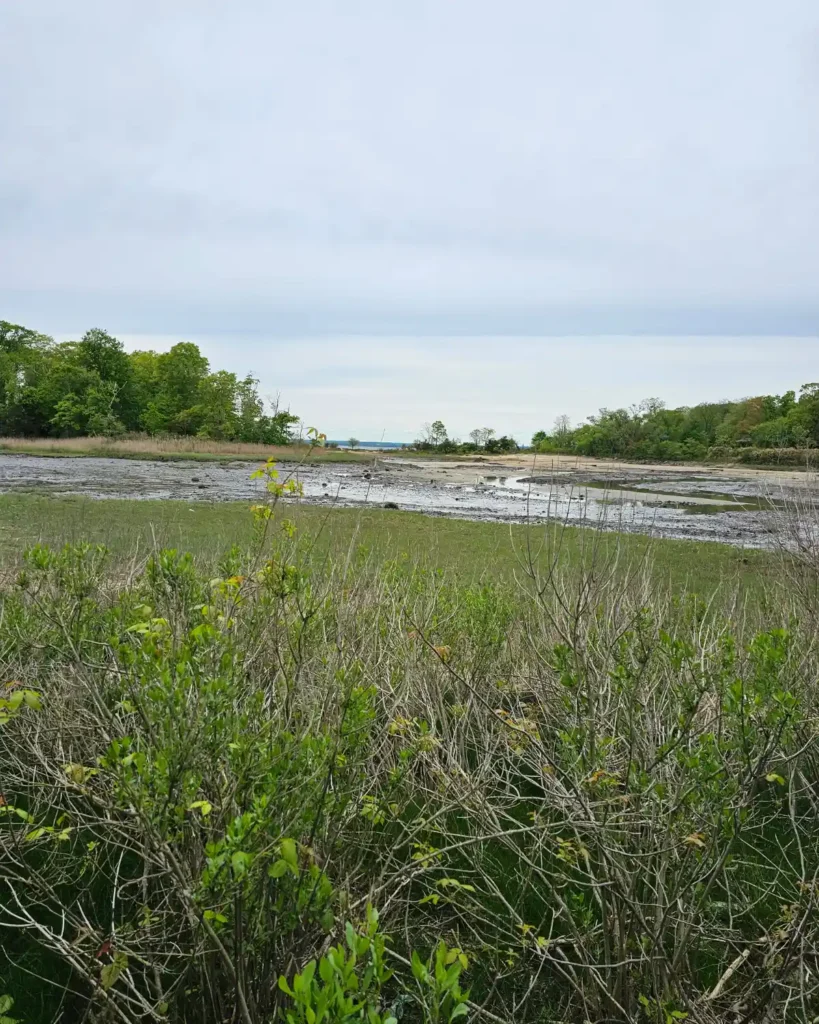
It wasn’t warm enough yet for the air to carry that familiar honeysuckle perfume, but the flowers still brought back memories instantly.
Honeysuckle may have been the first plant I ever loved.
Summertime officially began when my sister and I could walk to the library past a house with honeysuckle vines covering the fence. She taught me how to gently pinch the base of the flower, pull the stamen through the tube of the blossom, and sip the tiny drop of sweetness hidden inside.
Magic.
The honeysuckles at Welwyn looked different from the ones I remembered growing up. The yellow flowers were smaller, paler, sturdier somehow. And the pink honeysuckle fascinated me even more.
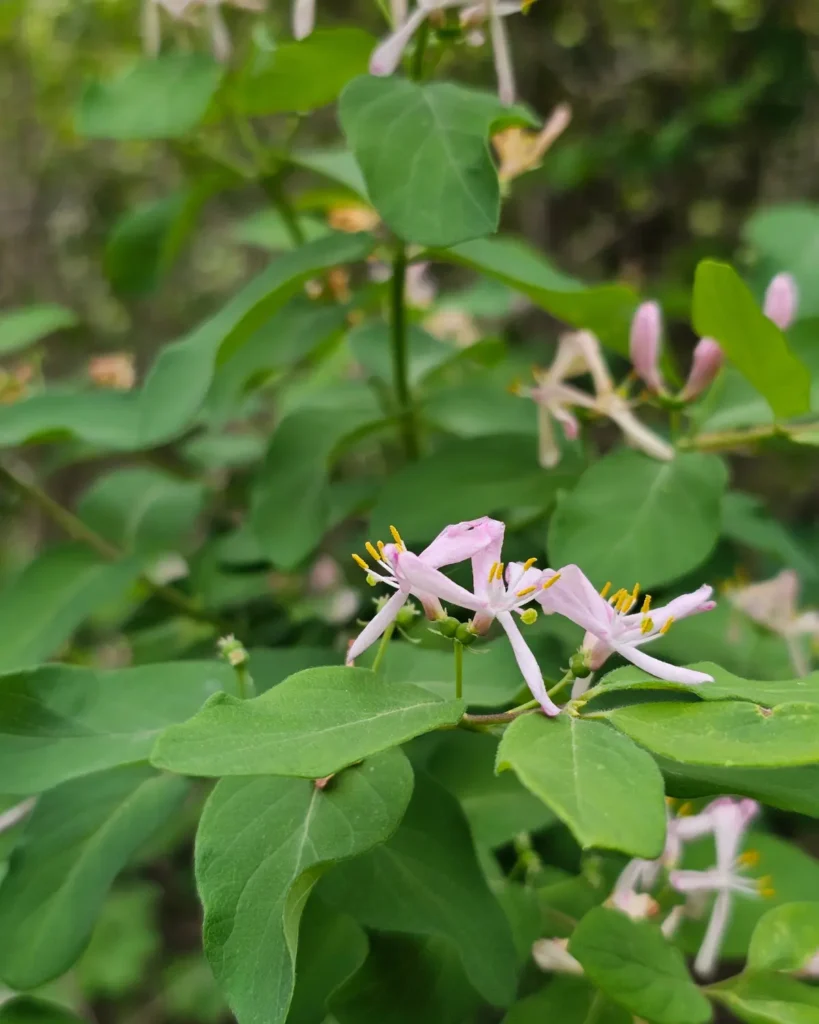
How did it get here?
And how was it thriving so close to the beach?
The questions made me look more carefully at all of them.
Rugosa Roses in the Sand
As I moved closer to the Sound, the wind picked up and I prepared myself mentally for the sand.
Running on the beach is not easy.
Big deep breaths. Slow down a little. Accept the struggle.
But nothing prepared me for the Rugosa roses and finding bees on the beach.
The flowers formed an enormous hedge between the marsh and the Long Island Sound — brilliant pink petals surrounding fuzzy yellow centers that practically glowed in the sunlight. The pink was not shy, but honestly, the yellow won first prize.

And the bees were everywhere.
I hadn’t seen a single honey bee during the first half of my run through the woods. Apparently they were all gathered at the beach, feasting on nectar and bright yellow pollen from the joyful roses growing directly in the dunes.
I stood there completely amazed.
I don’t think I had ever seen so many honey bees at the beach before.
And yes, I had to come home and look up the name of the flowers. Rugosa roses are salt-tolerant, drought-tolerant, and classified as invasive in New York. Originally from Asia, they are common in Japan, Korea, and China.
Huh.
There’s a saying: How can something so wrong feel so right?
Because standing there in the salt air, watching honey bees move from flower to flower beneath the bright spring sun, felt absolutely perfect.
Learning the roses were considered invasive didn’t take away a single moment of joy or wonder.
Any plant capable of thriving in wind, salt spray, shifting sand, and heat has earned a certain amount of admiration from me.
And trust me — the sand is not easy.
Black Locust and the Smell of Honey
Back on solid ground, I followed a concrete path running parallel to the water with an outstanding view of the Sound.
And the surprises weren’t over yet.
Suddenly, a sweet scent drifted above the salty beach air — vanilla and honey, rich and unmistakable.
I looked up immediately and recognized the drooping white blossoms of the black locust trees overhead.
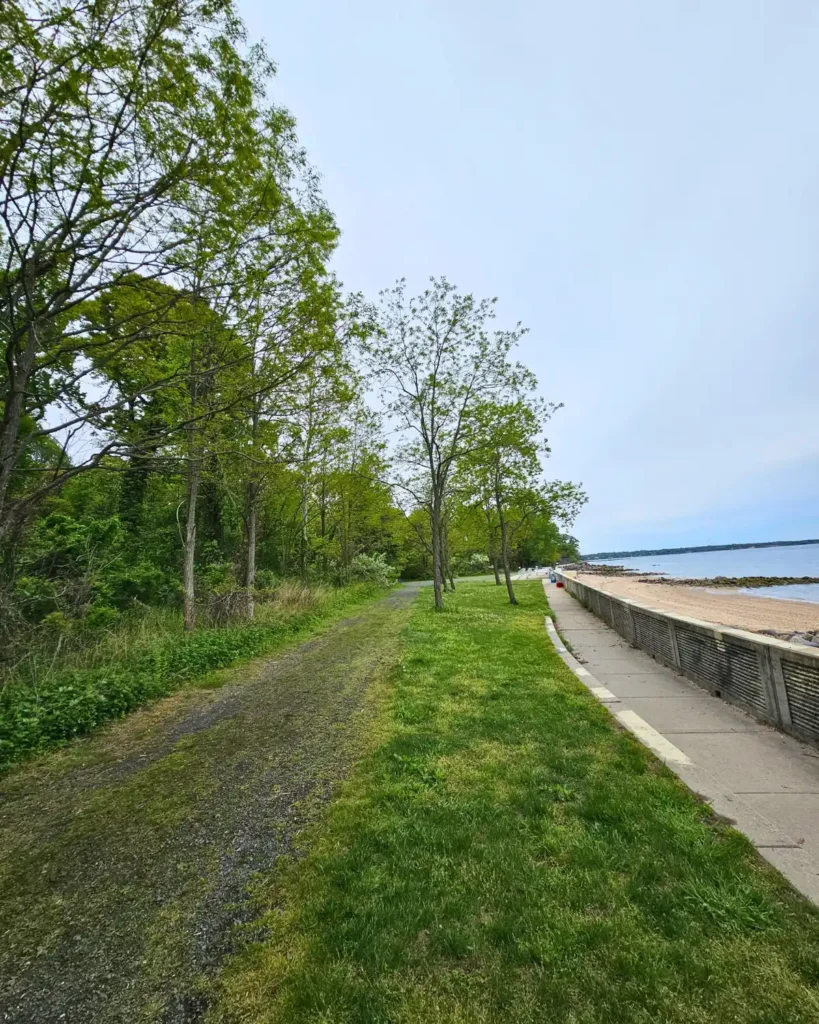
The smell is intoxicating to bees … and humans too.
Black locust trees signal the beginning of honey season on the North Shore. Seeing them blooming along the water filled me with hope. (Read more about black locusts in another Walk with a Beekeeper – Tulip Tree Nectar)
The trees themselves often look rough and weathered, bent by storms and shoreline winds, but every year they bloom again.
And yes, black locust is also considered invasive in New York.
By this point in the run, though, I had stopped thinking so simply about “good” plants and “bad” plants.
The theme of the morning had quietly become survival.
The honeysuckle.
The Rugosa roses.
The black locust.
All of them thriving in wind, salt spray, and shifting sand.
And all of them supporting honey bees in early spring.
I can’t help but admire that.
The Bees Noticed
I went to Welwyn for my fitness fix and my nature fix, and I certainly got both.
Beekeeping has made me hypersensitive to the little things that matter to bees. But it doesn’t mean I know everything. If anything, the bees keep reminding me how much there still is to notice.
That morning, I came home thinking about bees at the beach in springtime — working salt-tolerant roses beside the Long Island Sound.
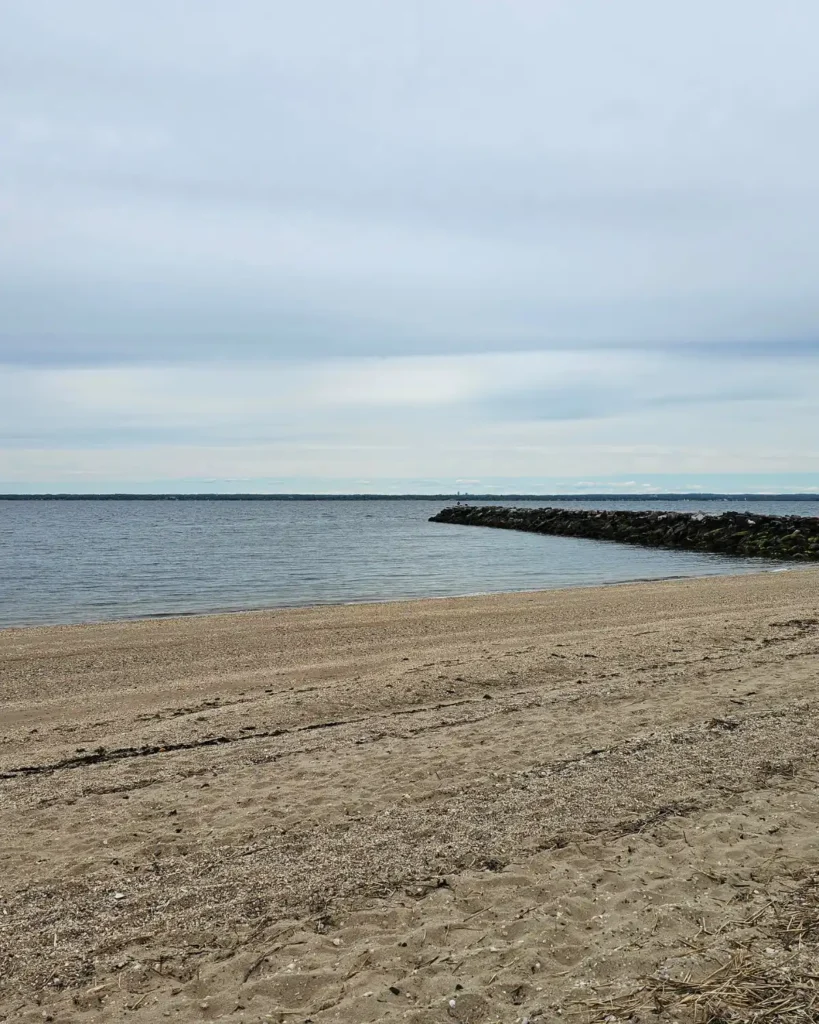
I’m grateful for the way beekeeping has changed the way I see the world around me.
Not just as scenery.
But as forage.
I cannot wait to see where the bees at the beach hang out in the summertime.
I noticed
Follow along with Walks With A Beekeeper