The Summer Run Series Through the Eyes of a Beekeeper
8 Runs. 8 State Parks. One Beekeeper.
What a 10K at Sunken Meadow Taught Me About Bee Memory
A windy evening at Sunken Meadow State Park led to an unexpected question: how do honey bees remember their way home? From orientation flights to flower schedules, the answer is remarkable.
What Memory Means to a Honey Bee
I’ve been here before. I’ve run here many times.
But today is different.
Today, I’m running as the woman who gave up running, became a mother, watched a lot of little league games, and became a beekeeper. That woman is not as fit as the woman in my memories.
And memories are important. As an athletic-minded person, I am counting on my memory of this incredibly difficult course to push me through to the finish line.
Despite my familiarity with Sunken Meadow, just like last week at Heckscher State Park, I arrived early to explore the park through my beekeeping eyes.
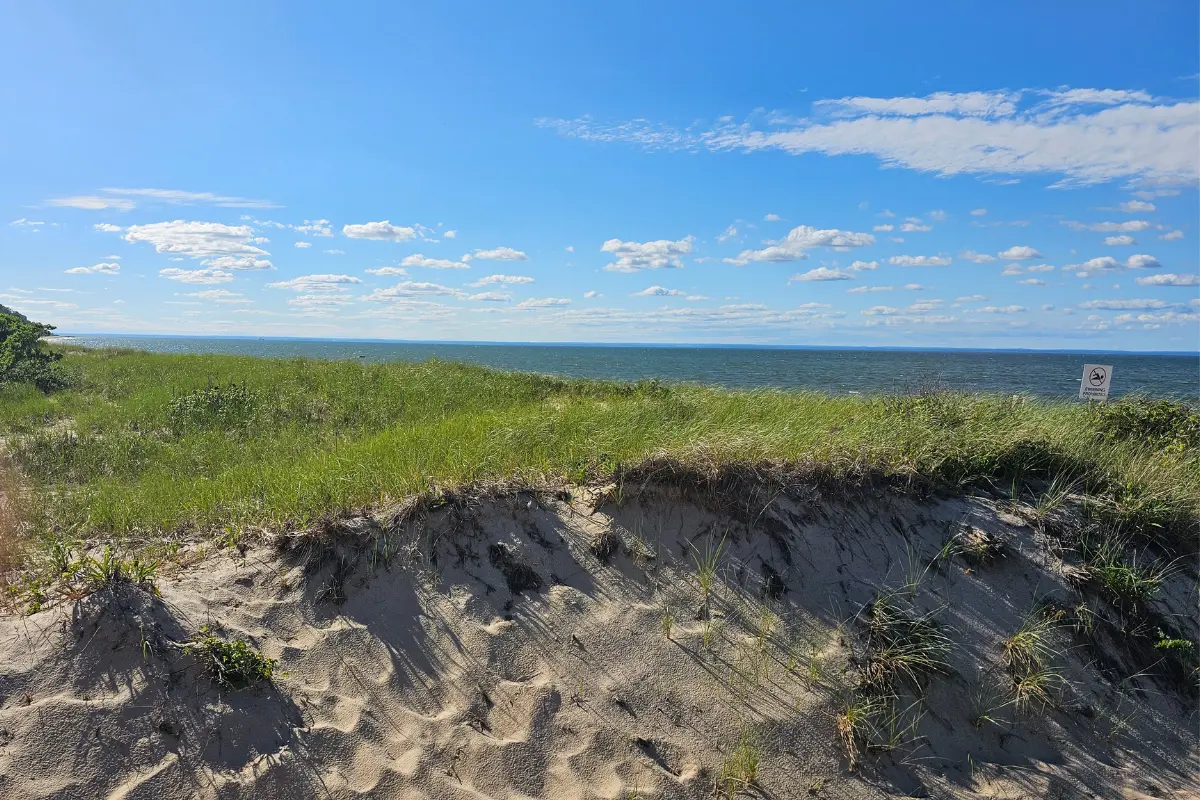
The views were as breathtaking as always: the cliffs, the water, the sky, and the marshes stretching in every direction.
Gorgeous.
But no bees.
The wind was whipping across the boardwalk, making it impossible to get a still photo of the amazing Japanese pine trees and bayberry bushes lining the path. I still tried.
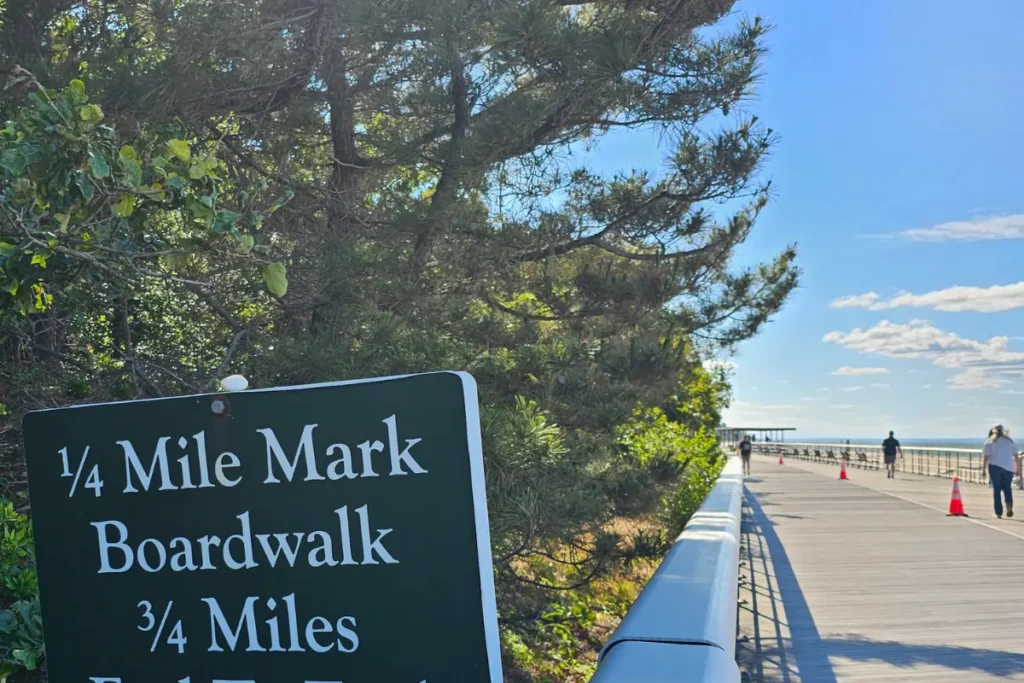
And then I just gave in. Let the wind blow where it may and enjoyed the place.
I wandered around, allowing my memories of running this course over the past 30 years or so to flit in and out of my consciousness. I can’t deny it. Those memories were making me nervous.
And then I drifted back to the bees.
I was counting on my memories of Sunken Meadow to get me through the evening. Honey bees depend on memory every day simply to survive.
A Brain the Size of a Poppy Seed
I like science, but I can’t imagine how scientists discovered that a honey bee’s brain is approximately the size of a poppy seed.
A poppy seed. Just close your eyes and visualize that for a moment.
Bees are tiny, yet they are able to learn and remember things.
Every drop of nectar collected by a honey bee depends on her ability to remember. Memory is essential for survival.
How Honey Bees Remember the Way Home
I didn’t expect to see bees on the boardwalk on this particularly windy day. Walking into the wind was difficult, but flying in it must be even more challenging. Just like ships at sea, the wind can throw bees off course.
So how does a bee manage to “run the course” and return home?
They start at the hive by learning exactly where they live. New bees emerge from the hive and take orientation flights. They fly up, make a loop, return to the hive, and repeat. Each loop becomes larger and larger. They practice going up, out, and back until “home” becomes a fixed place in their memory.
Bees also use the position of the sun to navigate. They have an internal clock that helps them account for the sun’s movement across the sky, even when clouds temporarily block their view.
Similar to the bees, I remembered landmarks on the 10K course from years past. A tall tree. A dip in the road. The place where the setting sun still shines brightly enough for you to know you’re more than halfway through the run.
Bees are remarkably smart.
How Honey Bees Remember Where to Forage
Somewhere between miles two and three is where Sunken Meadow’s Cardiac Hill appears.
It’s brutal. That’s all I’ll say.
Coincidentally, three miles is often cited as a practical foraging radius for honey bees. While they are capable of flying farther, every additional mile requires more energy.
A foraging trip that takes a bee three miles from home could require a six-mile round trip.
Take a moment and think about your fitness app that counts your steps. How far do you go in a day? I’ll tell you that 6.2 miles was more than enough for me last night.
Every journey has a limit. Humans and bees both need to know when it’s time to turn around.
Honey bees live by strict energy economics. Flying requires enormous effort, and the farther a bee travels, the more fuel she burns getting there and back.
Return trips are often more difficult because the bee is carrying nectar or pollen. A patch of flowers may be beautiful, but if the reward doesn’t outweigh the effort required to reach it, the trip simply isn’t worth making.
Memory plays a major role in these decisions.
Bees remember locations that provide rich sources of nectar and pollen. They learn where the best forage is, remember it, and return to locations that provide the greatest reward for the least amount of effort.
Why fly three miles for food if you can find it in one?
How Honey Bees Remember Water Sources
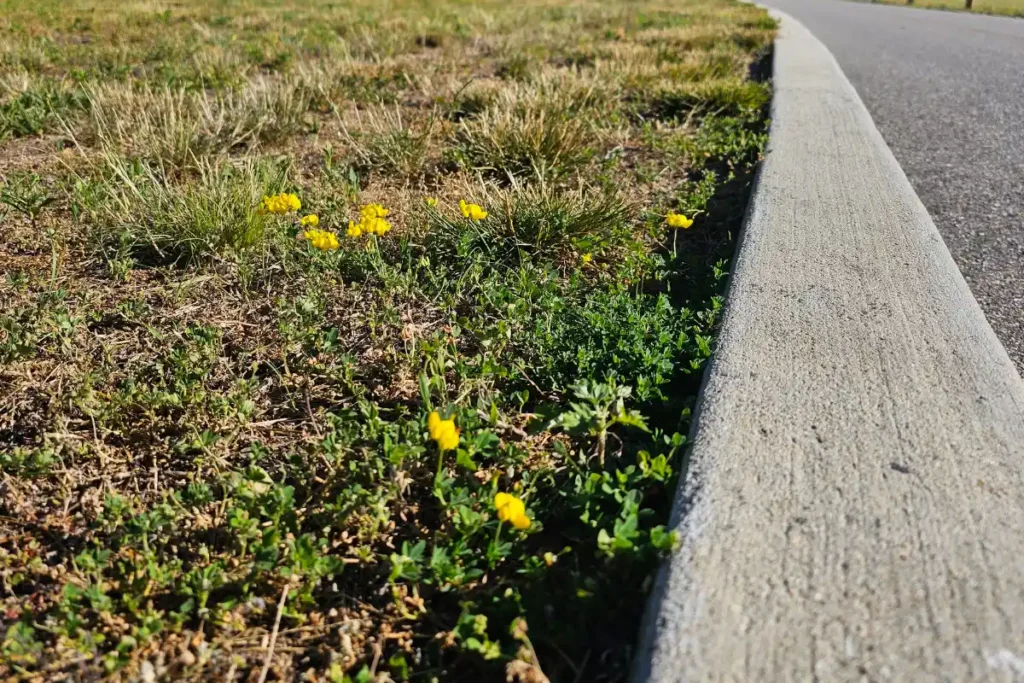
The Sunken Meadow boardwalk was lined with bayberry bushes, blackjack oak trees, and black cherry trees. I spotted one or two linden trees near the playground. Little buttercup-yellow flowers appeared here and there along the curbsides, while the no-mow zones looked surprisingly landscaped in their natural state.
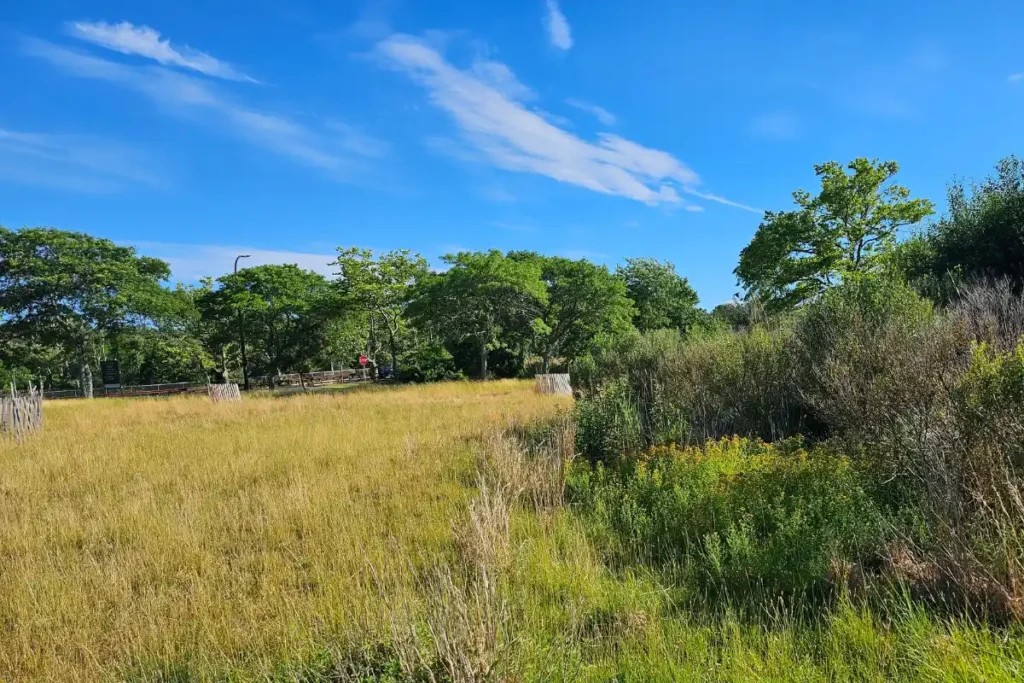
The bees notice it all.
The bees notice it all, including water sources.
Once a bee discovers a reliable water source, she may return to the exact same location repeatedly and recruit other bees to use it as well. Some individual bees even become specialized water collectors for the colony.
My own bees use a bird bath as a watering hole, and they stubbornly buzz around it when I forget to refill it.
At Sunken Meadow, I imagine they are drawn to the scents of salt water, damp soil, and the tidal basins. Like humans, bees need water and trace minerals to stay healthy. They also use water to help regulate temperature and humidity inside the hive.
Similarly, the water stops in the Summer Run Series are essential for runners.
And some of us are very much like the bees.
If you expect water at the three-mile mark, it better be there.
Honey Bees Remember Time
One of the most remarkable aspects of bee memory is that honey bees appear capable of learning daily patterns.
Beekeepers sometimes refer to this as “time memory” because bees learn when certain flowers are most productive and adjust their schedules accordingly.
Clover is a great example because you’ve probably noticed it yourself. Early in the morning, in the evening, or on cool cloudy days, you may not see many bees visiting clover flowers.
But when temperatures rise and the sun is shining, activity often increases dramatically.
Flowers open and close at different times. Nectar production changes throughout the day. Bees learn these patterns and make the most of them.
You could say a bee’s day is organized by memory.
And a good memory helps a colony thrive.
When Bee Memory Fails
Just like humans, bee memory isn’t perfect and can be affected by age and environmental stress.
I find it bittersweet that as bees age—and they only live about six weeks during the busy season—their ability to remember begins to decline.
Older foragers may still remember familiar nectar sources but can have more difficulty learning new routes or adapting to unfamiliar locations.
Exposure to certain pesticides may also affect a bee’s ability to learn and remember. Even subtle changes in navigation or decision-making can have significant consequences for a colony.
Researchers continue to study how disease, parasites, pesticides, and other stressors affect honey bee learning and navigation.
Scientists and beekeepers are constantly looking for ways to reduce those risks and help bees succeed in an increasingly complicated world.
Is Sunken Meadow Bee-Friendly?
So how bee-friendly is Sunken Meadow State Park?
Even without seeing a single bee, I would say very.
The Nature Center has a goal of planting 1,000 plants this year and had already planted 242 at the time of my visit. Combined with the park’s forests, marshes, meadows, and restoration projects, the habitat appears rich and diverse.
The Parks Department is educating visitors and collaborating on efforts to restore both the salt marsh and the tidal basin ecosystems.
Sunken Meadow revealed very little about bees that day. The wind kept them hidden from view.
Yet the more I explored, the more I found myself thinking about the tiny memories that guide every foraging trip.
Somewhere beyond the boardwalk, beyond the marsh grasses and blackjack oaks, honey bees were navigating a landscape they knew by heart.
The bees remembered their way home. I remembered how to finish.
Follow Along This Summer
This article is part of my Summer Run Series Through the Eyes of a Beekeeper, where I’m exploring Long Island’s parks and public spaces one race at a time.
👉 The NYS Parks Summer Run Series Through the Eyes of a Beekeeper
Next week, the series heads to Belmont Lake State Park for a 5K.
After six windy miles and a reunion with Cardiac Hill, a 5K sounds downright civilized.
We’ll see what Belmont Lake has to teach us next. 🐝🏃♀️