The Summer Run Series Through the Eyes of a Beekeeper
8 Runs. 8 State Parks. One Beekeeper.
Do Bees Fly in the Rain?
Do bees fly in the rain? When a summer 5K was canceled due to storms, I looked to my backyard honey bees for the answer and set out on a rainy run of my own.
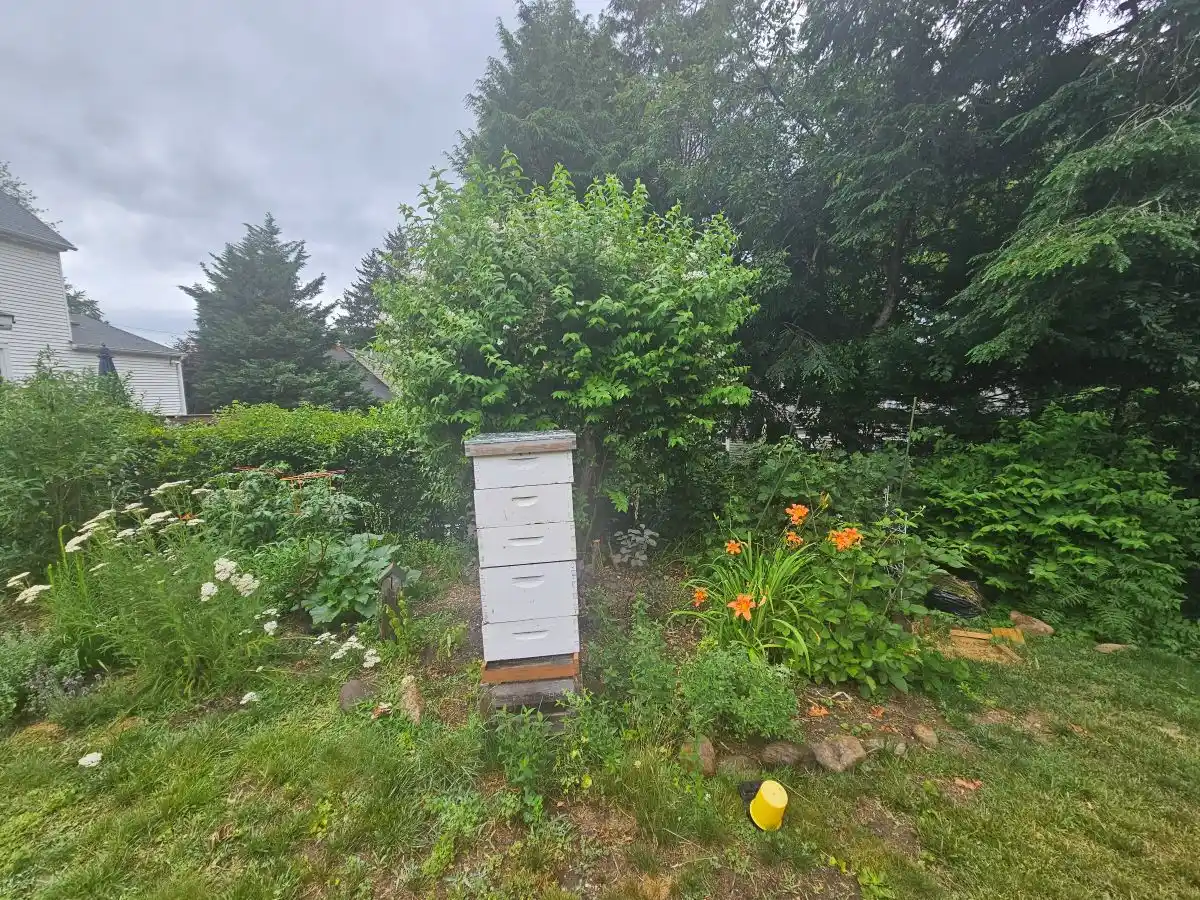
The clouds were thickening as the day went on. The forecast was iffy, with afternoon showers predicted but a chance of clearing by race time. Since the New York Mets and Chicago Cubs were still scheduled to play that evening, I remained hopeful.
Then, sometime around 3:00 p.m., I noticed the email.
Tonight’s 5K at Belmont Lake State Park: CANCELED.
Outside my window, however, nobody had informed the bees.
Watching them go about their business, I started wondering: Do bees fly in the rain, or was I witnessing something unusual?
Workers continued to stream in and out of the hive entrance, seemingly unconcerned by the weather forecast or the race director’s decision. Watching them go about their business, I started wondering: Do bees fly in the rain, or was I witnessing something unusual? Inspired, I decided to keep my own commitment to this summer run series, even if it wouldn’t be at Belmont Lake State Park.
Over the years I’ve learned that bees can be surprisingly good weather forecasters. If rain is approaching, foragers often return early. Before a storm, activity at the hive entrance can change noticeably. On cool mornings, they wait for the temperature to rise before heading out to forage.
They’re not always right, of course. But neither are weather apps.
So I made a simple decision:
If the bees were willing to go out, I was willing to go out.
As I laced up my shoes, I realized I’d been consulting the same weather forecasters I rely on all season long.
Bees as a Weather Barometer
Temperature
In the early spring especially, I can count on the bees to be a temperature gauge. If the weather is above 55°F, I can usually count on them being out and about, even though they prefer warmer temperatures, just like me.
When my kids tell me it’s freezing outside, I tell them to look at the bees.
“If the bees can go out, so can you.”
The bees seem remarkably accurate about that 55-degree mark. If they travel too far from the hive and temperatures suddenly drop, they can become chilled and unable to make it home. I’ve found bees frozen right outside the hive in early spring—so close to making it back.
As temperatures rise in summer, I tend to want to stay inside. The bees don’t seem to mind. They’re comfortable flying in the heat, but hot weather creates challenges of its own. Nectar sources can dry up, and bees must spend time collecting water to help cool the hive. During a heat wave, honey bees often find themselves working double duty.
Precipitation
One of the prettiest sights in the backyard has to be watching bees fly in and out of the hive during a sun shower. A brief sprinkle doesn’t always stop them. It’s as though they know this too shall pass.
Another favorite bee behavior is watching orientation flights after several days of bad weather. The bees seem almost joyful to be outside again. For a little while, the yard becomes chaotic, with young bees flying loops and circles in every direction. Then, just as suddenly, they settle down and return to their bee lines.
As I was running today, I got smacked on the cheek by a single well-placed raindrop. It didn’t make me cry, but it didn’t tickle either.
Can you imagine one of those oversized raindrops landing on a bee?
The weight of it must feel enormous.
Wet wings make for poor flying. Yet all afternoon the bees were still coming and going from the hive. Truthfully, they weren’t as active as they would have been on a sunny day, but they were working.
That’s why I laced up my shoes for the “Canceled Race” run of my own creation.
If the bees were out, I would be out.
Time of Day
I’m an early riser, but the bees are often flying before I’ve even poured my first cup of coffee. When the morning light hits the hive entrance, the workday begins.
I watch their activity as the coffee perks and consider what it means for the day ahead.
Like runners trying to avoid the midday heat, bees adjust their schedules. In fact, they remember which flowers bloom and produce nectar at different times of day. I wrote about bees’ remarkable memory last week after a run at Sunken Meadow but it’s one of the reasons I enjoy watching them so much. The bees seem to know exactly where they should be and when.
During hot summer weather, much of the activity happens early in the morning and again later in the afternoon. By two o’clock, traffic at the hive entrance often begins increasing again and continues right through sunset. It’s almost as though the colony takes a midday siesta.
And just like humans who become fatigued during a heat wave, bees must adjust their priorities. Water collection becomes increasingly important. A weaker colony may struggle to balance gathering nectar with bringing back enough water to cool the hive.
Time, temperature, and precipitation all matter. The bees are remarkably good at sensing changes in their environment.
As a beekeeper, I’ve learned to watch them and trust them.
The Canceled Race Run
I headed out onto the local streets, hoping I wouldn’t get drenched by a passing car. Puddles are not a runner’s friend.
Without a race course to follow or a finish line to chase, I settled into an easy pace and simply enjoyed the run. What began as a replacement for a canceled 5K gradually stretched into nearly five miles.
By mile four, I was hot, thirsty, and eyeing every puddle along the road. At one point I understood exactly why bees collect water from muddy potholes and gravel-filled puddles after a rainstorm. Fresh rainwater never looked so appealing.
Around that same time, the rain finally arrived.
Not a downpour, just enough to remind me why Belmont’s race organizers had made the decision they did.
When I returned home, I glanced toward the hives.
My son told me the Mets game was canceled too.
The bees were all inside.
They had almost called it perfectly.
Follow Along This Summer
This article is part of my Summer Run Series Through the Eyes of a Beekeeper, where I’m exploring Long Island’s parks and public spaces one race at a time.
👉 The NYS Parks Summer Run Series Through the Eyes of a Beekeeper
Next week, the series heads to Caumsett State Historic Park Preserve in Lloyd Harbor for a 5K.
A former Gold Coast estate with miles of trails, open fields, and waterfront views? Let’s just say I’ll probably take more pictures than I should. 🐝🏃♀️📷