Farmers Market Reports
Beekeeper notes on the seasonal happenings, local harvests, and community stories from my favorite farmers market at Eisenhower Park.
National Honey Bee Day 2026
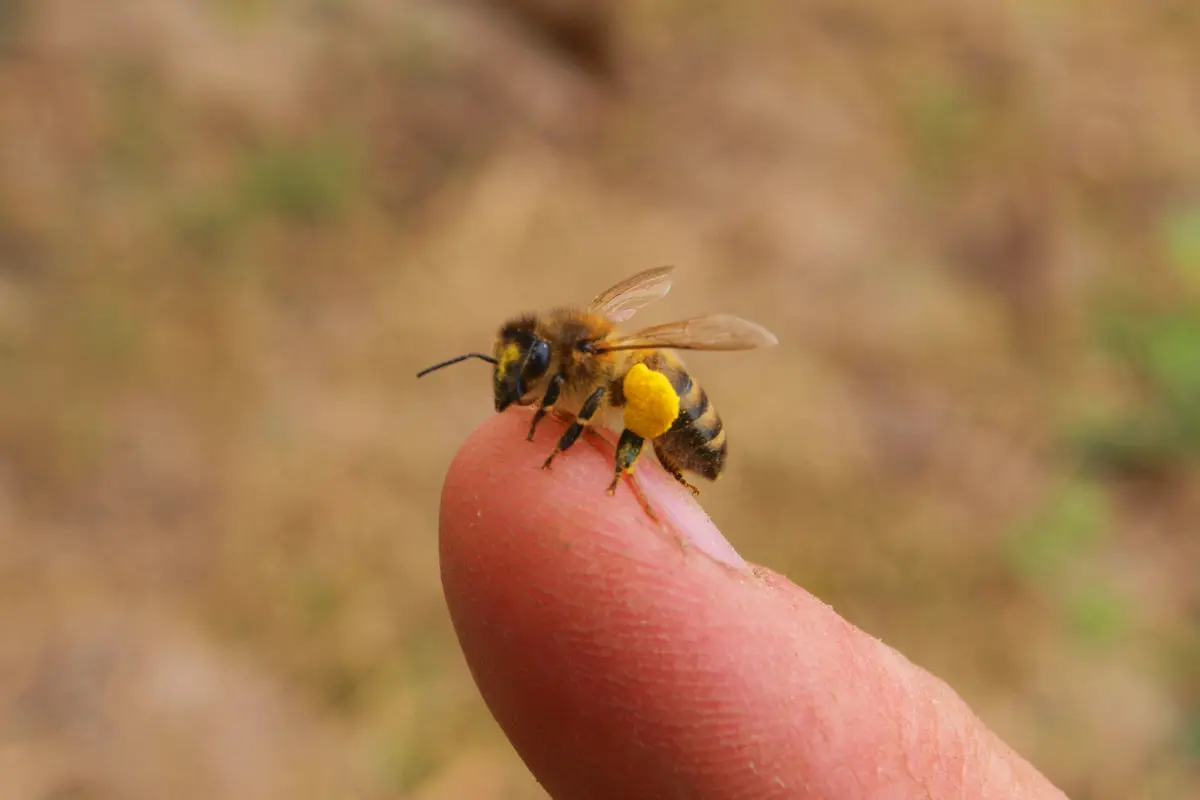
Let’s start this report at the end.
The end of the market, when our market manager announced that we had more than 800 visitors.
WOW! That’s almost three times as many as a typical day for us.
This was National Honey Bee Day, though, and it wasn’t a typical day for Backyard Bees.
I hardly spoke to any of the other vendors all day, which you know is very ATYPICAL of me. There was a quick morning hug with Pam from Pams Jamz and a little chat with Theresa, thanking her for my Lemon Blueberry Focaccia. And then, at the end of the day, a very quick check-in with Two Brothers as they were backing out of the field.
Then I was left alone on a sunny field — with a small gift bag of eggplants from Wheatley Farms — packing up a very long day.
What a way to end National Honey Bee Day.
A Field Full of Work
But let’s go back to the start. The start of a market that wouldn’t be much without honey bees.
Look around at the flowers, fruits, vegetables and herbs filling the tables each week and you are surrounded by the results of pollination — and the hard work of honey bees. Of course, there are other pollinators, but today was all about the honey bee.
Today, I wanted people to understand something that isn’t always obvious:
Honey bees work incredibly hard.
And they make much more than honey.
So for National Honey Bee Day, I brought some hands-on ways for people to learn about them.
There were beekeeping tools to examine, honey straws to taste, an empty frame of comb to touch, and propolis to see and smell. There was even a raffle for a two-pound jar of local honey and a Bee Kissable Beeswax Lip Balm Trio.
But the best learning happens when you can actually experience something.
So I brought a hive.
Not a hive with bees in it.
An empty hive.
The Hive Was the Surprise
I know that nothing ever turns out exactly the way you plan it, and National Honey Bee Day was no exception.
My hive was cute — three boxes in different colors stacked neatly together with a shiny metal lid. The perfect hands-on experience.
Or so I thought. As people approached, I watched some of them veer away. I even heard at least one person say, “Bees!” in a slightly panicked voice.
Once people understood that the hive was empty, they were more willing to come closer — but most weren’t quite ready to start pulling it apart on their own. I needed to get things started.
How Hard Does a Honey Bee Work?
I asked for a volunteer.
Just like when you were in school, most people immediately looked around at everyone else in the group. LOL. Understandably. We were standing in the middle of a grassy field at a farmers market, and nobody knew exactly what I was going to ask them to do.
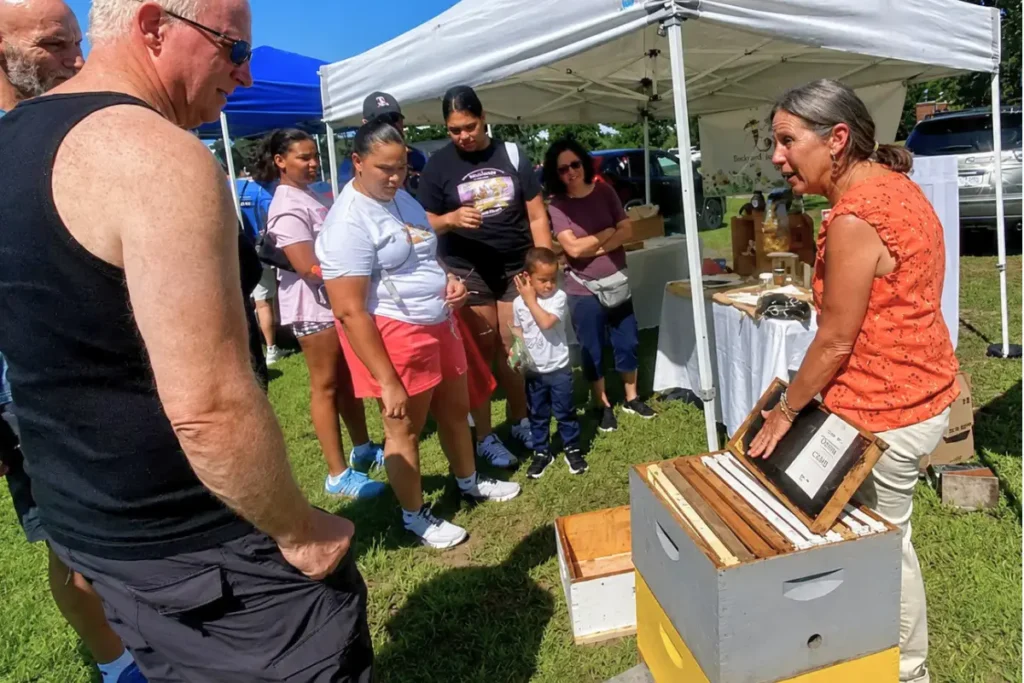
But people volunteered all day, and each time the experience was a little different.
Steven sticks in my mind because he stepped into the volunteer role with such great spirit and humor. You might have thought we had planned it.
We hadn’t.
Step 1: Remove the yellow box and place it on the ground.
The yellow box was filled with empty frames. It represented the beginning of the season, when the colony is smaller and there is a significant amount of work ahead. Wax comb needs to be built. The queen needs to lay eggs. The population needs to grow. Nectar and pollen need to be collected.
Steven removed the yellow box. Easy. Light. No problem.
Step 2: Remove the gray box and place it on top of the yellow one.
OOOF! Not so easy.
Steven repositioned himself, bent his knees, lifted the box and placed — dropped — it onto the yellow box with a thud. Everyone in our little crowd immediately understood that something was very different.
The gray box represented the work of the colony over the course of a season: growing, building comb, raising bees and collecting and storing honey. I had weighted that empty box to 55 pounds — about what a full super of honey can weigh.
The honey was imaginary. The weight was not.
And for just a moment, Steven gave everyone a way to feel the incredible amount of work represented by one full box of honey.
Tiny honey bees. Working and working and working.
Bees Make More Than Honey
There was one more part of the experience that everyone could see — and touch.
Propolis.
Most people know that honey bees make honey. Far fewer people know they make propolis too. Sometimes called “bee glue,” propolis begins with sticky resins that bees collect from trees and plants. They bring those resins back to the hive and use the resulting propolis to seal small cracks and gaps and help protect their colony.
There was a quiet man in one of the groups listening intently as I explained how propolis can actually help hold hive boxes together…but it can also make it harder for a beekeeper to separate them. He started moving his hands and fists in opposite directions, working out the push-and-pull for himself.
It made sense!
Soon the jar of propolis shavings from the education table was making its way around. People looked at it, smelled it and even rolled pieces between their fingers. A quiet buzz of conversation passed from stranger to stranger as people shared what they knew — or thought they knew — about bees, honey and propolis.
Propolis is also a popular traditional remedy. People use it in throat sprays, lozenges and other preparations, especially when they’re feeling a little under the weather. This time, I was the quiet one, listening as people shared what they knew and understood with each other.
And just like that, another part of the honey bee story became something people could actually experience – and remember.
When the Hive Gets Hot
All day long, the hive came apart and went back together — until someone accidentally leaned against the metal lid.
“OW! That’s hot!“
The roof of a beehive is covered with galvanized metal, and sitting in direct summer sun, it can get HOT. That opened up another conversation about how the crazy-hot summer we’ve had has affected the honey bees.
Because they were hot, too.
Unlike people, bees don’t have electricity to run fans and air conditioners, machines to make ice or faucets to provide water.
They have to do it themselves.
And they do.
Bees have an amazing system for cooling their hive. They collect water, bring it home and fan their wings to help cool the colony.
But MY bees have me. 😊
Just as you might have been watering your garden during our heat advisories, I was running between my different bee yards, creating shade and providing buckets of water so my bees wouldn’t have to work quite so hard.
Maybe my bees are a little spoiled.
But we can all use a little help.
I thought people might need a little help figuring out what to ask, too.
Ask the Beekeeper
I had prepared an “Ask the Beekeeper” sign, a whole deck of question-and-answer cards and even blank cards for anyone who was too shy to ask a question out loud.
Guess what?
They didn’t need my help.
No one used the cards.
And the question I probably hear more than any other — “Do you get stung?” — no one asked it.
Once we started looking, lifting, touching, tasting and talking, people had plenty of their own questions.
And that’s what I loved most about the day.
I thought my job was to teach people about honey bees. But no.
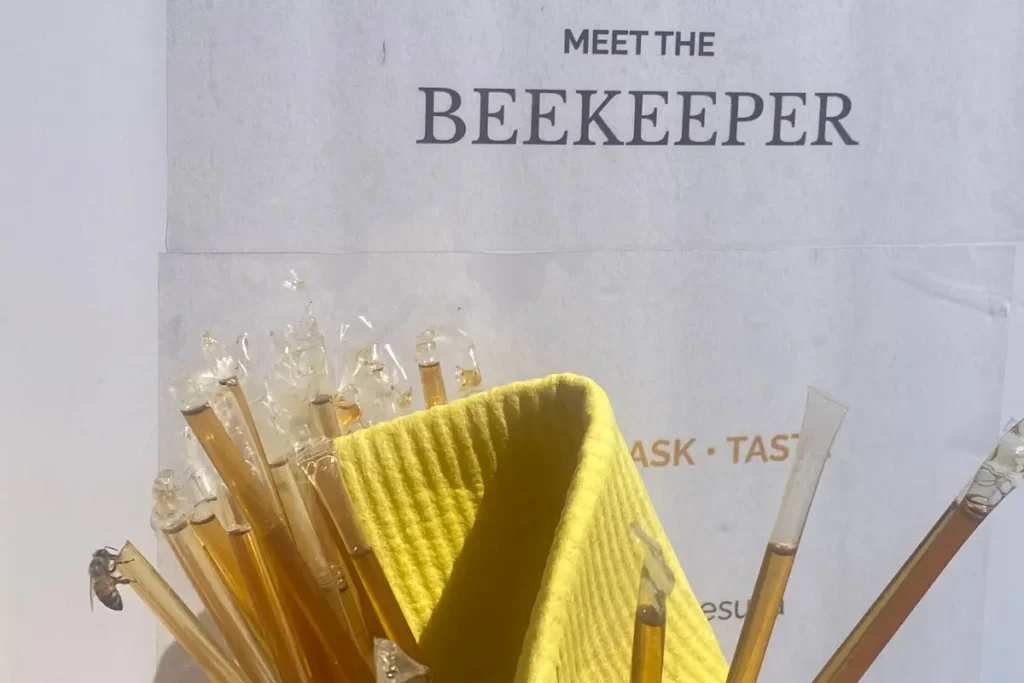
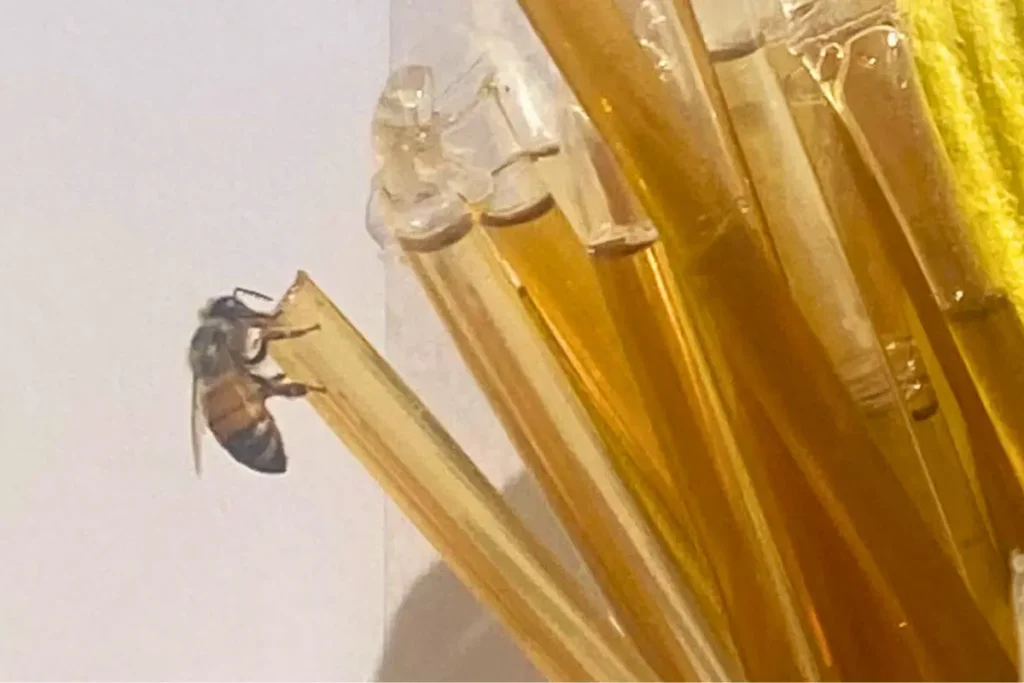
Instead, the bees spoke for themselves.
Their amazing hive. The honeycomb they build. The propolis they make. The wax caps they place over ripe honey. And, of course, the taste of honey straight from the hive.
They did it all.
I love the bees, and I love sharing what I know — and what I’m still learning — about keeping these remarkable little creatures healthy and strong.
You don’t have to wait until the next National Honey Bee Day to ask the beekeeper.
I’ll bee there next Saturday. Ask me.
Looking Ahead
Next Saturday is Back to School Week at the CCE Farmers Market.
Backyard Bees will be taking that theme in a slightly different direction — with Back to School Coffee Drinks.
I’ll be showing you how to make a simple honey syrup at home and use it to recreate — and maybe improve on — some favorite coffee-shop drinks.
Details are still brewing. ☕🐝
Meanwhile, let’s see what next market brings.
Continue Exploring
A Real Farmers Market at Eisenhower Park what makes the farmers market at Eisenhower park so special to me; find links to all the market reports here
Food Safety, Fresh Corn, and Rosemary Honey last week’s market report