Bee-hind The Scenes
Turmeric Honey: A Long Time Coming
What happens when folk wisdom, science, family tradition, and a beekeeper's kitchen all meet in one little jar?
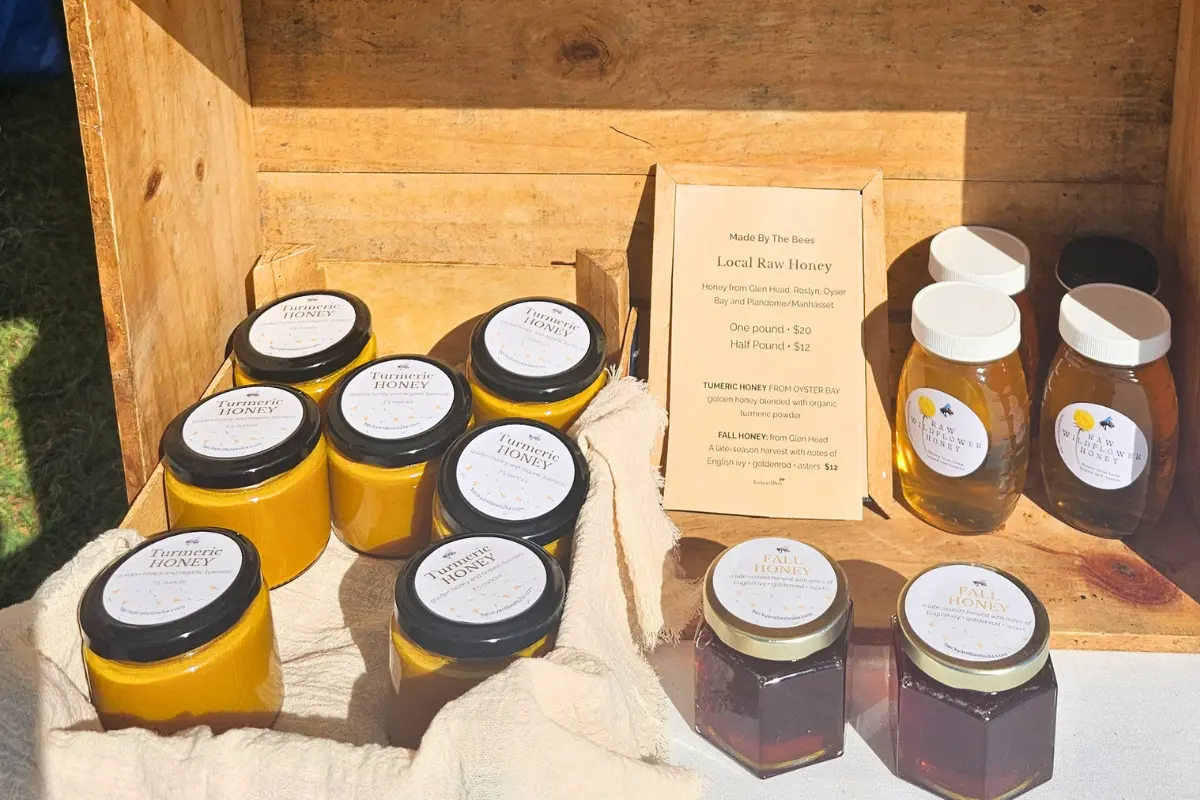
Turmeric Honey is a simple combination: golden honey stirred together with saffron-colored turmeric until the two become one beautiful, deeply golden mixture.
But this little jar of Backyard Bees Turmeric Honey has a much longer story than its two ingredients suggest.
I’ve been hearing about turmeric, honey, ginger, lemon, lime, and black pepper for years – from patients, families, farmers market customers, and friends. Everyone seemed to have a slightly different version, and everyone seemed to have a reason for making it.
Some called it a tonic. Some called it a morning shot. Some made it when sickness was coming. Others made it to keep sickness away.
And somewhere along the way, a tradition that belonged to other people became part of my own.
Folk Wisdom
I first heard about turmeric, honey, and ginger when I was working as a dietitian in a prenatal program.
One of my patients from the Caribbean was very serious and wanted nothing more than a healthy baby. She asked questions about everything she ate and followed all my advice. But when she developed a bad cold, she started having a morning cup of tea made with ginger, honey, and turmeric. That was her mama’s advice – no questions asked.
I didn’t even know what turmeric was at the time, so I asked her questions. She has stayed in my mind for years as someone following the traditions of her family in the most beautiful way: by caring for herself and her unborn baby.
Later, I heard similar stories from Caribbean customers at the Valley Stream Farmers Market. When they talked about making turmeric back ‘home,’ they meant home on an island in the Caribbean. They didn’t begin with a jar of turmeric powder. They started with fresh turmeric root and stewed it in water to make tea. They did the same with fresh ginger.
And they had definite ideas about what it was for. They described it as something for immunity – something that might help keep sickness away or help you through it when sickness arrived. Customers from other backgrounds often spoke about turmeric and inflammation.
The beliefs weren’t identical, and neither were the recipes. Some people used lemon; others used lime. Some added ginger. Some insisted on black pepper. Some made a whole cup of tea; others made just a little morning ‘shot.’
But there were two common threads: turmeric was something they used as part of caring for their health, and someone had taught them to do it.
The Family Traditions I Already Understood
I understood that instinct because I had traditions of my own.
My mother, my mother’s mother, and probably her mother before her always kept a jar of honey in the house. It wasn’t for everyday consumption. Honey was something you reached for when someone was sick.
In my house, the “dosage” of honey changed with maturity. When I was in elementary school, it was a teaspoon of honey. By middle school, it was hot tea with honey and lemon juice. By high school, I had graduated to a splash of strong whiskey to “sweat the sickness out.”
I will never forget that first hot toddy—the burn!
I remember it so well that I continued parts of the same tradition, now using honey from my own beehives, with my own children.
That history mattered when special teas and family remedies came up in my work as a dietitian. I was responsible for providing evidence-based advice. But I also understood that a family remedy could carry something evidence couldn’t measure: history, comfort, and care.
Turmeric Honey Science
Where the Science Fits
As a former dietitian, I’m trained to look at health claims with a little skepticism. None of my customers was making money from a recipe. They weren’t selling anything or promising a miracle cure. They simply held strong beliefs that this morning ritual helped them stay healthier than they would be without it.
So I looked into the simple recipe: water plus four ingredients—turmeric, citrus, honey, and black pepper.
And lo and bee-hold, there was a little bit of science hiding inside the folk wisdom.
I was fascinated.
Turmeric: Researchers have studied turmeric for its possible effects on inflammation and other health conditions, often focusing on curcumin, one of its active compounds. Some of the findings are interesting, but laboratory research and human research are very different things. The evidence on turmeric is far from definitive.
Citrus: Lemon or lime brightens the earthy flavor of turmeric and contributes some vitamin C. Vitamin C supports normal immune function, although a squeeze of citrus does not transform the drink into an immune-system cure.
Black pepper: Black pepper wasn’t included in everyone’s version of the recipe, which made it even more interesting. Pepper contains piperine, a compound that can improve the body’s absorption—or bioavailability—of curcumin. That doesn’t prove that a pinch of pepper makes this homemade drink medically effective, but it does help explain why the two ingredients are so often paired.
Honey: I didn’t need research to understand what honey contributed to this particular tradition. But let’s be honest: turmeric and black pepper stirred into water would not be much of a morning treat. Honey makes the whole thing taste good.
Versions of those four simple ingredients have passed through families for generations. Were they onto something?
Maybe.
My reading didn’t prove that this morning tonic could prevent or treat illness. But it gave me a new appreciation for the little bit of science tucked inside one repeated piece of folk wisdom:
Add a dash of black pepper.
Someone had figured out that the pepper belonged there, even if they never used the word bioavailability.
The Stories Were Better Than the Recipe
As a new beekeeper, I had only one or two hives producing honey. I don’t know if other beekeepers feel this way, but those first honey harvests were extra special. I almost hated letting the jars go.
So, at the Valley Stream Farmers Market, when customers told me exactly how they planned to use my honey, it felt good. It felt even better when they shared the family stories surrounding their recipes.
The amounts varied depending on who was telling me what to do. But these are some of the words that stayed with me:
I make my son take it. He’s on the football team.
I can’t be weak for my grandchildren.
My mother made it for me. Now I make it for her.
Those stories made me think about my own mother, her jar of honey, and all the things people make for one another when they are trying to help.
Maybe that is why these traditions last. Not because every ingredient has been scientifically proven to do everything people say it does, but because someone cared enough to make it for someone else.
The Beekeeper’s Kitchen
During the pandemic, I started making my own version. I already had everything in the kitchen, and there was something reassuring about beginning the morning with a warm and healthy ritual.
I wasn’t trying to recreate anyone else’s recipe exactly. I was making something that had traveled through many kitchens before it reached mine.
That is how food traditions work. They change.
Someone has fresh turmeric, so they stew it. Someone else has turmeric powder in the pantry. One family uses lime; another uses lemon. Someone adds ginger. Someone insists on black pepper.
And eventually a beekeeper puts a jar of her own raw honey on the counter, blends it with organic turmeric powder, and creates a modern kick-start to a traditional recipe.
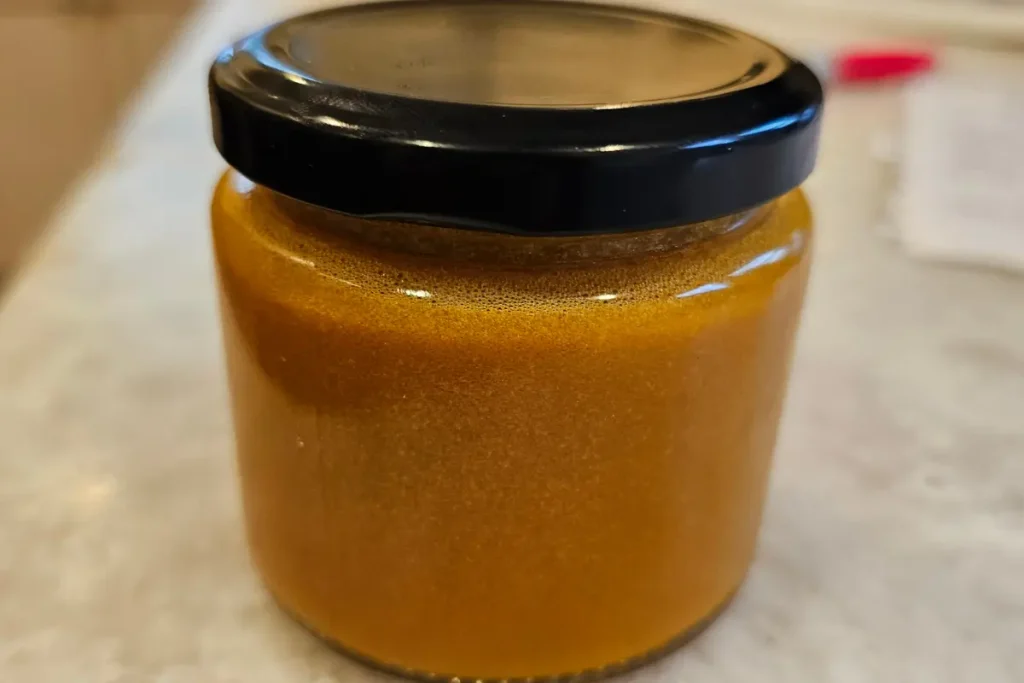
Now I keep a jar of Turmeric Honey on my ‘Bee Well’ shelf. When I want a morning shot, I stir a spoonful into warm water, add lemon and a little black pepper.
That’s it.
It’s quick. It’s golden. It’s a little spicy and a little citrusy.
And every time I make turmeric honey, I think about the people who introduced me to it along the way: the mother caring for her unborn baby, the Caribbean families who remembered making fresh turmeric tea at home, the mother preparing a morning drink for her son, and the daughter who now makes it for the mother who once made it for her.
Somewhere along the way, their tradition became part of mine.
Maybe that’s how new traditions begin.
Morning Turmeric Honey Shot
Stir 1 teaspoon Turmeric Honey into 1/4 cup (2 fluid ounces) of warm water. Add a squeeze of lemon or lime and a dash of black pepper. Ginger is optional.
More Bee-hind the Scenes
The Honey That Wouldn’t Flow — The mystery and surprises behind an unusual English ivy honey harvest.
Salt Water Cures Everything (Or So My Mother Said) — The family story behind one of Backyard Bees’ best-selling soaps.
Lemon Bomb Is a Terrible Name — The story of a lip balm that grew into something much bigger.