The Summer Run Series Through the Eyes of a Beekeeper
8 Runs. 8 State Parks. One Beekeeper.
What I Didn’t Notice at Hempstead Lake State Park
During a summer run at Hempstead Lake State Park, I found myself noticing something unexpected. The invasive plants I'd grown used to seeing across Long Island were missing, replaced by native flowers that support pollinators and restore the landscape.
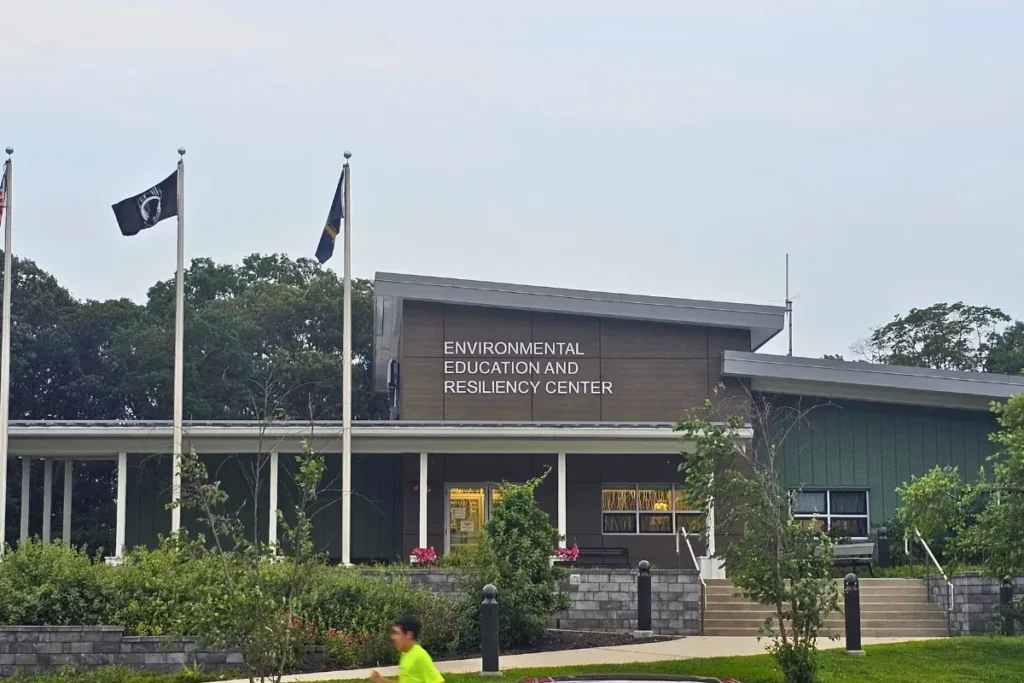
The first thing you notice when you pull into Parking Lot 1 at Hempstead Lake State Park is the huge Environmental Education and Resiliency Center sitting on the hill overlooking the parking lot.
The first thing you don’t notice is the invasive weeds.
Actually, that’s not quite true.
I didn’t realize I wasn’t noticing them until much later.
Are you confused? Let me explain.
The Resiliency Center
The Environmental and Resiliency Center is mammoth. The exterior is a mix of deep gray textured concrete and thick glass. It’s modern and pretty, in a stark sort of way. No matter what you think of the architecture, it is impressive.
It wasn’t open when I arrived, but with the help of the parking lot kiosk, I learned that it’s 8,000 square feet with roof-mounted solar panels, an electric vehicle charging station, and bird-safe AviProtek glass.
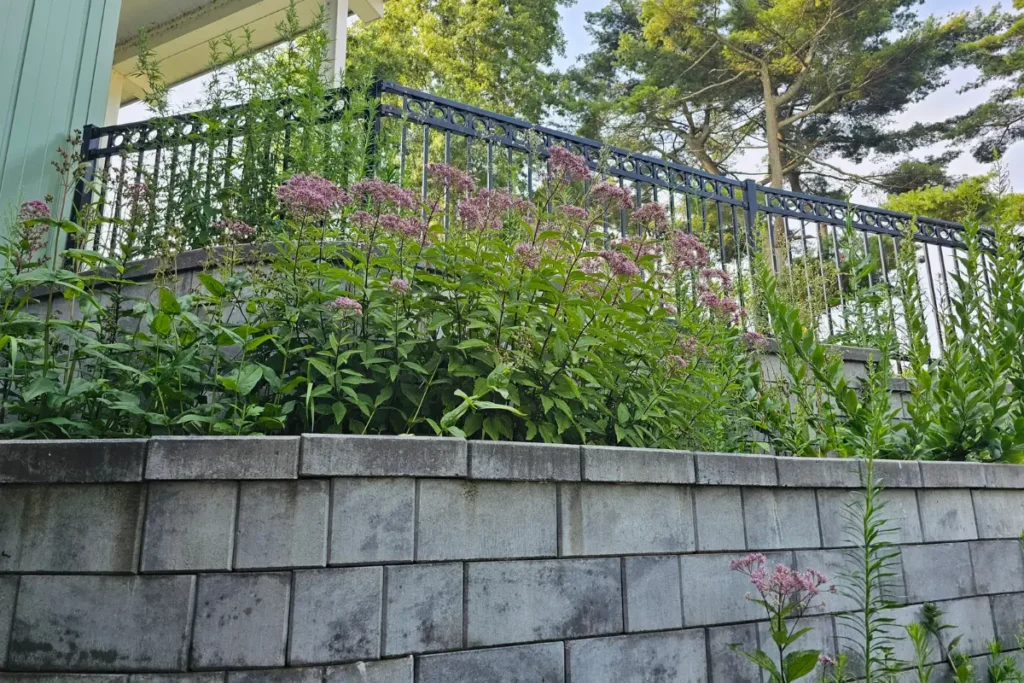
Before I even made it around back, I spotted the first of what would become many Joe Pye Weed plants in bloom.
Mental note to self: My Joe Pye Weed in the backyard is enormous this year, but it still hasn’t bloomed. Am I managing it correctly? Should I be cutting it back less? Do I need to divide it? What are they doing differently?
There were so many Joe Pye Weed clusters throughout the park that I eventually stopped counting.
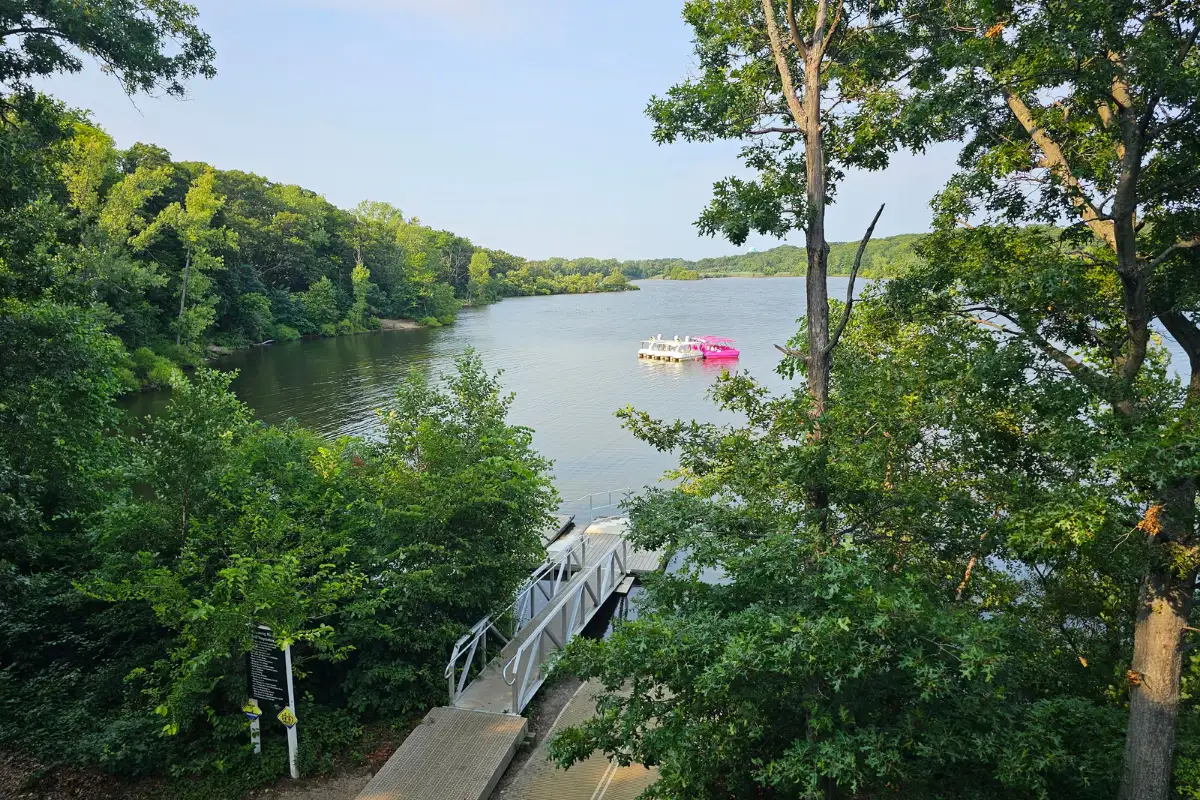
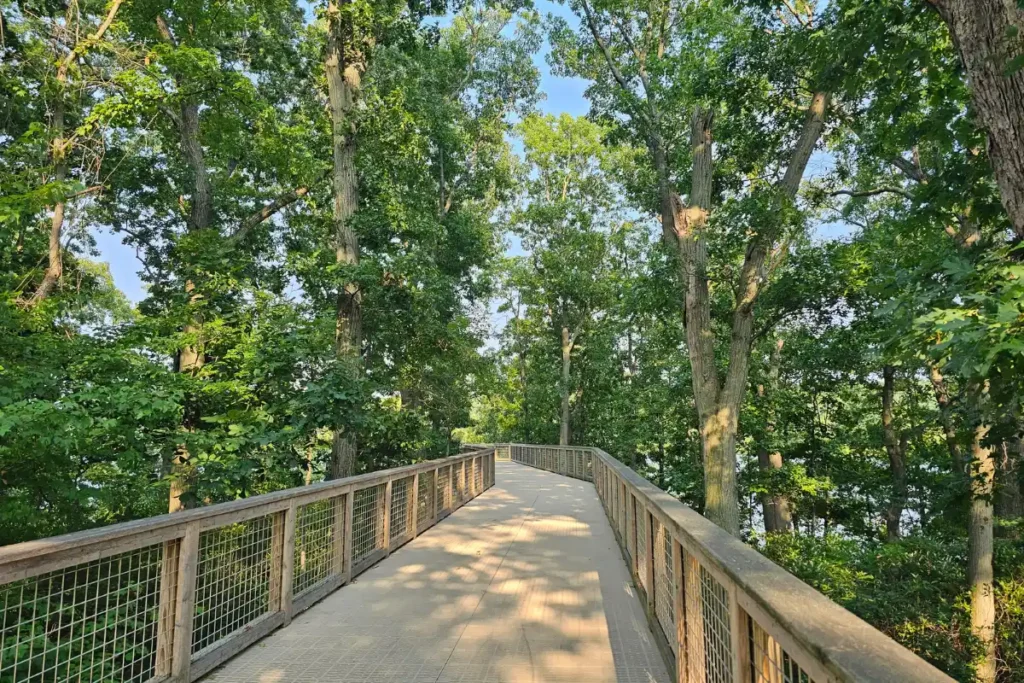
Hempstead Lake is, obviously, a lake—but I had no idea just how large it was. One of the park’s unique features is its kayak rentals. The walk down to the launch is beautiful, with an elevated boardwalk winding through the trees before opening onto the sandy shoreline. Families were picnicking, music drifted through the air, children played in the water, and a cool breeze rolled across the lake.
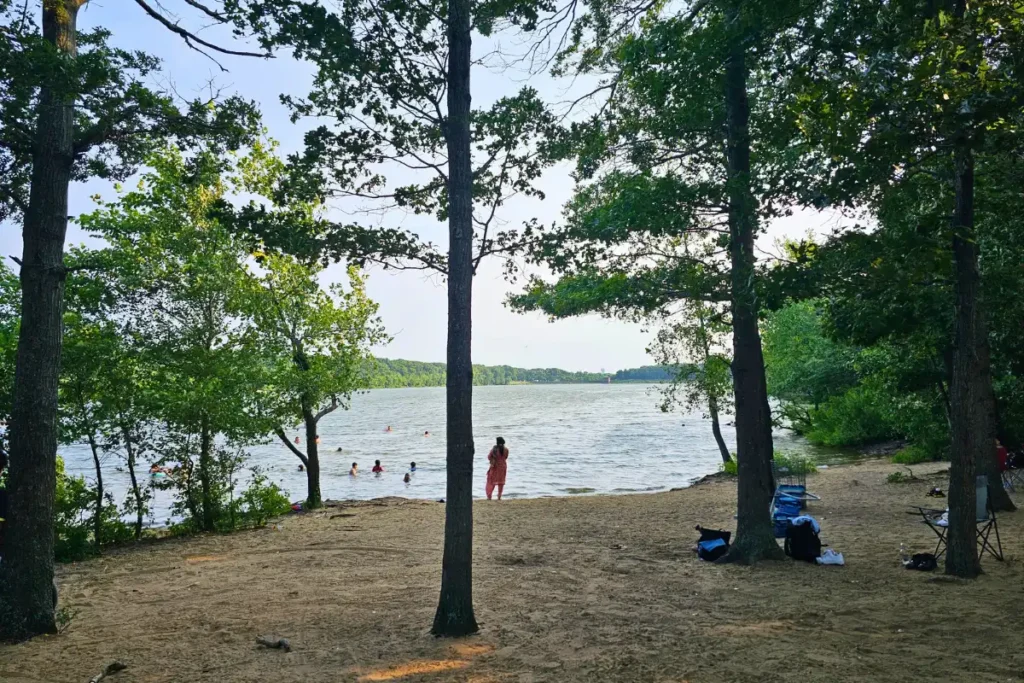
Standing by the shoreline, I was wearing a tank top and was almost chilly.
Then I walked back toward the race start.
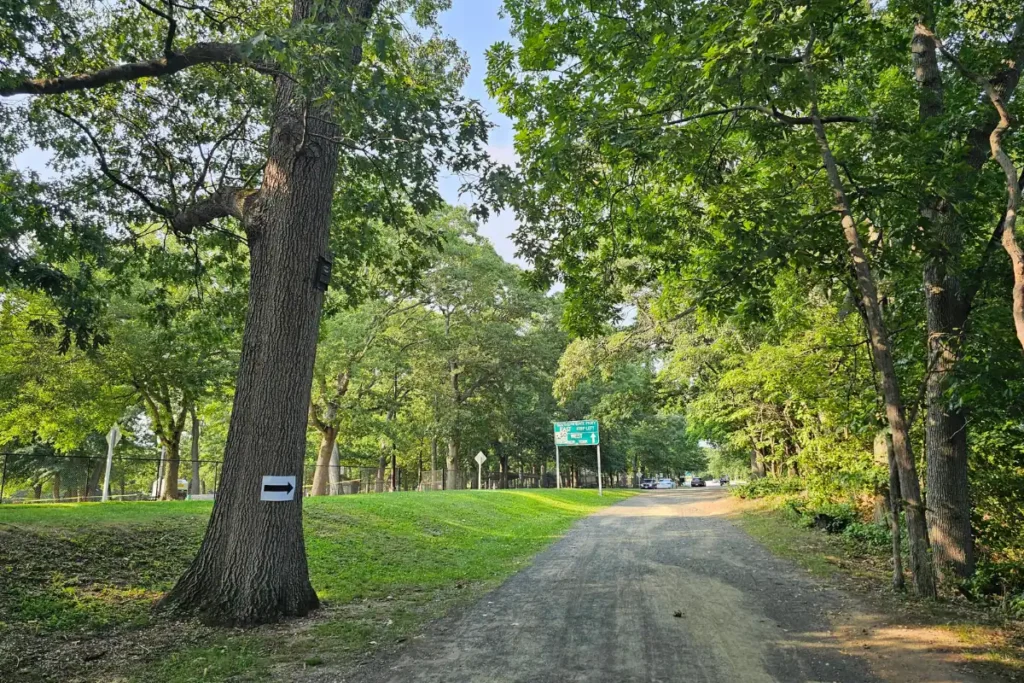
Almost immediately, the breeze disappeared. The main trail was hot, dry, and dusty. Between me and the water was what looked like an endless wall of green.
But that wasn’t what caught my attention.
What I noticed was the space.
Happily Confused
By the time the race started, I was happily confused. Something about Hempstead Lake State Park felt different, but I couldn’t quite put my finger on it.
There were gaps where I expected to see dense stands of mugwort, Japanese knotweed, or porcelain berry. I noticed beautiful tree trunks that weren’t buried beneath poison ivy, grapevines, or mile-a-minute vine. While waiting for the race to begin, I looked up and saw old vines hanging brown and lifeless from the branches above me. Someone had cut them at the base, leaving them harmless while the trees reclaimed the canopy.
Then it hit me.
The invasive plants I’d grown so accustomed to seeing simply weren’t there.
They’re so common that you almost stop noticing them—until suddenly they’re gone.
As the race started, I kept noticing it.
Light reached the trail.
Air moved through the woods.
The lake didn’t feel sealed off behind a wall of invasive plants.
I actually started doubting myself. Was I imagining it?
Then I noticed another clue.
There was Joe Pye Weed everywhere. As one of my favorite backyard bee plants, it tends to catch my eye. Bees absolutely adore it, so naturally I do too. It’s not something I expect to see in large numbers, yet here it was, thriving throughout the park.
A little farther along, I spotted a long stretch of young plants just getting established. They weren’t very tall yet, but they were clearly planted intentionally. Each one carried clusters of small white flowers.
At the time, I had no idea what they were.
I just knew someone had put them there for a reason.
Restoration Can Work
When I got home, my curiosity got the better of me.
It turns out I wasn’t imagining any of it.
Hempstead Lake State Park has undergone an enormous restoration effort through the Living With The Bay initiative, established after the devastation of Hurricane Sandy. Invasive Species Strike Teams have spent years removing acres of Japanese knotweed, porcelain berry, and the vine tangles that once overwhelmed the park. Today, Hempstead Lake is considered a model for restoration across the New York State park system.
What fascinated me most wasn’t just what they removed.
It was what they planted in its place.
Joe Pye Weed was one of the featured species.
So was swamp milkweed.
And those little white flowers I’d noticed?
Boneset.
Every one of those plants serves two purposes. Their deep root systems help stabilize the soil around the dam, while their flowers create habitat and food for native pollinators.
As a beekeeper, that’s the part that stayed with me.
Restoration isn’t just about removing what doesn’t belong.
It’s about creating space for what should have been there all along.
Maybe resiliency is simply giving nature the chance to recover.
And that’s what I really noticed when I came to Hempstead Lake State Park tonight. Not a building on a hill, but a landscape that can breathe again. A place where sunlight reaches the trail, native plants take root, and the bees eventually find their way back.
Sometimes hope looks like a field full of Joe Pye Weed.
Sometimes it’s a patch of boneset gently taking root.
And sometimes you don’t realize you’re running through a success story until you get home and learn what you were actually seeing.
Follow Along This Summer
This article is part of my Summer Run Series Through the Eyes of a Beekeeper, where I’m exploring Long Island’s parks and public spaces one race at a time.
👉 The NYS Parks Summer Run Series Through the Eyes of a Beekeeper
Next week, the series heads back to Heckscher State Park for another 5K. I’ll have a chance to see what’s developed over the season for the bees—and a chance to improve my 5K time!
We’re heading back to where the Summer Run Series began. If you missed that first run, you can read How Honey Bees Use Scent at Heckscher State Park here.
And after that, the Summer Run Series finishes up at Jones Beach with a five-mile run. That’s my reminder to get outside, see what you can see, and enjoy the summer while it lasts. 🐝🏃♀️